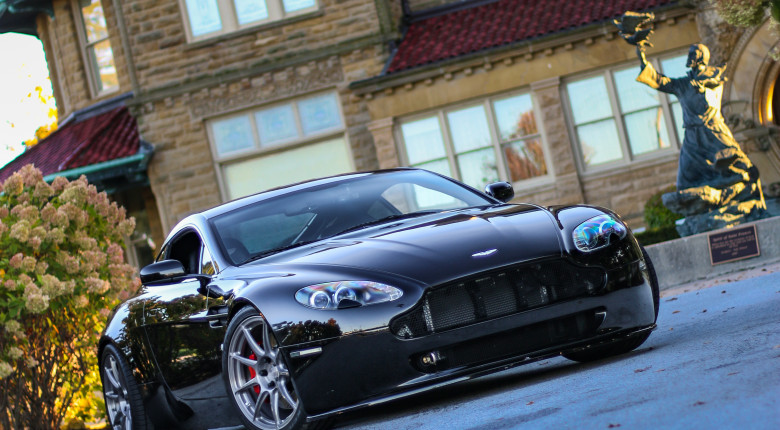
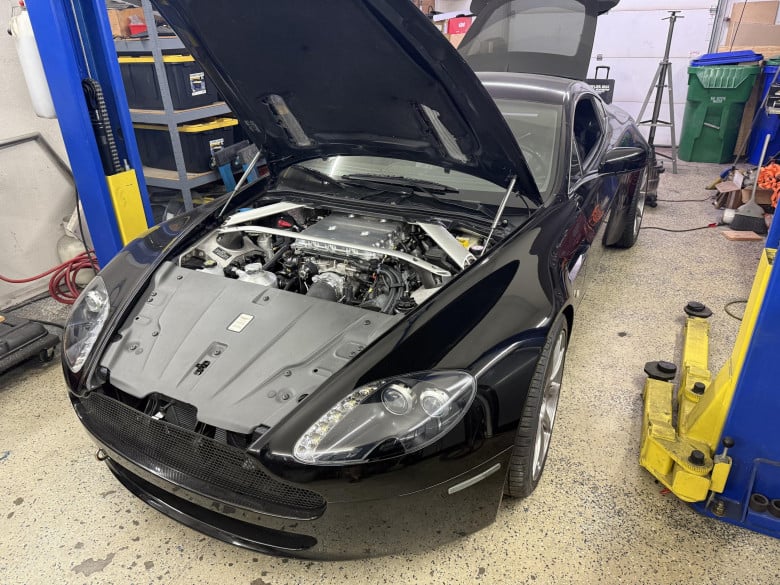
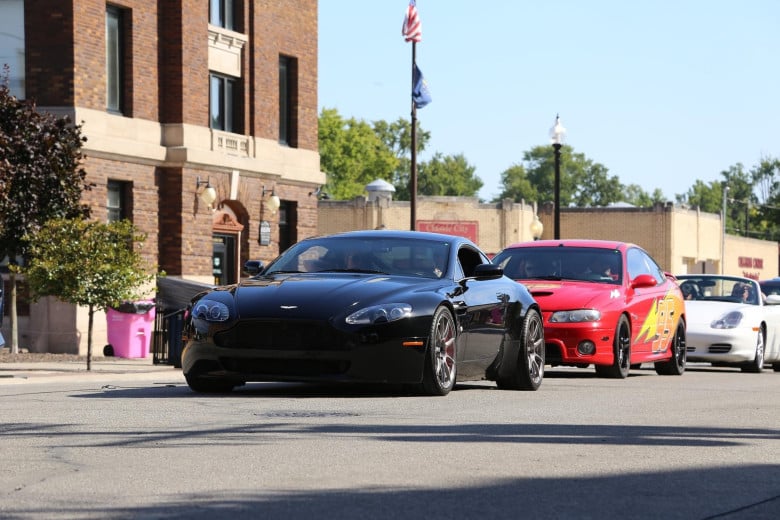
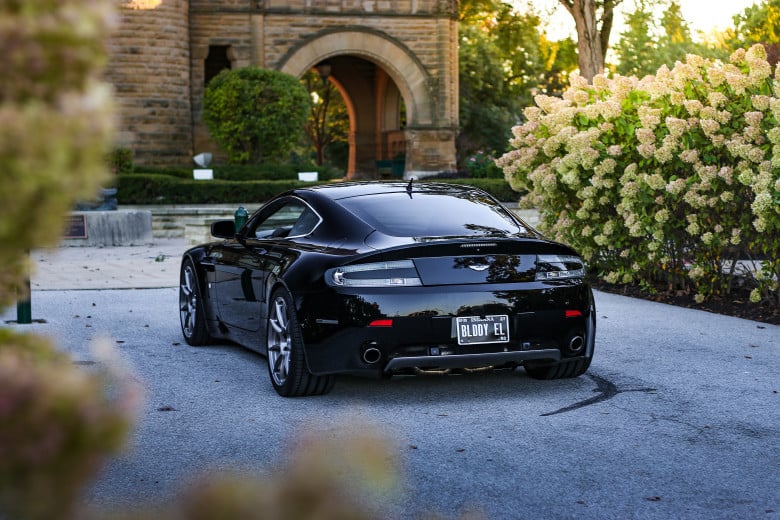
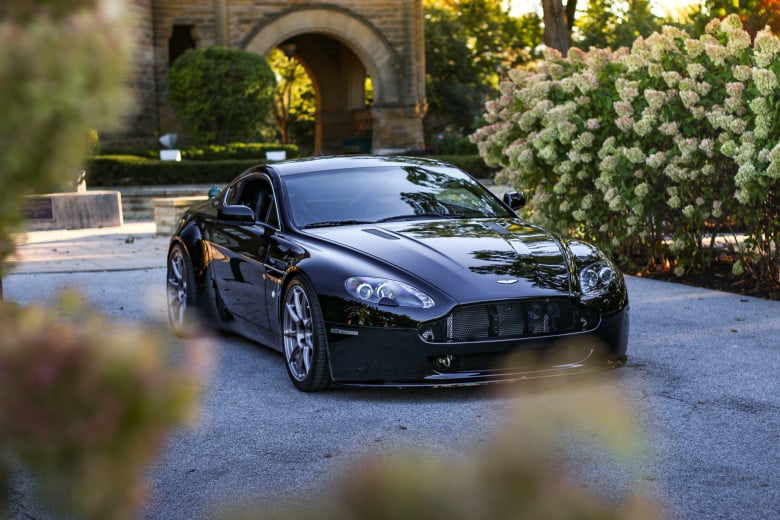
HPA member Blake McBride promised his wife he wouldn’t modify his 2007 Aston Martin… Today, the Vantage runs a supercharged GM LT4 V8, a Corvette six-speed transaxle, and MoTeC engine management.
📸: Chase Clardy
“I always thought that the 2006–2017 Vantage was one of the most beautiful cars ever made,” Blake says. “I’ve wanted one since college, and decided to pick one up when the prices got somewhat reasonable.”
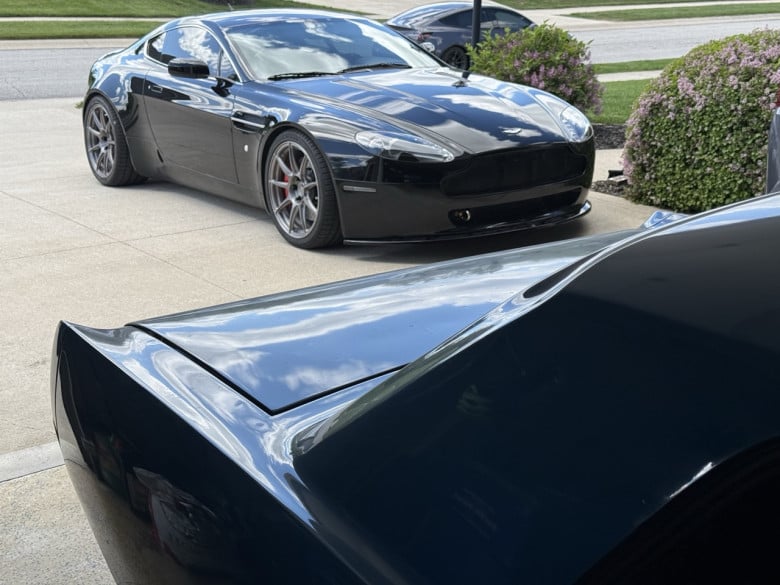
Most people would probably assume that an engine failure prompted an ambitious swap like this, but that isn’t the case. The car was in perfect condition, and in fact, the original engine had been replaced under warranty and only had 26,000 miles on it.
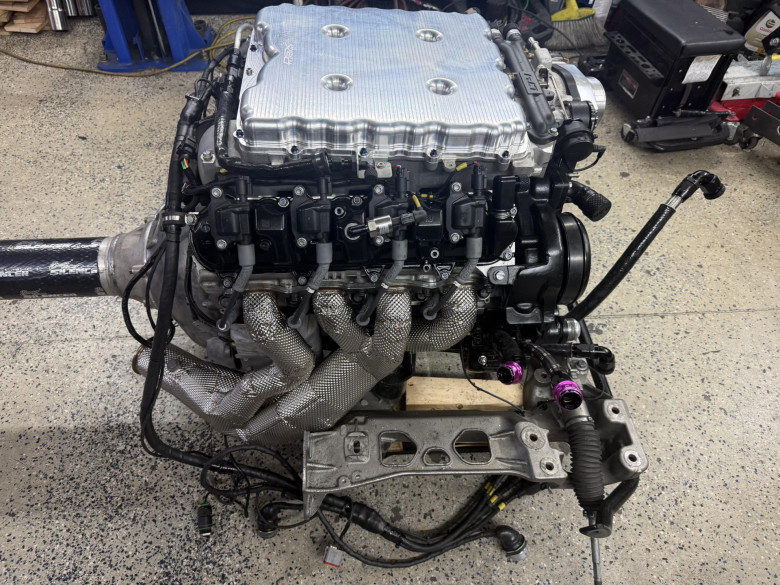
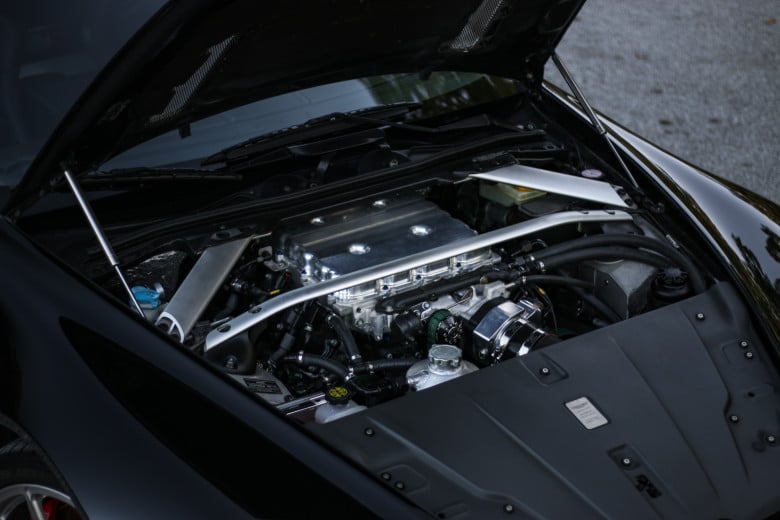
Instead, Blake wanted more torque and horsepower, and with plenty of experience with engine swap projects (LS-swapped RX-7s, a 2JZ-powered 1995 Chevrolet Camaro, and a Coyote-swapped 1965 Mustang), he had a fairly good idea of what was needed. Blake knew he wanted forced induction, and while there were a few options out there, packaging constraints helped narrow the choice. The Vantage’s bonnet is quite low, and that made GM’s supercharged, dry-sumped LT4 from a C7 Corvette Z06 the best choice.
In its current specification, the LT4 uses a Tick Stage II camshaft and dual valve springs, a Jokerz race-ported supercharger, a 2.3-inch upper pulley, and a five-per-cent-overdrive lower pulley. A Nick Williams 103mm throttle body pulls air through a custom 3D-printed five-inch intake, while 1⅞-inch long-tube headers feed a Velocity AP Valvetronic muffler.
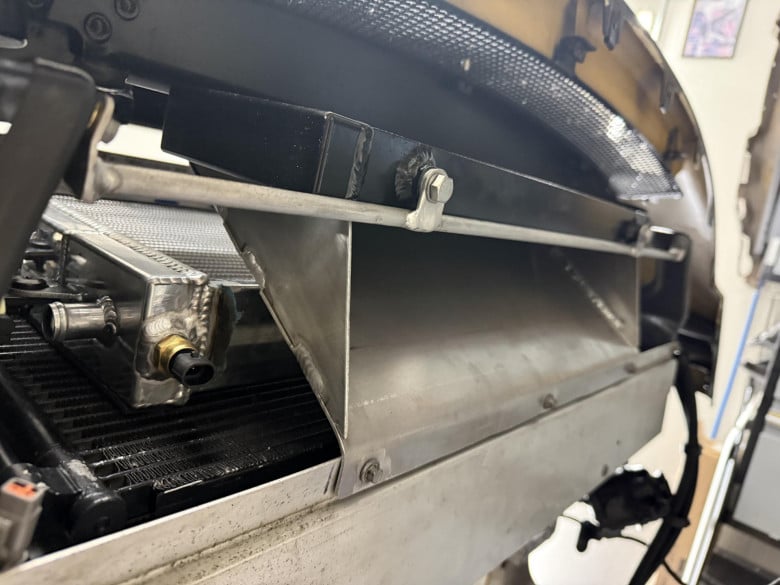
Fuel delivery combines a DeatschWerks 850lph brushless low-pressure pump with a Goliath direct-injection pump and XDI +50-percent injectors. A Bosch brushless intercooler pump and oversized Camaro heat exchanger handle the charge-cooling circuit.
The LT4 made 662hp at the wheels before moving to the current fuel system, ported blower, and slightly more pulley, and while Blake hasn’t made it back to the dyno, he predicts it’ll now be making somewhere over the 700hp ATW mark on E85.
The blown V8 is backed up by a TR6060 from a 2012 C6 Corvette, which Blake says was a relatively straightforward fit, requiring a shortened torque tube, a modified rear bell section, and custom half-shafts.
Because the Vantage was to remain a street car, Blake didn’t want to compromise on comfort and usability, and that meant integrating the Aston’s existing control networks with the MoTeC M142 ECU, supported by an E888 expander and LTCD lambda controller.
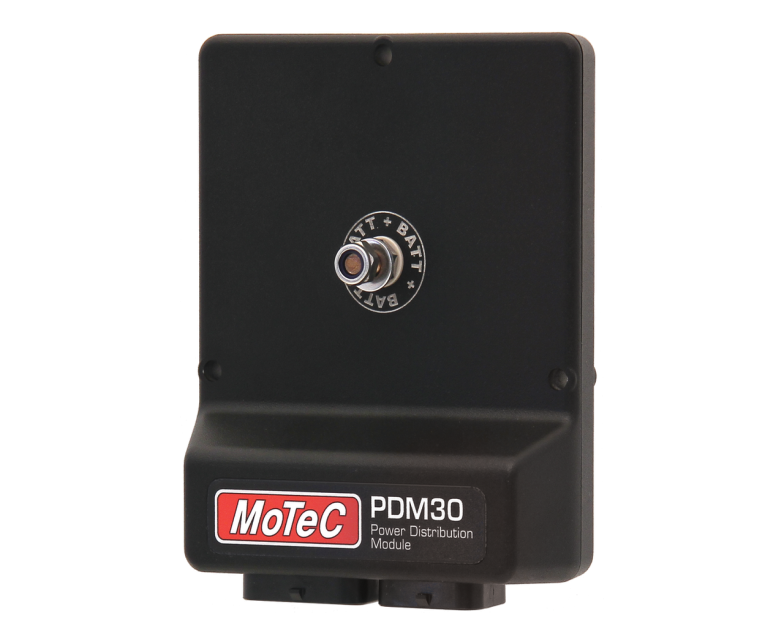
A PDM30 handles drivetrain power distribution, and a Motorsport Electronics Apex 16-channel PDM runs the front chassis electronics. The engine operates independently from a control perspective, but the installation remains integrated with the chassis CAN and other control networks.
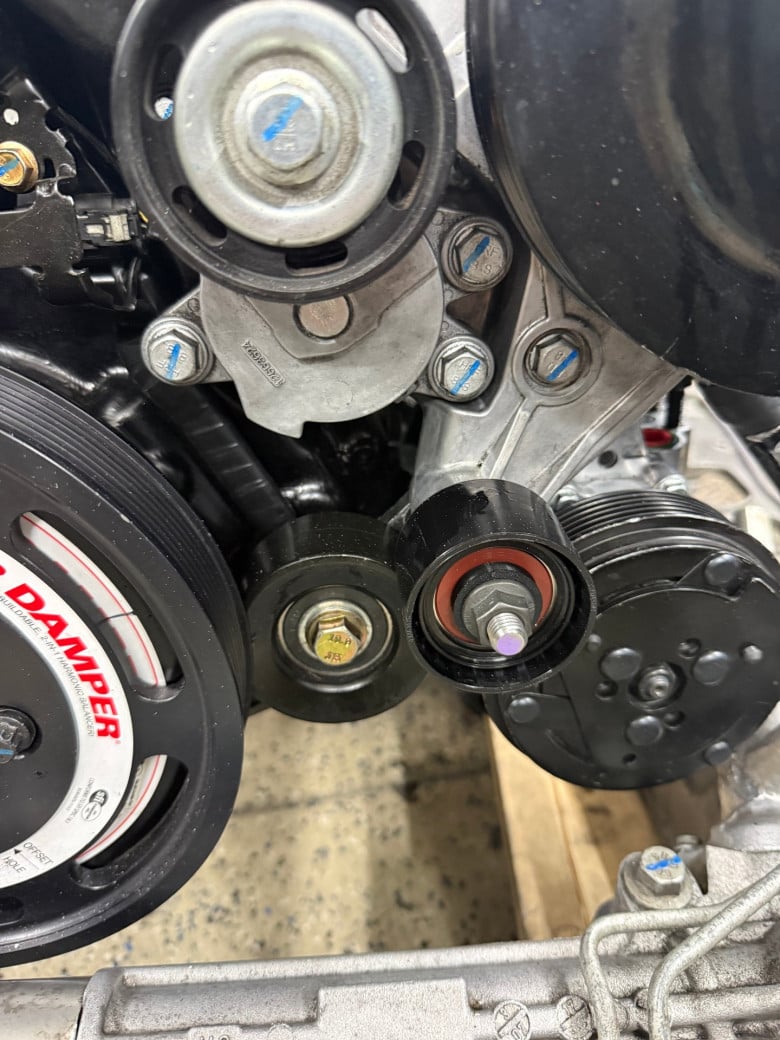
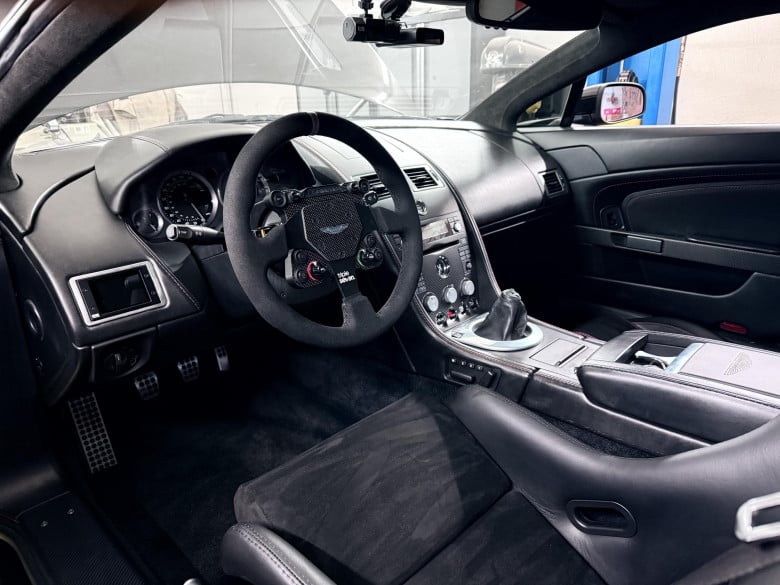
A unique accessory drive accommodates both air conditioning and hydraulic power steering. The factory instrument cluster also works as intended, although Blake did replace the central LCD with a custom screen using MoTeC data.
The original ABS wasn’t happy operating without the factory engine ECU, so Blake replaced it with a BMW-sourced system and integrated that with the MoTeC. Alongside its ABS function, the system provides brake-pressure and balance monitoring, plus wheel-speed information for MoTeC traction control.
Although Blake studied electrical engineering at college, automotive harness construction was a more specialised area in which he had less experience. For him, the most valuable lesson from High Performance Academy’s wiring courses was preparation.
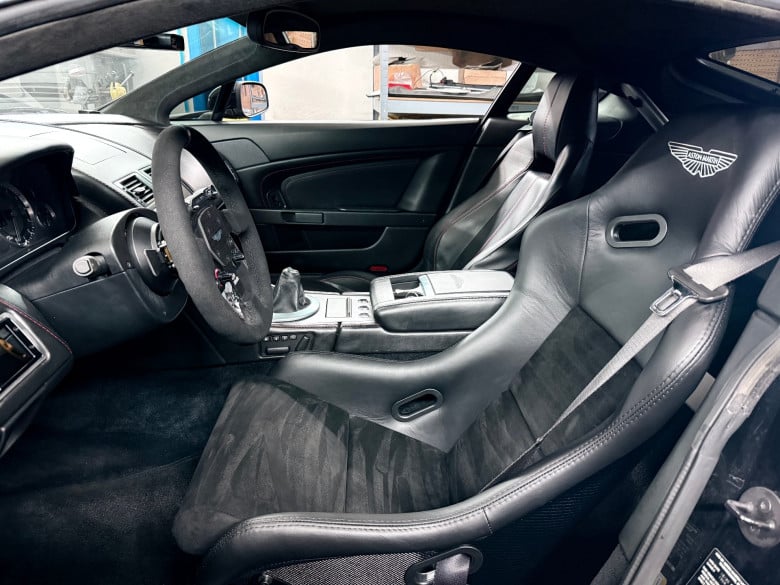
He also applied concentric twisting, motorsport-style connectors, and methods for sealing and protecting the harnesses. Those techniques sit behind the finished installation, but the planning was what helped bring its many systems together.
📸: Chase Clardy
All of this work comes together into an undeniably good-looking street car with some serious performance credentials. And the best part? Unless you know your Aston Martins and your GM motors, you might not even realise it’s an absolute Frankenstein underneath the skin.
📸: Chase Clardy
There’s a whole lot more to this car than what we’ve covered in this article, so if you’d like to dive deeper, check out Blake’s HPA Build profile here.