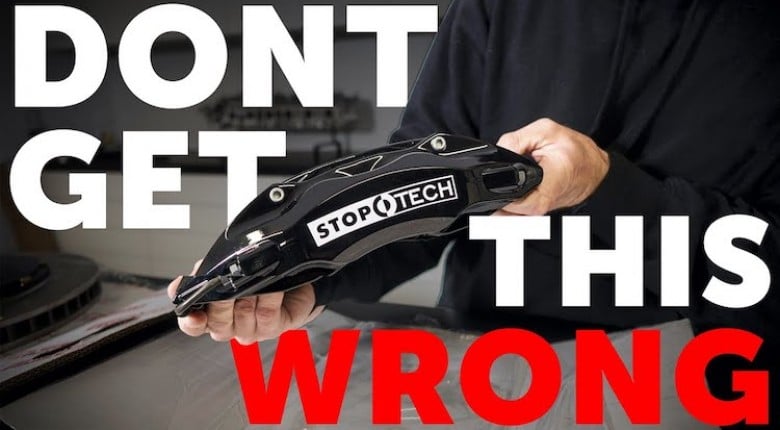
Before you spend money on a 'big brake kit', let's help make sure you understand what actually changes braking torque.
Brake upgrades are one of the most common areas for mistakes in track and performance car builds. Bigger callipers and more pistons do not guarantee better braking, and in many cases, they damage bias, increase pedal travel or create reliability issues, ruining car performance and feel.
In this webinar, Connor explains how brake calipers actually convert hydraulic pressure into clamping force and why stiffness, pad support, piston sizing and thermal capacity matter far more than piston count. Using AP Racing, Endless, Brembo and Wilwood examples, you will see the real differences between sliding, fixed and monoblock designs, and how features like staggered pistons, pad thickness, anti knock back springs and caliper coatings affect performance.
You will also learn how to calculate brake torque from piston area, pad coefficient of friction and disc radius, and how to choose calipers and discs that maintain correct front to rear bias. Examples from Honda Civic and CRX platforms show how to increase thermal mass without destroying pedal feel, and why many cars end up overbraked at the rear.
If you want to upgrade your braking system without harming balance or modulation, this webinar gives you the engineering fundamentals you need. The session also introduces HPA’s Brake System Design and Optimisation course, which includes a full brake system calculator.
TIMESTAMPS
0:00 - Why brake caliper upgrades often go wrong
0:31 - Factory brakes, heat limits and common track issues
1:43 - What a caliper actually does and what defines good braking
3:12 - Modulation, pedal feel and reliability under heat
5:23 - Heat management and disc thermal capacity explained
6:25 - Motorsport caliper design | seals, pistons, coatings
8:29 - Caliper stiffness, compliance and unsprung weight
10:49 - Pad size, pad thickness and the friction equation
13:18 - Pad taper, staggered pistons and pressure distribution
15:47 - Why piston count does not equal more clamping force
19:33 - Sliding, fixed and monoblock calipers compared
24:17 - Multi piece vs monoblock stiffness and weight trade offs
27:29 - Choosing calipers for application, wheels, budget and serviceability
31:17 - Radial vs axial mounting and adapter considerations
33:54 - Anti knock back springs, dust seals and piston materials
36:31 - Building a balanced system | torque, piston area and disc radius
39:32 - Master cylinder sizing, pedal ratio and pedal feel
46:59 - Real world examples | Honda upgrades, SR86 setup and rear bias traps
48:56 - Brake System Design and Optimisation course overview
49:34 - Q&A highlights | pad compounds, sliding pin faults, caliper plumbing
59:59 - Brake bias vs suspension stiffness and caliper placement questions
1:04:48 - Typical front and rear bias ranges for different layouts
1:10:41 - Final questions and webinar wrap up