Looking to make more power and torque from your diesel engine? There are some big differences in how a diesel operates compared to a gasoline motor, and you need to understand them before you start tuning.
In this article: Spark Ignition vs Compression Ignition | Four Stroke Operation Comparison | Air Fuel Ratios and Torque Control | The Diesel Combustion Process | Summary
Spark Ignition vs Compression Ignition
While both engine types share plenty of mechanical similarities, the way combustion is initiated inside the cylinder is completely different, and this has major implications for tuning.
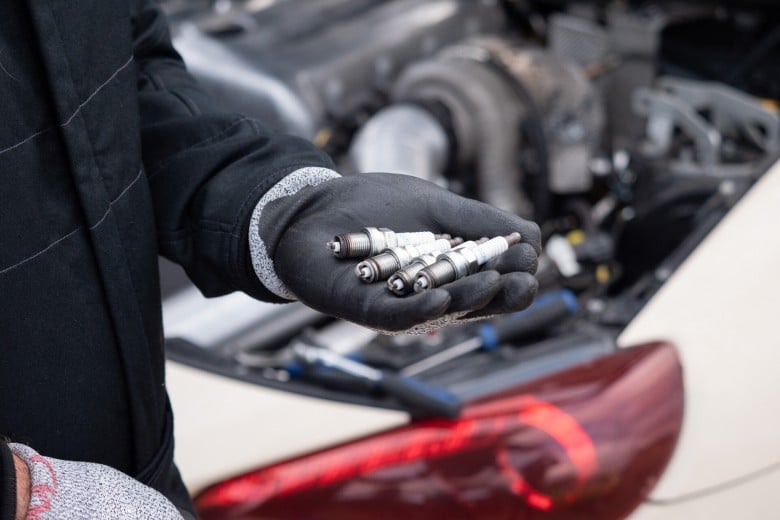
The most significant difference between petrol and diesel engines is how the air-fuel mixture is ignited. A petrol engine operates on a spark ignition process, with spark plugs located in the combustion chamber initiating combustion of a pre-mixed air-fuel charge.
A diesel engine, on the other hand, operates on a compression ignition process. Instead of relying on a spark plug, the heat generated during the compression stroke ignites the fuel once it's injected into the cylinder, and this reliance on compression heat is the defining characteristic of diesel engine operation.
Diesel and Petrol Operation Comparison
Just like petrol engines, most automotive diesel engines operate on the four-stroke principle. These are the intake, compression, power, and exhaust strokes, each occupying 180 degrees of crankshaft rotation. So that means that one complete cycle requires the crank to spin twice, or 720 degrees.
There are some key differences between petrol and diesel operation, though.
During the intake stroke of a petrol engine, a mixture of air and fuel enters the cylinder. In a diesel engine, only air is introduced during this stroke.
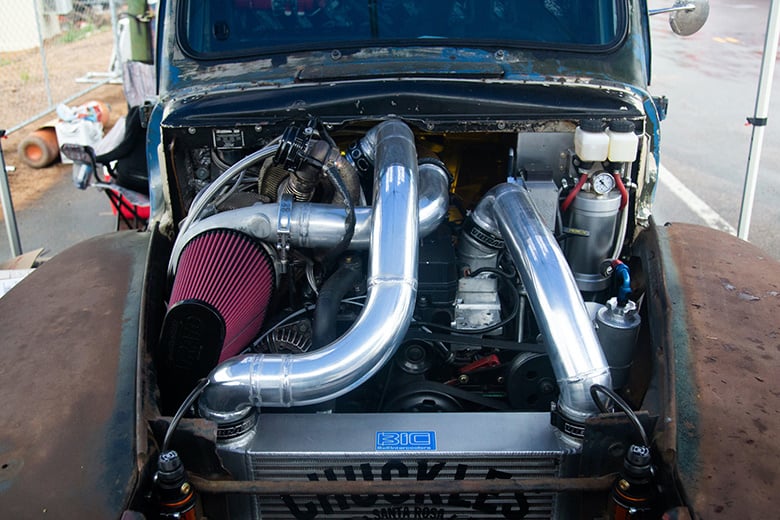
On the compression stroke, the air charge is compressed. As pressure increases, temperature also rises significantly. Diesel engines use much higher compression ratios than petrol engines, commonly between 15:1 and 20:1 or higher. These high compression ratios are needed to generate the temperature required for the fuel to ignite.
Near the top of the compression stroke, fuel is injected directly into the combustion chamber through an injector mounted in the cylinder head. Once injected, combustion begins due to the high temperature of the compressed air, and not by any type of spark.
The power and exhaust strokes then proceed similarly to a petrol engine, with expanding combustion gases pushing the piston downward before being expelled through the exhaust system.
Air Fuel Ratios and Torque Control
One of the biggest operational differences between petrol and diesel engines relates to how torque is controlled.
Because petrol engines operate within a relatively narrow air-fuel ratio range, typically between 0.6 and 1.3 lambda, torque is controlled by adjusting airflow through a throttle body, and fuel is then matched accordingly. Diesel engines operate very differently, as they can run reliably across an extremely wide and lean air fuel ratio range, from lambda 1.0 through to lambda 10 or leaner.
Because of this, diesel engines don't require a throttle body to control torque. Instead, torque output is controlled purely by adjusting the amount of fuel injected. To reduce torque, less fuel is injected.
With that said, to be clear, plenty of modern diesel engines do include a throttle body, but it's not used for torque modulation. Instead, it assists with engine shutdown and exhaust gas recirculation functions.
From a tuning perspective, this difference is critical. In petrol engines, running lean under high load can be dangerous and may prevent proper ignition. In diesel engines, the opposite is true. Lean mixtures are normal and safe, while excessively rich mixtures increase torque, heat, and emissions.
The Diesel Combustion Process
Modern common rail diesel engines operate at extremely high fuel pressures, and it's not uncommon to see pressures around 220 megapascals, which is approximately 32,000 psi. This high pressure serves several important purposes:
- Fuel must be injected against very high cylinder pressure near top dead centre, also known as TDC. To achieve this, fuel pressure must exceed cylinder pressure to create the pressure differential needed.
- The available injection window is very small. so high pressure allows the required fuel volume to be delivered quickly without excessively long injector opening times.
- High pressure improves fuel atomisation. Smaller fuel droplets vapourise more quickly and ignite more efficiently, improving combustion quality.

Summary
Petrol and diesel engines share similar four-stroke mechanical cycles but differ fundamentally in how combustion is initiated and controlled.
Petrol engines rely on spark ignition, operate within a narrow air-fuel ratio range, and control torque via airflow using a throttle body. Diesel engines rely on compression ignition, operate across extremely lean mixtures, and control torque solely through fuel quantity.
Understanding these differences is essential before attempting to tune either engine type, as the strategies and risks involved are fundamentally different.
Want to learn how to tune diesel engines? Everything you need to know can be found in High Performance Academy's range of diesel courses.