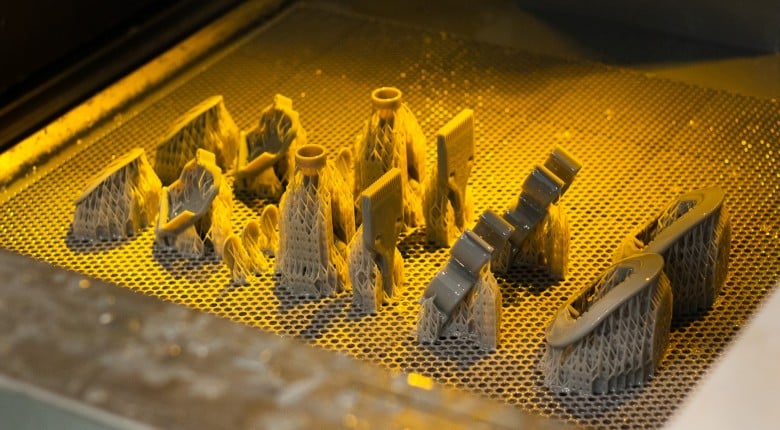
This is the largest resin 3D printer we’ve ever seen, and it completely changes how parts can be produced.
Resin printing has been around for a long time, but machines like this 400-litre SLA system take it to a different level, allowing not just large parts, but hundreds of smaller components to be produced in a single build.
In this walkthrough, we break down how stereolithography (SLA) actually works, using a laser to cure liquid resin layer by layer, and how that compares to other additive manufacturing methods like SLS and FDM.
The discussion covers where resin printing excels, particularly in surface finish, fine detail, and applications like prototyping, mould making, and casting patterns. We also look at material properties, including clear resins, high-temperature options, and how resin parts compare to thermoplastics in strength and durability.
We also explore production advantages, including how larger machines improve efficiency by printing multiple parts at once, as well as the full post-processing workflow from cleaning and UV curing through to final part readiness.
If you are considering additive manufacturing for functional or prototype parts, this gives a clear overview of where large-format resin printing fits and how it compares to other technologies.
TIMESTAMPS
0:00 - The Largest Resin 3D Printer We’ve Seen
0:11 - Why Large Machines Change Production
0:30 - What Is SLA 3D Printing?
1:03 - How Laser Curing Turns Resin Into Solid Parts
1:47 - Why Use Resin Over SLS Or FDM
2:06 - Surface Finish And Fine Detail Advantages
3:04 - Typical Use Cases: Prototyping And Tooling
3:34 - Material Options And Mechanical Properties
4:24 - High Temperature And Functional Applications
5:15 - Build Volume And Maximum Part Size
5:50 - Why Printing Multiple Parts Improves Efficiency
6:05 - Printing Speed And Layer Limitations
6:52 - SLA Vs DLP Technology Differences
7:38 - Why DLP Can Be Faster For Batch Production
8:06 - Post Processing: Cleaning And UV Curing
8:40 - Why Parts Are Not Fully Cured After Printing
9:14 - UV Stability And Long-Term Use Materials
9:55 - Thermoset vs Thermoplastic Behaviour
10:26 - High Temperature Resin Capabilities
10:56 - Where To Learn More About Resin Printing