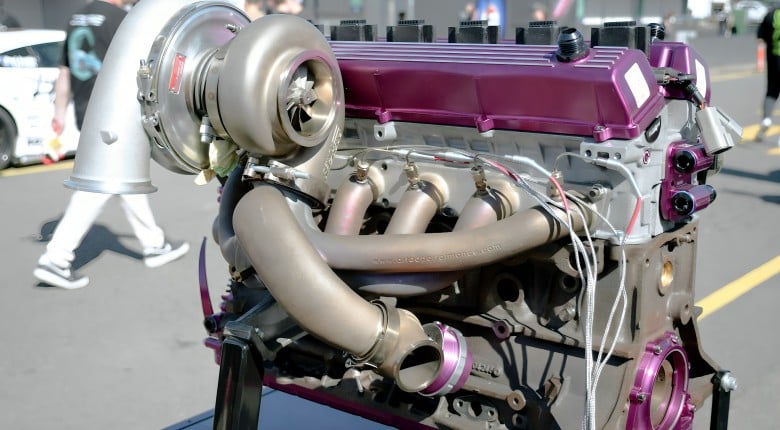
Factory RB26 blocks were never designed for four-digit horsepower, let alone 1,500 plus. Thin cylinder walls, core shift, cracked head stud holes, and deck failures have become common failure points as power levels have climbed.
So what do you do when a factory casting is no longer fit for purpose? You design your own. We sat down with Herman from @Platinumracingproducts to talk about their cast RB26 block, developed from decades of experience pushing Nissan’s iconic straight-six beyond its original limits.
We cover the real problems seen in factory blocks, including inconsistent bore thickness due to core shift and cracking around head studs and oil galleries. While a stock block might survive at 800 to 1,200 horsepower with luck, pushing beyond that becomes a matter of time before failure.
PRP’s solution is a stronger casting with significantly thicker bore walls and a much thicker deck surface. Where factory deck thickness can measure as little as 5.5 to 6 mm, the PRP block extends to 15 mm at the deck, improving head sealing and resistance to cracking under high cylinder pressure.
With a stated capability around the 3,000 horsepower level, the conversation also explores where billet alloy blocks still make sense, particularly in extreme drag racing applications where weight reduction is critical.
If you are building a serious RB combination and want to understand where factory castings fall short and how modern aftermarket blocks address those weaknesses, this interview breaks down the engineering decisions behind the next evolution of the RB platform.
TIMESTAMPS
0:00 - Why Factory RB26 Blocks Crack And Fail
0:39 - Core Shift And Inconsistent Bore Thickness
1:02 - Real-World Cracking Around Studs And Oil Galleries
1:30 - The Cost Of Bracing And Repairing Stock Blocks
2:17 - Designing A Clean-Sheet Cast RB26 Block
2:42 - Short Deck Vs RB30 Combinations
3:18 - Bore Size Limits: Stock Vs PRP Casting
3:43 - Increased Deck Thickness And Head Sealing
4:15 - Extended Deck Height And 3.0L Configuration
4:59 - Stroker Clearance And Bottom-End Improvements
5:35 - Oil Control And Internal Oiling Revisions
6:00 - Decades Of Testing And Failure Analysis
6:33 - Target Power Handling: Toward 3,000 Horsepower
6:47 - Cast Block Vs Billet Alloy Block Applications
7:26 - Pricing And Available Variants
8:19 - Ordering And Availability Details