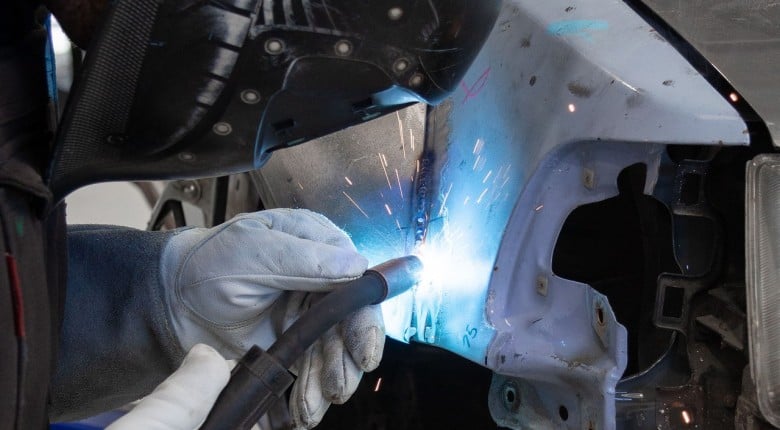
A MIG welder in the wrong hands is just an expensive way to make sparks, but in the right hands a MIG can be one of the most versatile tools in your workshop.
There's nothing quite like the frustration of spending an afternoon practising MIG welds, only to realise you've been fighting the wrong gas mixture, incorrect wire speed settings, and a grounding issue all at once. The truth is, most MIG welding problems come down to just five fundamental questions that every beginner struggles with -- and once you have these sorted, you can really start to make the most of your precious time.
In this article: What Gas Should I Use? | Setting Wire Speed and Voltage | Understanding Machine Thickness Capabilities | Getting Good Penetration Without Blowing Holes | Troubleshooting Spatter, Popping, and Inconsistent Welds
1.) What Gas Should I Use When MIG Welding?
Shielding gas selection is one of the most important decisions you'll make when setting up your MIG welder. The purpose of shielding gas is to prevent exposure of the molten weld pool to oxygen, nitrogen, and hydrogen present in the atmosphere. Without proper shielding, you'll encounter porosity, excessive spatter, and damage to consumables.
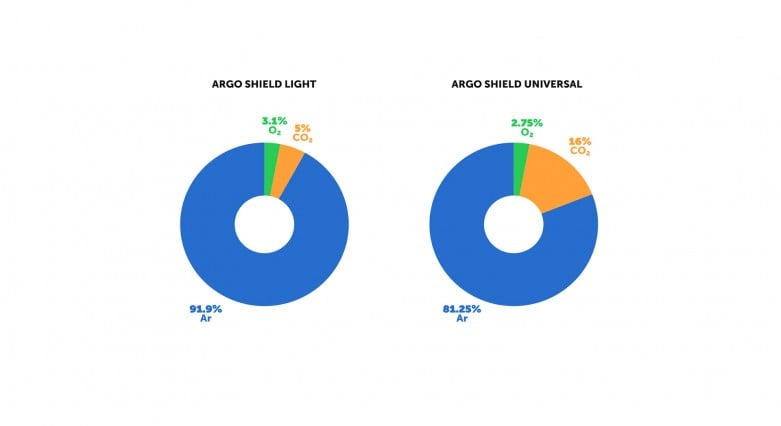
For mild steel welding, the most common choice is a mixture of between 75 to 95 percent Argon and 5 to 25 percent Carbon Dioxide (CO2). This combination provides superior arc stability, better puddle control, and significantly reduced spatter compared to pure CO2. While pure CO2 is the least expensive option and provides very deep weld penetration for thick materials, it produces a less stable arc and considerably more spatter.
In motorsport applications, which typically focus on lighter material thicknesses, you don't need large amounts of CO2 to assist in penetration. Instead, you want weld stability and minimal spatter. Products like Argoshield Light, which consists of 2 percent Oxygen, 5 percent CO2, and the remainder Argon, are ideal for this purpose. The higher concentration of Argon and Oxygen assists in arc stability while keeping spatter to a minimum.
Oxygen is also a reactive gas used in small ratios to improve weld pool fluidity, penetration, and arc stability in low carbon and stainless steels. If you're MIG welding non-ferrous metals such as aluminium, 100 percent Argon is the common starting point, and this is the same gas many people already use for TIG welding aluminium. There are exceptions when it comes to some thicker non-ferrous metals that are less common in motorsport fabrication, where argon/helium blends may be used.
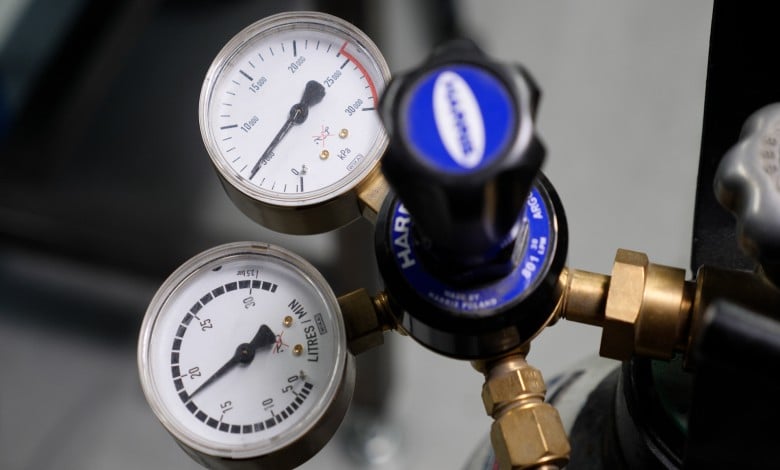
When setting up your gas flow for light motorsport fabrication, around 10 litres per minute, or approximately 21 cubic feet per hour, is a useful starting point. From there, adjust as required for nozzle size, joint access, drafts, and the actual shielding you're seeing at the weld, as too little flow can cause porosity while too much flow can create turbulence and introduce atmospheric contaminants into the gas stream.
2.) What Wire Speed and Voltage Should I Use?
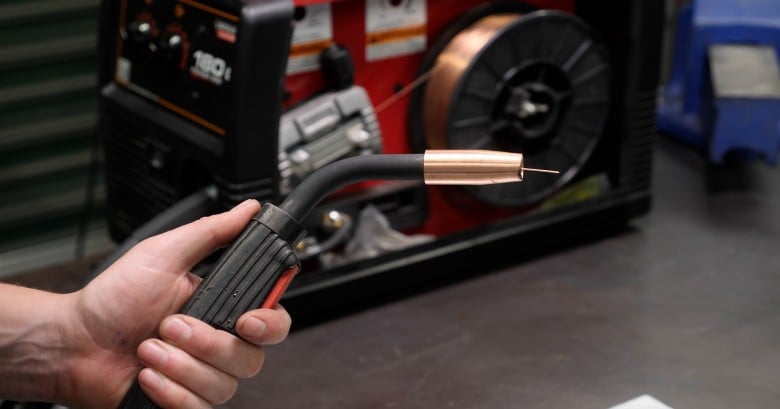
Understanding the relationship between wire speed and voltage is fundamental to producing quality MIG welds. MIG welding is a constant voltage process that fluctuates the amperage levels to match the wire feed speed. This means the voltage is set as the electrical force that pushes the current through the contact tip to create the arc and resulting molten weld pool.
Matching the wire speed to your weld current is paramount in creating a strong and good-looking weld. The thicker your material, the more weld current you'll need to produce, and therefore more filler wire you'll need to service this hotter arc.
A basic rule of thumb used in the industry is 40 amps per millimetre of material thickness, or one amp per thousandths of an inch. Using this guide, a 200 amp machine has the capability of welding extremely thin materials at just half a millimetre, all the way up to around 5mm thick plate.
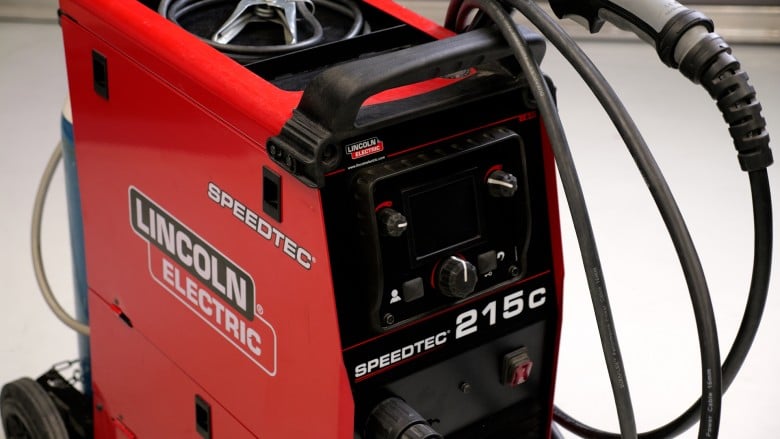
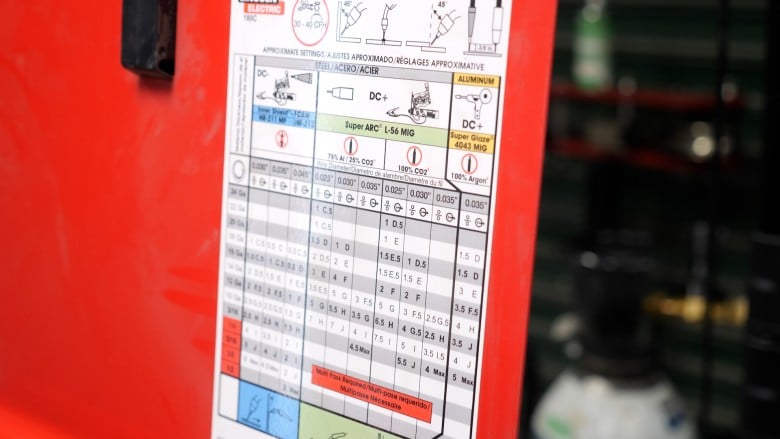
Most MIG welders will have a quick start guide that references typical settings for particular situations. These are usually located in the user manual or stuck on the inside of the wire compartment door. Modern machines with synergic functions take this a step further by automatically adjusting wire speed and welding current based on the material type, thickness, wire diameter, and gas type you're using.
If your machine doesn't have synergic mode, you'll need to find the correct settings while performing a series of test welds. Start with the manufacturer's recommended settings for your material thickness, then fine tune by listening to the weld and observing the molten pool. You're looking for the weld current to achieve an adequate level of penetration into the base material without burning a hole through to the other side.
The key to dialling in your settings is understanding the feedback your welder gives you. If you have irregular popping or feel the wire stubbing into the weld pool, your wire feed speed may be too high for the voltage, or your voltage may be too low for the selected wire feed speed. If the weld becomes very quiet, overly fluid, or appears too hot for the material, reduce the heat input and return to a stable short-circuit arc with a consistent crackling sound.
Adjusting the wire speed and welding current will become a natural part of your weld process. Cycle through the settings you have on your machine and spend some time getting to know what you prefer. When everything is set perfectly and the machine is crackling away as it should, you have a sense of confidence that'll allow you to concentrate on your technique.
3.) What Material Thickness Can My MIG Welder Handle?
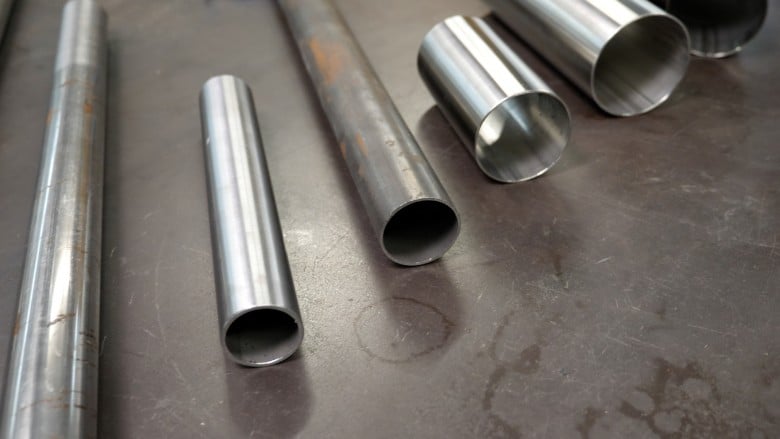
Your MIG welder's output amperage directly determines the maximum thickness it can handle and the thinnest material it can weld without burning through. Most 200 amp machines, which cover the vast majority of work done in motorsport fabrication, have the ability to weld materials as thin as 0.5 of a millimetre right up to around 5 millimetres in thickness in a single pass.
The amperage specification refers to the range of output the machine is capable of producing, from a base amperage of roughly 20 amps all the way up to its peak output. Using the 40 amps per millimetre rule of thumb, you can quickly calculate whether your machine has sufficient power for your project.
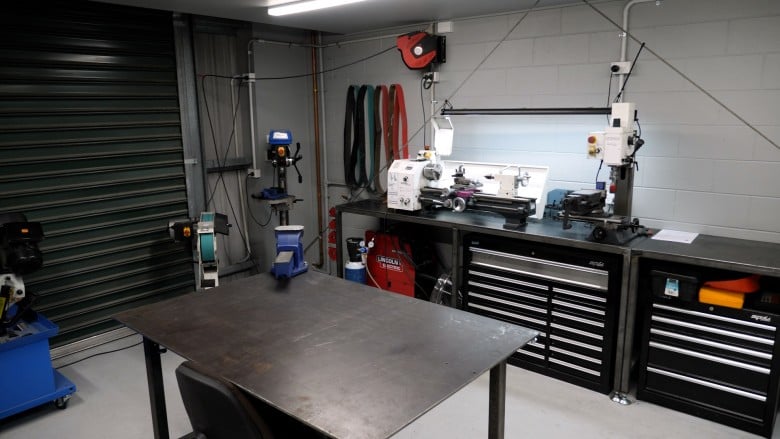
Wire diameter also plays a role in thickness capabilities. The most common sizes used in motorsport applications are 0.8mm and 0.9mm diameter MIG wire, which are suitable for the material thicknesses most commonly encountered in motorsport fabrication.
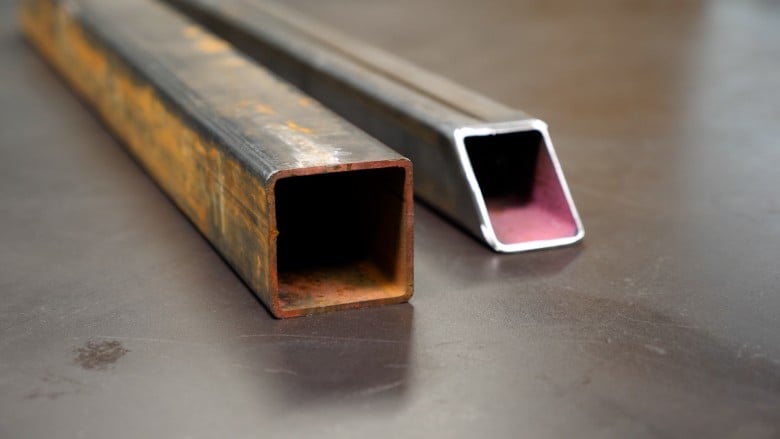
For thicker materials beyond your machine's single-pass capability, you have options. Multiple passes can be used to build up weld thickness and achieve proper penetration. To assist with weld penetration on thicker materials such as 3mm and up, a 45 degree bevel can allow the weld to sink into the root of the joint without adding too much heat, increasing both the speed of the weld and its inherent strength.
It's important to consider duty cycle when working at or near your machine's peak amperage. This is measured in percentage and lets you know the amount of time in a ten minute period that the MIG machine can output this amperage for. Many machines have a duty cycle percentage around 25 percent at their advertised peak amperage level, meaning the welder will only be able to output this peak amperage for two and a half minutes non-stop before requiring a rest period.
4.) How To Get Good Weld Penetration Without Blowing Holes?
Achieving the sweet spot between adequate penetration and avoiding burn-through is a balancing act that involves heat control, travel speed, and torch angle. The goal is to achieve adequate fusion and penetration for the joint design without creating holes, excessive distortion, or unnecessary heat input.
Your travel speed plays a crucial role in managing heat input. Moving too slowly allows heat to build up and can cause burn-through, while moving too quickly results in insufficient penetration and weak welds. The amount of time spent in one position builds up the molten weld pool, and as soon as you begin moving the torch along the workpiece, the weld pool will cool and solidify.
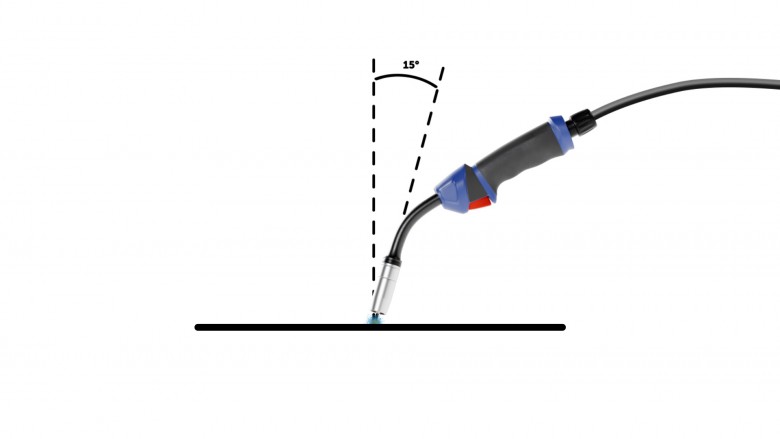
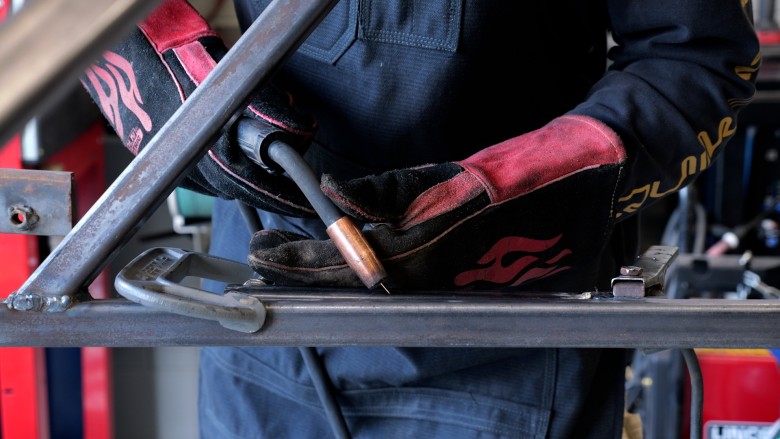
Torch angle is equally important for controlling where the heat goes. Depending on the position of the two parts you're welding together, you need to make sure that even amounts of heat are inputted into each side. To do this, angle your MIG gun into the root of the weld seam at the intersection angle of the two parts. This keeps the penetration and inclusion into the metal even and ensures the weld seam properly joins the two parts.
Stickout and torch distance affect arc stability, shielding, and current delivery, but it's useful to understand that the current change is mainly related to the distance between the contact tip and the workpiece. For the light-gauge steel fabrication common in motorsport, keeping a consistent stickout and torch distance, often around 10mm as a starting point, helps maintain a stable arc, good visibility, and effective gas coverage. Increasing the contact-tip-to-work distance slightly can increase resistance and reduce current, which may help control heat on thinner sections. This can be useful when you move onto a thinner section that would otherwise be more susceptible to burn-through, but too much distance can reduce penetration, shielding, and arc stability.
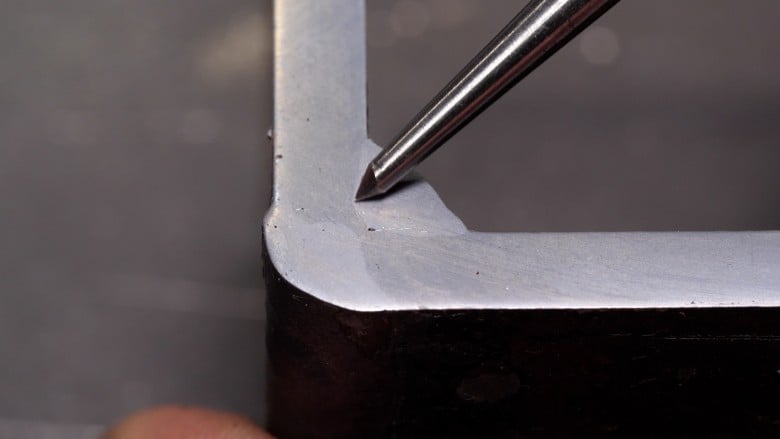
For welding dissimilar material thicknesses together, you may need to use a weaving motion of the torch to focus more heat on the thicker portion of your workpiece. However, be mindful that weaving your torch during a fillet weld can starve the root of the joint from adequate fusion and penetration, so if you need a larger weld it may be worth inputting more current and wire speed into your workpiece instead.
The best way to verify your penetration is through destructive testing. Performing bend tests or cutting and etching your test welds reveals the profile of the weld and the depth of penetration into the root of the joint. For a joint that requires full penetration, the weld must fuse through to the root of the joint, but many motorsport fabrication welds instead require adequate root fusion, correct weld size, and controlled heat input. This testing builds confidence before tackling critical structural projects.
5.) How To Troubleshoot Spatter, Popping, and Inconsistent Welds
Understanding what your welder is telling you through sound and visual cues is essential for diagnosing and fixing common problems. The arc sound provides immediate feedback about whether your settings are correct.
For much of the thin steel fabrication common in motorsport, the short-circuit transfer method, with its fast-paced crackling sound, is usually the method of choice. This should sound like crispy bacon crackling. If you're hearing irregular popping or feeling feedback through the torch, the wire feed speed and voltage are likely out of balance, so adjust them together rather than assuming wire speed alone is the issue. Conversely, if your weld is very quiet, overly fluid, or producing too much heat for the material, reduce the heat input and bring the arc back into the stable short-circuit range.
A slow, drawn out, inconsistent pop and crackle sound indicates you've shifted into globular transfer method, which uses high heat input and isn't ideal for the thinner materials common in motorsport. If the weld becomes almost silent, you've entered spray arc transfer, which is definitely too hot for thin materials. Both situations require reducing the arc current to return to the safe crackling short circuit state.
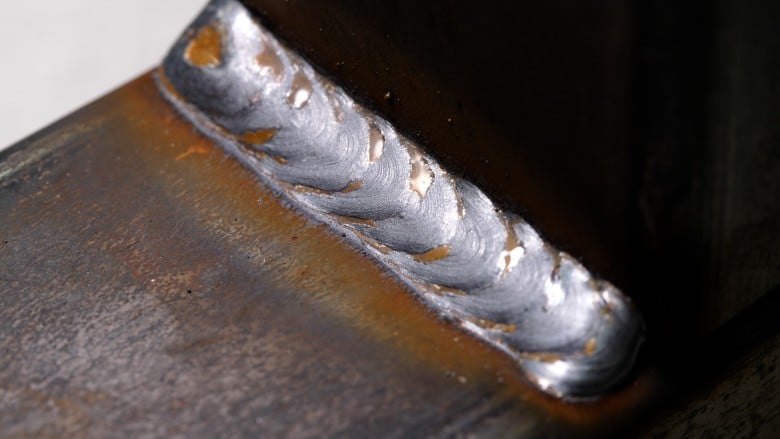
Excessive spatter has several causes. The most common is a lack of shielding gas, which can result from inadequate flow rate, obstructions in the gas path, or leaks in the system. Over time, weld spatter can stick to the gas nozzle and block gas from flowing smoothly onto the workpiece. The inclusion of atmosphere into the molten weld pool is easy to see as the amount of spatter will increase, the weld pool will begin to deform, and you'll see small air bubbles and a brown haze of smoke being emitted from the weld area.
Porosity, which appears as small holes or bubbles in the weld, indicates a lack of shielding gas or contamination. This can be caused by dirty material, insufficient gas flow, obstructions in the gas nozzle, or wind blowing away your shielding gas. By closing doors, creating wind blocks, or simply increasing the flow of shielding gas, this can be overcome. However, using too much gas can be counterproductive, as the turbulence can cause inclusions of atmospheric contaminants into the gas stream.
Brown discolouration on steel, or blackening on aluminium, is a sign of a lack of shielding gas or contaminants coming out of the material you're welding. Material preparation is critical. When preparing materials through cutting, marking, and drilling, use clean, appropriate abrasives and avoid contaminating the weld area with dirty, shared, or unsuitable tools. Oils, rust, paint, mill scale, oxide, and other surface coatings should be removed before welding, with extra care taken on aluminium and stainless to avoid embedded abrasive contamination or cross-contamination from tools used on other materials.
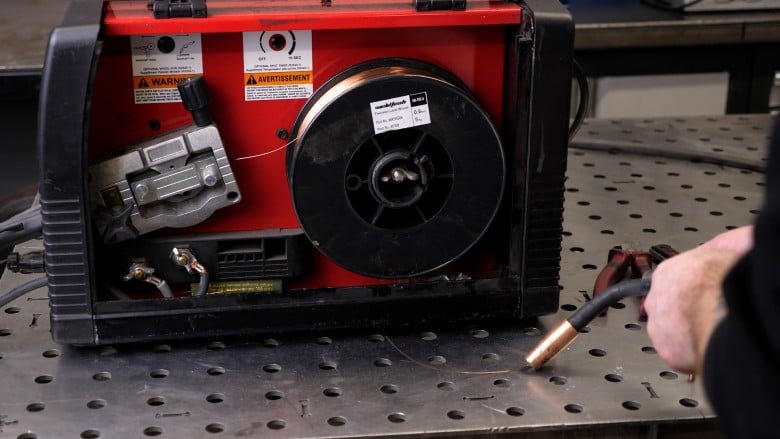
Wire feed issues can cause inconsistent welds. The drive rollers need precise tension adjustment. Too much tension will crush the wire and affect wire speed, while also impacting the contact tip's ability to direct current smoothly into the wire. Too little tension may cause irregular wire feeding and sticking. The wire drive mechanism and understanding how to adjust it will take a lot of the guesswork out of your MIG welding experience.
Finally, don't overlook the earth clamp connection. The earth clamp must be properly fastened to the metallic bench or workpiece to complete the circuit. A poor ground connection will create erratic arc behaviour and inconsistent welds.
What Next For My MIG Welding?
Mastering MIG welding comes down to getting the fundamentals right before you focus on technique. To take your welding to the next level, here's what to remember:
- Select the right shielding gas for your material -- for mild steel, a 75-95 percent Argon and 5-25 percent CO2 blend is your starting point.
- Dial in wire speed and voltage together by listening to the arc -- you're aiming for that consistent crispy crackling sound.
- Use the 40 amps per millimetre rule to understand what your machine can handle and stay within its limits.
- Control penetration through torch angle, consistent stick-out length, and travel speed -- and always verify with test welds before tackling anything structural.
- When troubleshooting, let the arc sound guide you, and remember that wire speed and voltage need to be adjusted together to keep the arc stable.
The journey to becoming proficient at MIG welding takes practice and patience, but with these fundamentals in place, you're well-equipped to produce strong, reliable welds on your motorsport projects. If you want to build a complete foundation in MIG welding techniques and take your fabrication skills to the next level, the Practical MIG Welding course provides comprehensive step-by-step instruction from setup through advanced techniques.