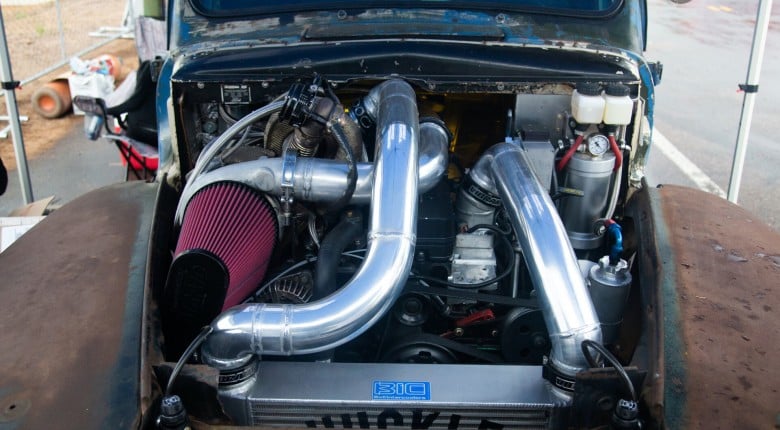
Turbocharging is a defining feature of modern diesel performance engines, allowing us to leverage diesel efficiency while still achieving high power density. Because of this, boost control becomes a critical part of tuning any turbocharged diesel engine... But there are a few things you NEED to know.
While the core principles of turbocharging are similar between diesel and gasoline engines, the way a diesel engine operates introduces some important differences that directly impact how boost is generated and controlled.
In this article: What Drives Boost Pressure? | Diesel vs Petrol Boost Behaviour | The Relationship Between Fuel and Boost | Tuning Considerations | VNT vs Wastegate Turbochargers | Summary
What Drives Boost Pressure?
The performance of a turbocharger is directly related to the energy available in the exhaust gases, and this energy comes from two key sources:
The first is heat -- exhaust gas temperature.
The second is flow -- the mass of exhaust gas moving through the turbine.
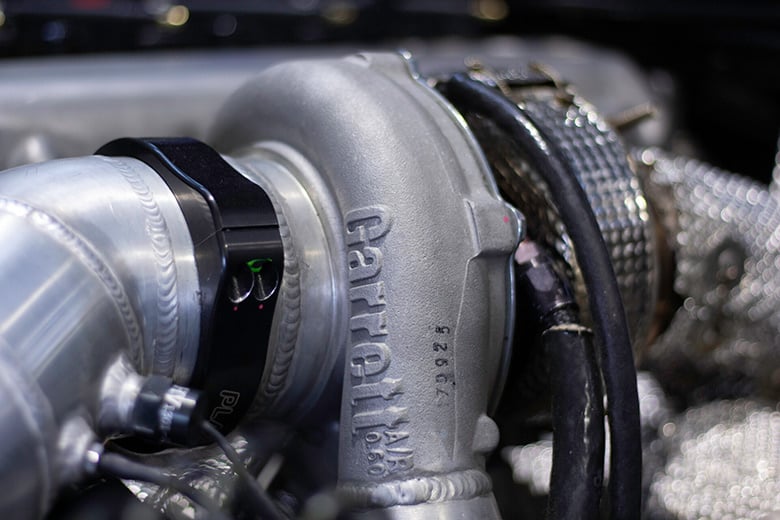
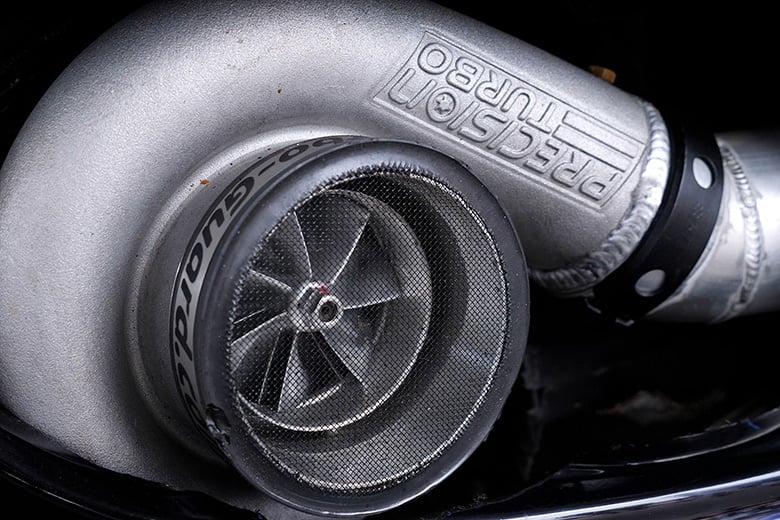
As exhaust temperature and flow increase, more energy is delivered to the turbine wheel. This increases turbo speed, which in turn increases compressor output and boost pressure. Understanding how this energy is generated is key to understanding diesel boost control.
Diesel vs Petrol Boost Behaviour
One of the biggest differences between diesel and gasoline engines is how consistent the exhaust energy is.
In a gasoline engine, air-fuel ratios operate within a relatively narrow range. This means exhaust gas temperature (and therefore turbo-driving energy) is fairly stable for a given load and RPM.
In a diesel engine, however, air-fuel ratios can vary dramatically. This leads to a much wider range of exhaust temperatures under the same operating conditions.
For example, at a fixed RPM and boost level, a diesel engine might see exhaust temperatures ranging from around 300°C to over 900°C, depending on fueling.
This variability is what makes diesel boost control fundamentally different... and more complex.

The Relationship Between Fuel and Boost
In a diesel engine, increasing fuel delivery doesn't just increase torque, it also increases exhaust temperature. This added heat provides more energy to the turbine, which increases turbo speed and raises boost pressure.
At the same time, increasing boost raises airflow into the engine, which alters the air-fuel ratio, creating a feedback loop between fuel and boost.
More fuel means higher exhaust energy, which means more boost, more airflow, and a changed air fuel ratio.
Because of this interaction, changes to fuel and boost don't exist in isolation. Adjusting one will influence the other.
This is why diesel tuning often becomes an iterative process. Here at High Performance Academy, we take the approach of making adjustments to fuel, then boost, then revisiting fuel again until the desired result is achieved.
Tuning Considerations
The relationship between fuel and boost means that tuning diesel engines requires careful balancing.
Unlike gasoline engines, where boost targets can be relatively predictable, diesel engines require ongoing refinement as changes are made.
Key considerations include:
- Fuel delivery directly affects turbo speed and boost pressure
- Boost pressure affects airflow and air-fuel ratio
- Both must be tuned together to achieve stable and efficient operation
- Rather than making single changes in isolation, tuners need to work back and forth between fuel and boost adjustments to reach the desired performance targets.
VNT vs Wastegate Turbochargers
Another key difference in diesel engines is the type of turbocharger used for boost control.
Many diesel engines use VNT (Variable Nozzle Turbine) or VGT (Variable Geometry Turbine) turbochargers. These systems use adjustable vanes inside the turbine housing to control how exhaust gas flows onto the turbine wheel.
By adjusting these vanes, the turbo can behave like a smaller unit at low RPM, improving response, and like a larger unit at high RPM, reducing back pressure.
In contrast, many gasoline engines use traditional wastegate-controlled turbochargers. The wastegate works by diverting excess exhaust gas around the turbine, limiting turbo speed and controlling boost pressure.
While both systems achieve boost control, VNT turbos provide more flexibility and responsiveness, which is why they're so commonly used in modern diesel applications.
Summary
Boost control is a critical part of tuning turbocharged diesel engines, but it behaves differently compared to gasoline engines due to the wide variation in air-fuel ratios.
Turbocharger speed, and therefore boost pressure, is driven by exhaust energy, which in diesel engines is heavily influenced by fuel delivery.
This creates a strong relationship between fuel and boost, where changes to one will directly impact the other, requiring an iterative tuning approach.
Modern diesel engines often use VNT or VGT turbochargers to improve boost control and responsiveness, as opposed to traditional wastegates.
Understanding this relationship between fuel, exhaust energy, and boost is essential for achieving reliable and effective diesel engine performance.
Want to learn everything you need to know about tuning diesel engines? Start here with some free lessons.