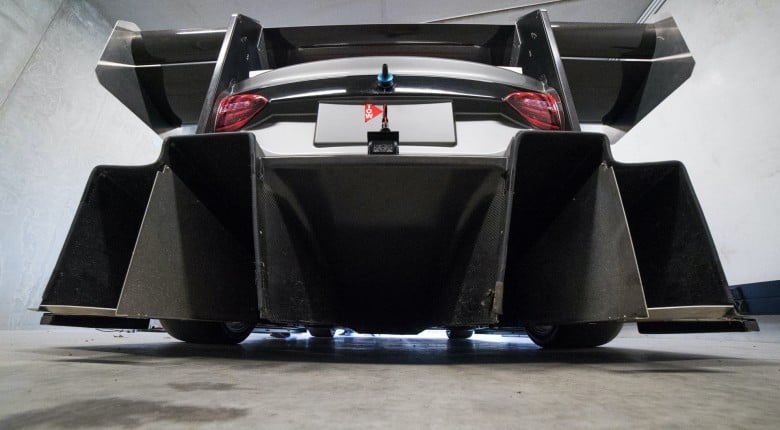
How can adding a rear wing make you both faster and slower at the same time?
Aerodynamic downforce and drag are two forces that every performance car generates, and understanding how they interact is one of the most important skills in going faster on track. More downforce increases cornering speed, but it also creates drag that costs straight-line speed. Getting that balance right depends on your car and the circuit you're running, and the answer is rarely obvious without testing.
In this article: What Causes Downforce? | What Causes Drag? | Why More Downforce Usually Means Faster Lap Times | The Role of Drag and When It Matters | Track and Car-Specific Aerodynamic Balance | Determining the Optimum Setup
What Causes Downforce?
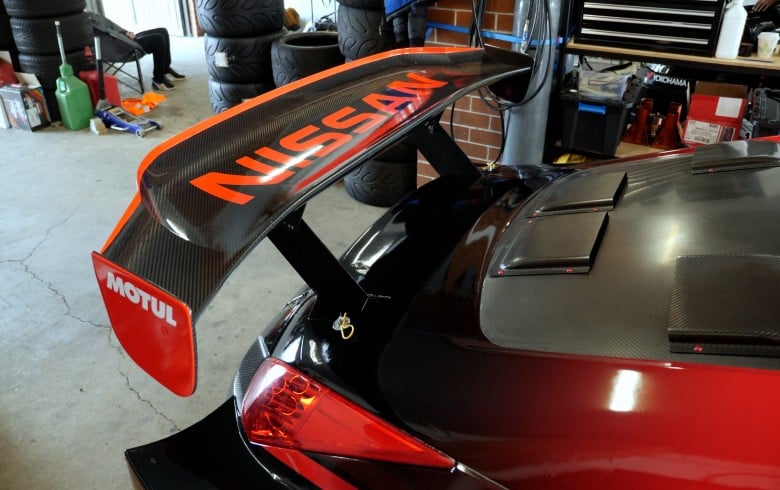
Downforce is generated by creating a pressure differential across a surface, where the pressure on the underside is lower than on the top. That pressure difference is achieved by increasing the velocity of airflow beneath the surface, which lowers pressure in accordance with Bernoulli's principle. The result is a net force pressing down on the car.
On a car, this is achieved in two main ways. Wings use their curvature and angle to accelerate air across the suction surface, generating low pressure beneath and downforce on the wing. The underfloor and diffuser work similarly: the floor creates a constriction that accelerates airflow beneath the car, lowering pressure relative to the ambient pressure behind it. That pressure difference across the underfloor is the primary source of downforce on most purpose-built performance cars.
To maximise downforce, the goal is to maximise pressure differential across the most horizontal surfaces possible. As a surface angles towards vertical, an increasing proportion of the pressure differential contributes to drag rather than downforce.
What Causes Drag?
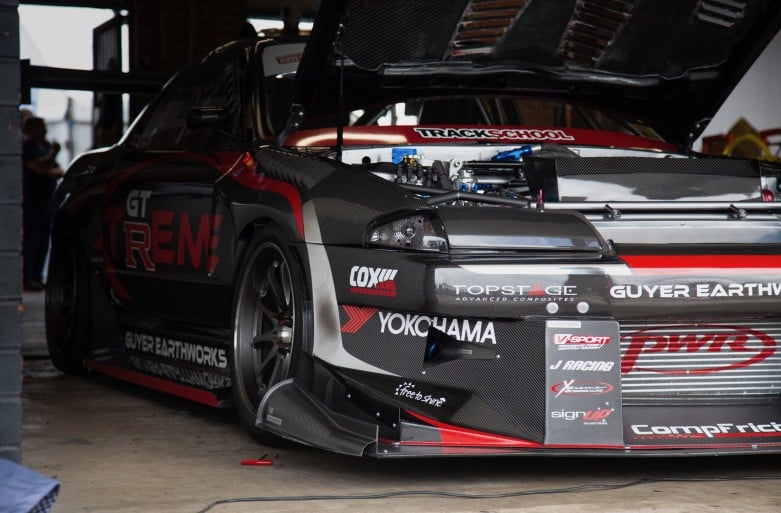
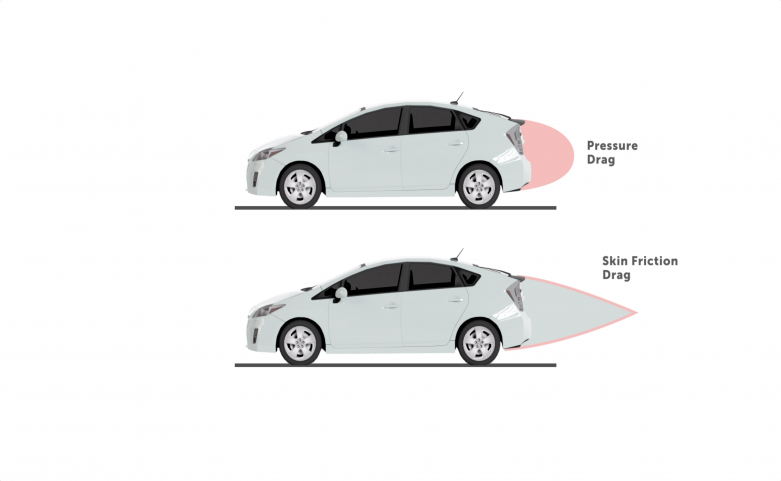
Drag has two main components. Pressure drag arises from pressure differentials on rearward-facing surfaces. The high pressure region at the front of the car and the low pressure wake at the rear are the two dominant sources on a road car. Any suction on a rearward-facing surface also contributes, which means wings and diffusers that generate downforce inherently produce pressure drag as a byproduct.
The second component is skin friction drag, which comes from shearing forces within the boundary layer as air moves across the car's surface. Smoother surfaces and laminar boundary layers produce less skin friction drag. Turbulent boundary layers produce more.
On high downforce cars, pressure drag dominates and skin friction drag is a relatively minor consideration. Skin friction becomes more significant on very low drag vehicles with large surface areas and minimal aerodynamic loading, such as solar cars or land speed record vehicles.
Why More Downforce Usually Means Faster Lap Times
Adding downforce increases cornering speed and typically improves lap times. Although there is a theoretical upper limit where too much downforce can overload the tyres, this is not a concern for standard club-level cars, which are well below that threshold. Because of this, in most cases at the club level, more downforce is beneficial.
The Role of Drag and When It Matters
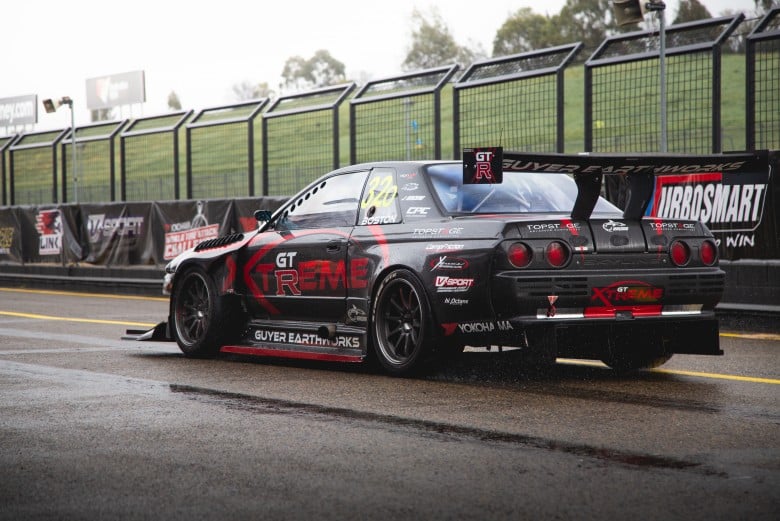
Drag must be overcome using engine power, and the power required increases with the cube of the car's speed. This means drag becomes increasingly costly as speed rises. However, cars typically reach their top speed only during a small part of any lap, and those high-speed sections are covered quickly. Most of the lap is spent at lower speeds where drag has comparatively little effect on power output.
This means a reduction in straight-line speed is often a worthwhile trade for more cornering performance. A loss of 10 km/h at the end of a straight is a reasonable compromise if it delivers a gain of 5 km/h through low to medium speed corners.
Track and Car-Specific Aerodynamic Balance
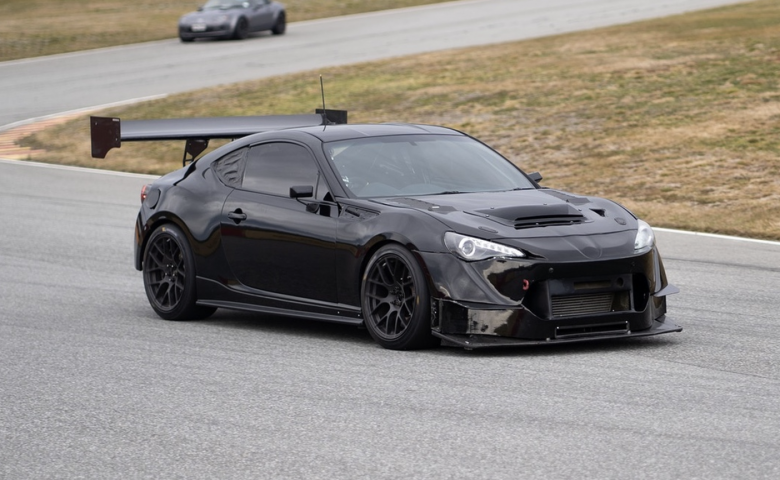
The right balance between downforce and drag depends on the car and the circuit. Tracks with long straights, such as Monza or Le Mans, favour low-drag setups. At Le Mans, a component might be considered worthwhile if it generates five points of downforce for every point of drag. At a lower-speed circuit like autocross, drag is almost irrelevant, and even a one-to-one ratio of downforce to drag could be beneficial.
Average speed, maximum speed, and corner speed all influence what aerodynamic setup works best. More power allows a car to tolerate more drag, while high mechanical grip may require a more aerodynamically efficient setup to complement it.
Most club-level touring cars are overpowered and overweight relative to the amount of aero they carry. In around 90 percent of cases, these cars benefit more from increased downforce, even at the cost of higher drag. It is rare for a club-level car to gain lap time by prioritising reduced drag over increased downforce.
Determining the Optimum Setup
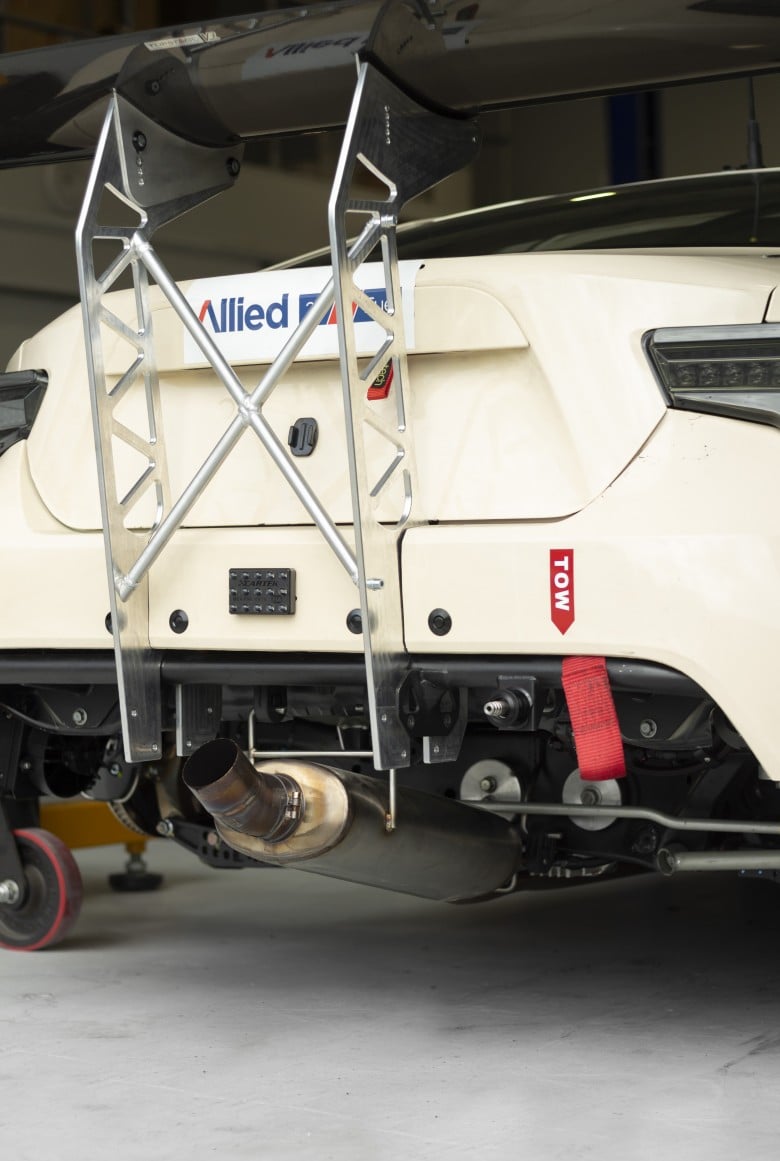
At the professional level, lap time simulation is used to set targets for drag and aerodynamic efficiency, which are then refined through on-track testing. At the club level, simulation is less reliable, and the stopwatch becomes the primary tool. Running through different drag levels, for example by adjusting rear wing angle, and comparing lap times is the most practical way to find the optimum balance for a given circuit.
While this covers the key points around how downforce and drag affect lap times, there is still much more to learn from ex-Mercedes-AMG Petronas Formula One Team aerodynamicist Dr Kyle Forster in the Aerodynamics Fundamentals course.