Getting set up for ECU remapping with WinOLS requires more than just the software itself. Choosing the right flashing hardware is a critical step, and the best option will depend on your budget and the scope of vehicles you plan to work with.
In simple terms, to actually read and write your tune into an ECU, you'll need a compatible hardware and software interface alongside your WinOLS license. The good news is that there are options available across a wide range of budgets, whether you're a home enthusiast tuning your own car or a professional workshop working across a broad range of vehicles.
In this article: Choosing Your Flashing Hardware | Budget-Friendly Options | Professional Hardware Solutions | Master and Slave Kits Explained | Binary File Recommendations | Conclusion
Choosing Your Flashing Hardware
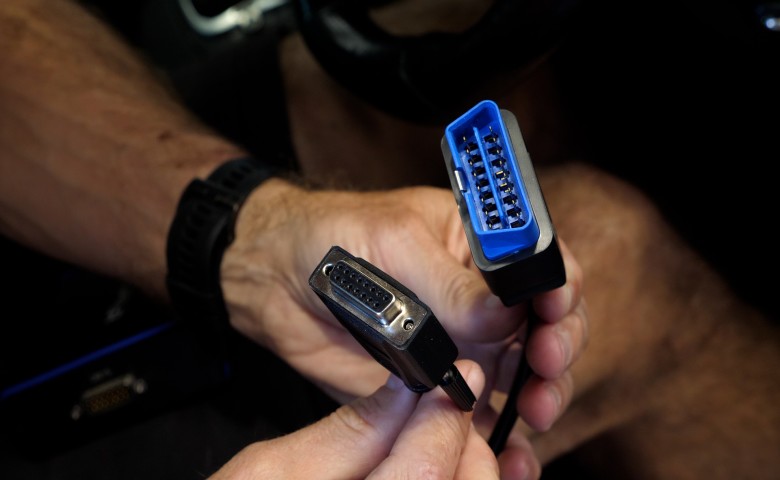
When it comes to ECU flashing hardware, there is no single solution that suits everyone. The right choice depends on your budget, the vehicles you intend to tune, and the level of functionality you need. Some options are built purely for reading and writing, while others offer a complete suite of tools including data logging, log analysis, and live tuning support for compatible controllers.
It's also worth noting that the landscape of available products and their supported vehicle applications changes regularly. Rather than providing a definitive list here, HPA has put together a reference PDF attached to this module that covers the known popular options for various vehicles at the time of recording. For specific application questions, the HPA forum is also a great place to get guidance before committing to a purchase.
Budget-Friendly Options
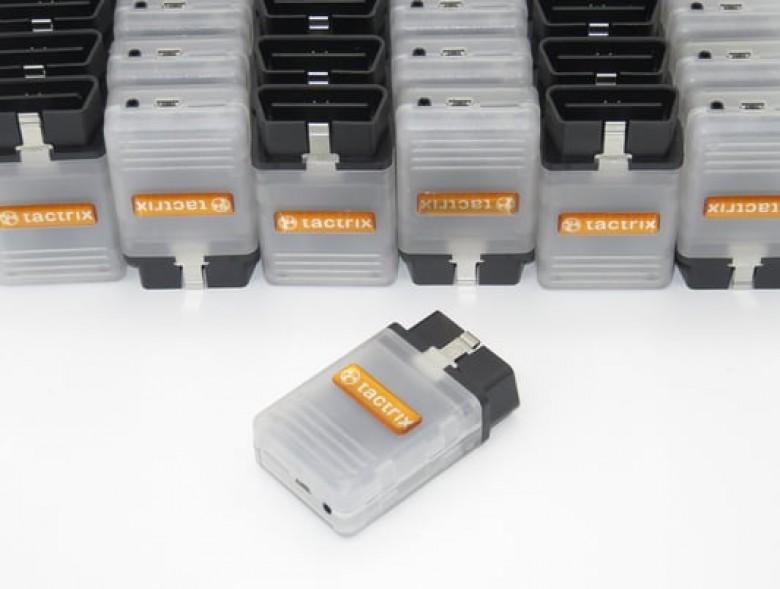
At the lower end of the price range, PCMfash is worth considering. The software itself can be purchased for under $50 USD, though it does require a third-party OBD2 to USB interface such as the popular Tactrix cable (or an alternative), which adds around $200 to your cost. On top of that, you'll need to purchase the relevant module to support reading and writing on the specific vehicle you want to tune.
All up, a setup like this can come in at around $300 USD, which makes it a genuinely accessible entry point for enthusiasts who only intend to tune one specific vehicle. While it won't offer the breadth of vehicle coverage or the additional features of the more expensive professional tools, it may be entirely sufficient for your needs.
Professional Hardware Solutions
For professional tuning workshops dealing with a wide range of vehicles, the requirements are quite different. More capable hardware solutions provide broader vehicle coverage, multiple reading and writing methods, and additional functionality that justifies the higher price point.
Among the many options available are Auto Tuner, bFlash, and Kess, along with others. CMD is arguably the most popular choice for professional workshops and comes in at around $5,500 USD. It's a complete tuning solution capable of reading and writing via OBD2, direct from the ECU header plug using supply jumpers, or directly from the PCB.
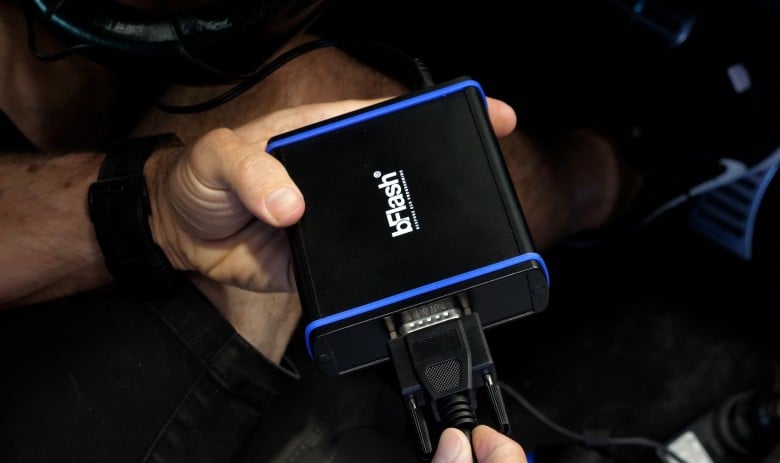
The bFlash solution, which is used in some of the worked examples throughout this course, sits at around $6,300 USD. Like CMD, bFlash supports OBD2, bench, and PCB reading and writing, and also includes logging, log analysis, and live tuning functionality for a range of supported controllers.
It's common for professional tuners to own more than one hardware solution and to use whichever is most appropriate for the vehicle they're working on at the time. For a workshop tuning large volumes of cars, the cost of professional hardware is recouped relatively quickly and the additional investment is rarely a concern.
Master and Slave Kits Explained
If you're looking at professional-grade flashing hardware, it's important to understand the difference between master and slave kits before making a purchase.
The professional flashing industry has largely been built around a master/slave business model. A master tuner develops calibrations for specific vehicles and modification levels, then sells those calibrations through a network of slave dealers, who in turn sell them to the end customer. This is a well-proven model and the results for slave dealers can be excellent when aligned with a quality master who produces good calibrations.
The limitation of this arrangement is that the slave dealer is not able to make direct tuning changes to a calibration. A quality master dealer will typically offer refinement services when needed, but ultimately the slave dealer is not doing the tuning themselves. This is an important distinction, and it's the reason slave kits are priced considerably lower than master kits. If you're looking at a slave kit purely because of the lower cost without understanding what that means for your capability, you may find yourself with a tool that doesn't meet your actual needs.
If your goal is to develop and deliver your own calibrations, you'll need a master kit.
Popular Tools for Reading Open Binary Files
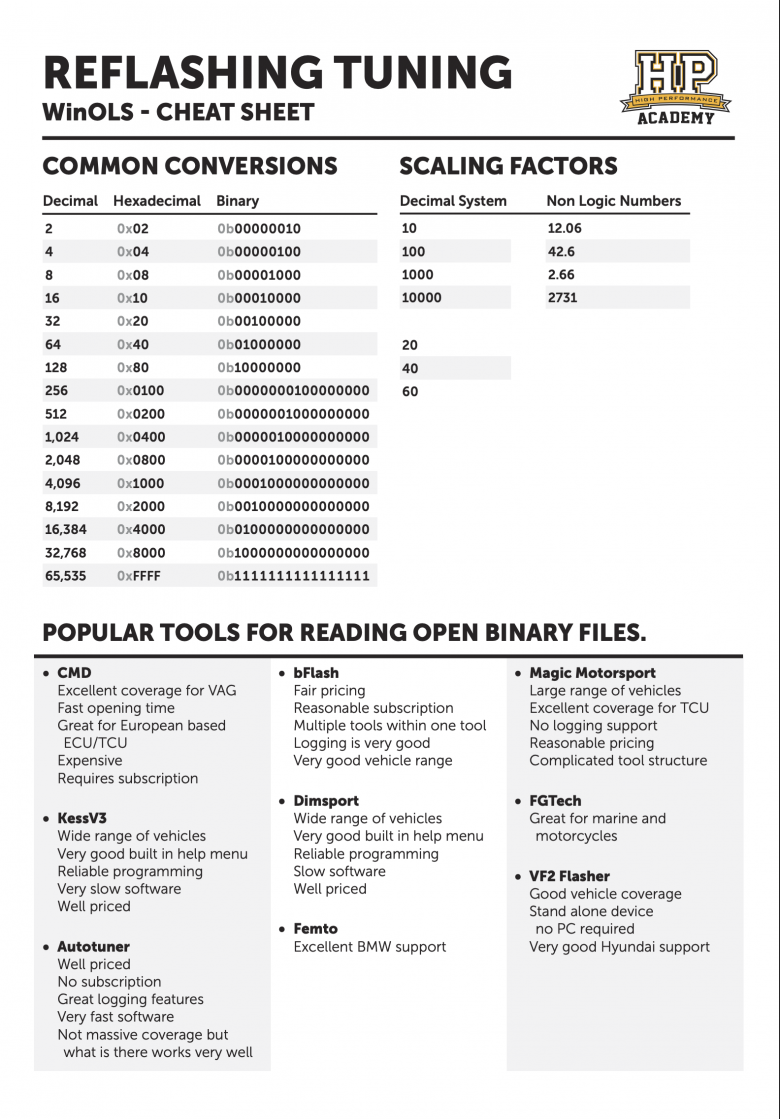
To give you a practical reference point, we've put together the cheat sheet above covering the most popular tools for reading open binary files, along with a quick summary of the strengths and limitations of each. Here's a breakdown of what's available and where each tool tends to shine:
CMD offers excellent coverage for VAG and is great for European-based ECU and TCU work, with fast file opening times. It does require a subscription and sits at the more expensive end of the market.
KessV3 covers a wide range of vehicles and includes a very good built-in help menu with reliable programming. It is well priced, though the software can be slow.
Autotuner is well priced with no subscription required, offers great logging features and very fast software. Vehicle coverage isn't the broadest, but what is supported works very well.
bFlash is fairly priced with a reasonable subscription model, packs multiple tools into one solution, offers very good logging, and covers a very good range of vehicles.
Dimsport covers a wide range of vehicles, has a very good built-in help menu, and reliable programming. The software is on the slower side but it is well priced.
Femto is the standout choice if your focus is BMW, offering excellent support for that platform specifically.
Magic Motorsport covers a large range of vehicles with excellent TCU coverage and reasonable pricing, though it has no logging support and a more complicated tool structure.
FGTech is worth considering if your work extends to marine and motorcycle applications.
VF2 Flasher operates as a standalone device requiring no PC, offers good vehicle coverage, and is particularly strong for Hyundai.
Conclusion
For enthusiasts working on a single project using WinOLS, a budget solution like PCM Flash can be a practical and cost-effective starting point. For professional workshops, a more comprehensive solution like CMD or bFlash offers the vehicle coverage and feature set to handle a wide range of applications.
Whatever route you take, make sure you understand the difference between master and slave kits before committing to a purchase. If you're developing your own calibrations, a master kit is what you need.
If you're ready to take your understanding of WinOLS further, the WinOLS Mastery course covers everything from reading and interpreting binary files through to developing and applying calibration changes, and the Practical Reflash Tuning course covers the actual tuning side of things and breaks it down into a clear 6-step process.