The internet's most popular engine swap was designed for a family SUV. Here's why that's actually the reason it works in a performance vehicle.
Second only to the LS V8, the Honda K Series has become the default answer to almost every "what should I swap?" question online. But most people reaching for a K swap don't fully understand what they're buying, which variant actually suits their build, or where the platform quietly falls short.
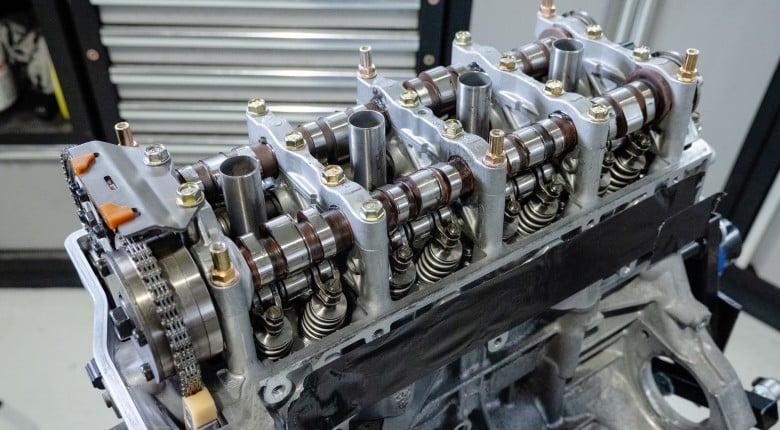
In this video, HPA breaks down why Honda moved on from the beloved B Series, how the intelligent variable timing of the i-VTEC (intelligent Variable Timing and Electronic Control) system changed the game, and what the two-lobe versus three-lobe head distinction actually means for your build. We cover the bore-to-stroke fundamentals of the K20 and K24, explain the popular K20/K24 hybrid combination, and walk through the real drawbacks you need to know before spending money.
Whether you're a first-time builder or just trying to understand why this engine keeps showing up in everything from time attack builds to Formula cars, this is the breakdown you need.
0:00 - The K Swap Obsession
1:02 - The B Series: What the K Replaced
2:06 - Honda's Response To Emissions Rules
2:37 - i-VTEC and Variable Cam Phasing Explained
3:57 - Why Are K Series Parts EVERYWHERE
4:27 - K20 and K24 Variants Overview
5:14 - Head Design: Two-Lobe vs Three-Lobe
6:49 - Bore to Stroke Ratio: K20 vs K24
7:58 - The K20/K24 Hybrid Combination
8:50 - Drawback 1: Vibration and Engine Mounts
10:38 - Drawback 2: Oil Slosh and Starvation
10:58 - Drawback 3: Rods and Pistons Under Boost
11:36 - Drawback 4: Being Boring
12:39 - The K48: Two K Series Heads, One V8
13:01 - K Series Legacy and the Modern K20C