Do you need a harmonic balancer, or does good engine balancing mean you can use a cheaper solid pulley instead?
If you've built or rebuilt a performance engine, chances are someone has suggested swapping the factory harmonic balancer, aka a harmonic damper, for a lightweight solid pulley. It's cheaper, it reduces rotational mass, and on paper it sounds like a reasonable trade off. But according to JC Beattie Jr from ATI Performance Products, it's one of the most common ways builders unknowingly set their engine up for an expensive failure.
In this article: What Is a Harmonic Damper? | What Is Torsional Vibration? | What Happens Without a Damper? | Is Your Factory Damper Good Enough? | How Does a Harmonic Damper Work? | Does a Balanced Engine Still Need a Damper? | SFI Certification and Safety | Serviceability
"IN OUR OPINION, FOR ANYONE RUNNING A SERIOUS ENGINE BUILD, THE COST OF A DAMPER SERVICE IS NEGLIGIBLE AGAINST THE COST OF ENGINE DAMAGE".
What Is a Harmonic Damper?
A harmonic damper, also called a harmonic balancer or crankshaft damper, is a device fitted to the front of the crankshaft. Its job is to absorb and dissipate the torsional vibration that builds up in the crankshaft as the engine runs. Think of it like a shock absorber: just as a shock absorber manages the rebound of a spring, a harmonic damper manages the rebound of a crankshaft as it twists and tries to unwind under load.
IN OUR OPINION, FOR ANYONE RUNNING A SERIOUS ENGINE BUILD, THE COST OF A DAMPER SERVICE IS NEGLIGIBLE AGAINST THE COST OF ENGINE DAMAGE.
What Is Torsional Vibration and Why Does It Matter?
Torsional vibration is cyclic angular twist of the crankshaft about its axis. Each combustion event forces the piston and connecting rod against an offset crankpin, applying torque to the crankshaft. Those repeated pulses twist and release the crankshaft through the firing order.
A useful way to think about this is to picture a suspension system. A damper controls the oscillations of a spring. Without it, a single bump sends the car bouncing repeatedly because nothing is absorbing the energy. The same thing happens in a crankshaft without a harmonic damper: torsional energy builds and rebounds with nothing to dissipate it. Where it gets more serious is if the engine happens to be running at an RPM that coincides with a resonant frequency. At that point, each firing pulse adds to the last rather than cancelling it out, and the amplitude of the oscillations grows rapidly. The longer the engine sits at that RPM, the worse the damage.
"TORSIONAL TWIST IS TWIST WITHOUT A BEND" - JC BEATTIE JR
A practical example: a road car cruising in fifth gear at highway speed might sit at 3,000 RPM for extended periods. If a resonant frequency happens to fall at that point in the rev range, the engine has ample time to accumulate serious damage, often with no outward warning signs until something fails.
For more information on torsional twist in a high power motorsport build, check out this interview with Bullet Race Engineering.
What Happens If You Don't Use a Harmonic Damper?
This is where the harmonic damper vs solid pulley comparison becomes critical. A solid lightweight pulley reduces rotational mass and can make the throttle response feel sharper, but it provides no damping of torsional vibration. A damper functions because of its inertia weight: without mass, there is nothing to absorb and counteract crankshaft twist. The engine may feel fine for a long time, and you're unlikely to feel torsional vibration directly through the car. The failures it causes tend to arrive without warning.
The typical failure progression can look like this:
- Oil pump gear failure, typically the first sign and often catastrophic
- Timing chain failure, which can cause top-end destruction
- Fastener loosening across flywheel or flexplate bolts and alternator mounting bolts
- Accessory failures, with alternators and other driven components failing prematurely
- Crankshaft bearing failure, a late-stage consequence of sustained torsional damage
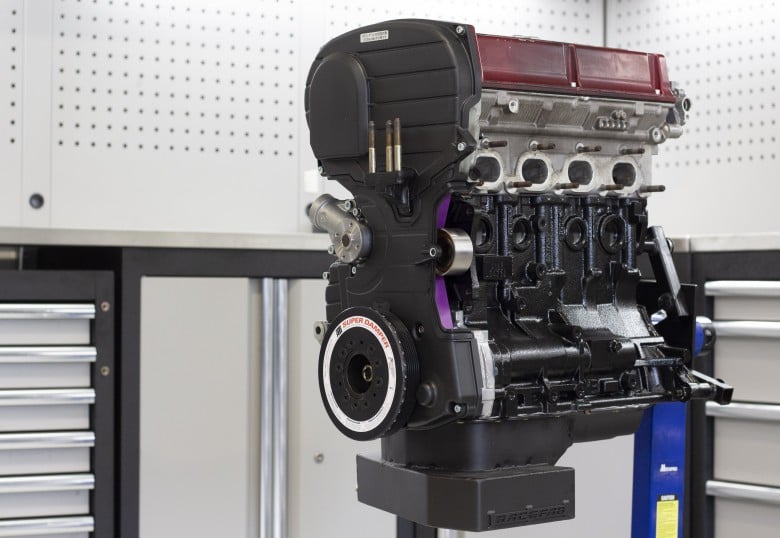
As covered in Webinar 242 | Harmonic Dampers - Do You Need One?, this failure mode has a real face. We have had a Honda B18C turbo engine running a solid alloy front pulley in place of the factory damper suffer an oil pump gear failure mid-dyno run. The gears failed with enough force to crack the front cover, oil pressure dropped instantly, and the engine came within seconds of total destruction. The oil pump on that engine is driven directly off the crankshaft snout, meaning every harmonic transmitted into the crank feeds straight into the gears. Fitting stronger aftermarket gears, as many builders do, treats the symptom rather than the cause.
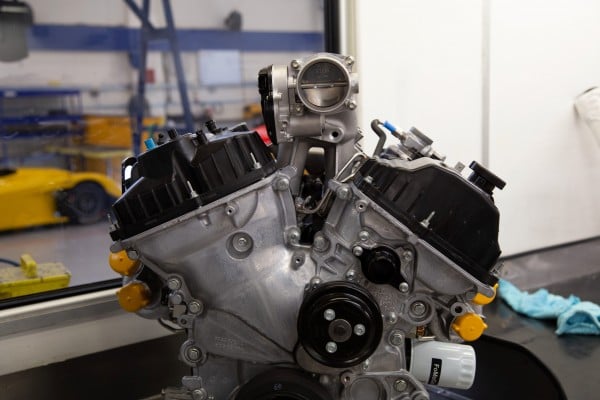
A well-known example at a larger scale is the Ford Coyote engine, which developed a reputation for breaking oil pump gears in heavily modified applications. The root cause was the same: the factory damper was designed around stock power levels and stock driving patterns, and once those limits were exceeded, it was no longer adequate.
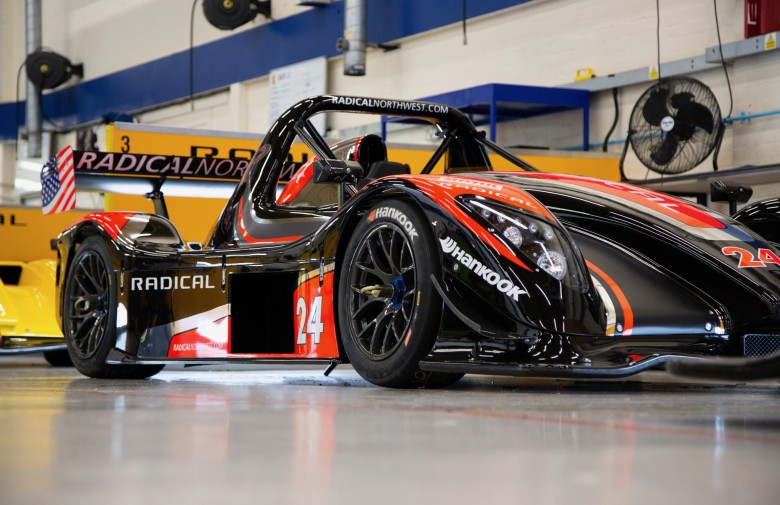
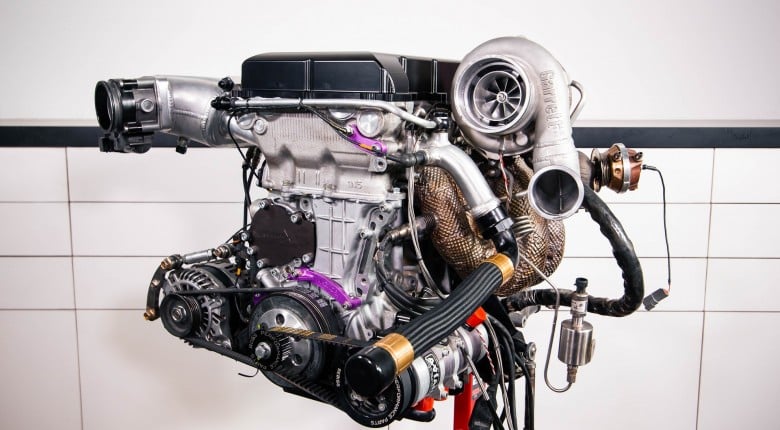
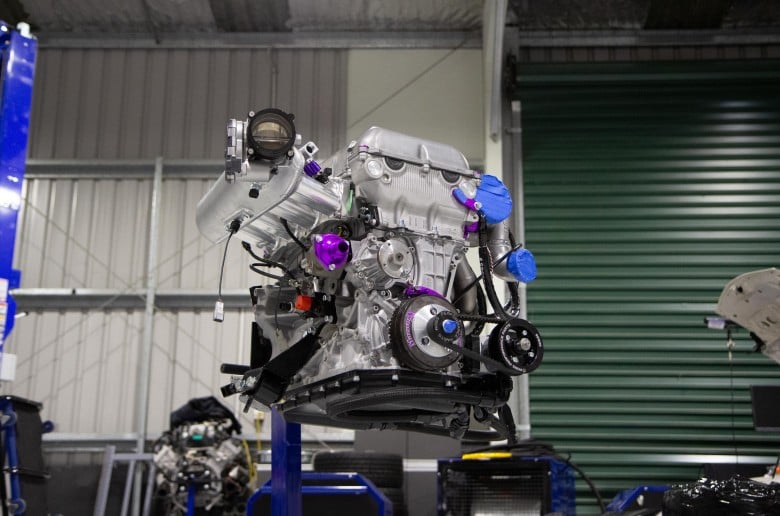
It's worth noting that some purpose-built race engines are deliberately designed without a harmonic damper, but this is never without consequence. The RPE V8, a bespoke racing engine built around Suzuki Hayabusa cylinder heads and barrels, is one example. According to James from Radical Performance Engines, omitting the damper directly reduces the fatigue life of all engine components, and the crankshaft design has to compensate by ensuring harmful resonant frequencies fall outside the engine's normal operating range. That level of engineering mitigation isn't available to someone who simply swaps a factory damper for a solid pulley.
Is Your Factory Harmonic Damper Good Enough?
Even if you're not building a high-power engine, the condition of your factory damper matters. As discussed in Webinar 242 | Harmonic Dampers - Do You Need One?, many common OEM dampers use an elastomer-bonded construction with an inner hub, an outer inertia ring or pulley section, and a rubber element between them. That rubber, like any suspension bush, deteriorates with age and heat cycles. It can crack, harden and eventually debond entirely.
When the rubber debonds, the outer ring can rotate relative to the inner hub. This has two consequences. First, on engines where the outer ring can separate completely, it becomes a projectile, which is why many racing classes prohibit factory dampers and require an SFI-certified unit. Second, and more insidiously, the timing mark on the outer ring is no longer aligned with the crankshaft. As Fluidampr note, movement of the inertia ring is the most obvious sign of a problem with a stock damper, and if left unchecked there is a real possibility the ring could separate entirely. Setting base ignition timing from a mark that has rotated even a few degrees will give a false reading, leading to tuning problems that can be difficult and time-consuming to diagnose.
Any engine work that changes the rotating or reciprocating mass also means the stock damper is no longer properly tuned for that application. For a stock engine being rebuilt to stock power with a damper in good condition, a replacement factory unit may be sufficient. For any engine being pushed beyond stock power or RPM, or any engine destined for track use, an aftermarket damper is the more reliable choice.
How Does a Harmonic Damper Actually Work?
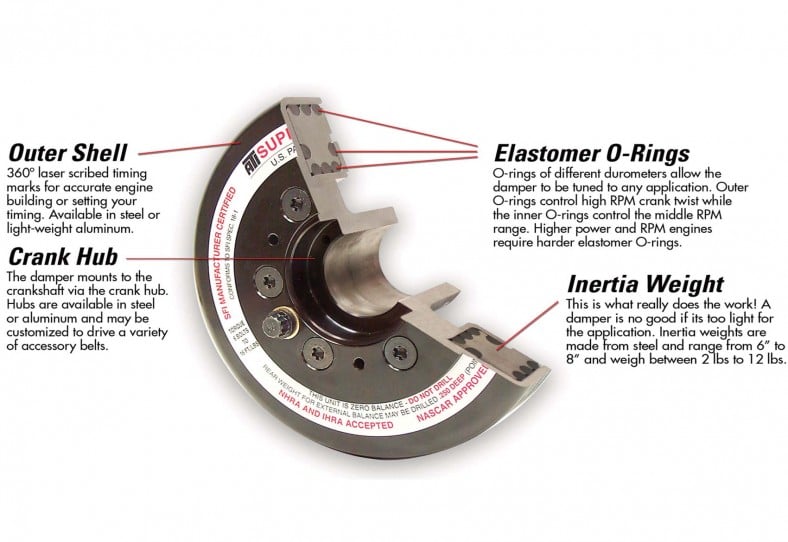
Most quality aftermarket harmonic dampers use one of two approaches. ATI's Super Damper range uses an elastomer-based design: an inertia ring sits within the damper housing, connected to the hub via rubber O-rings rather than being rigidly fixed. When the crankshaft twists, the inertia ring moves slightly relative to the hub, absorbing and dissipating that energy through the rubber. The rubber acts as a tuned spring and damping medium simultaneously.
ATI's published elastomer kit specifications confirm O-ring durometers ranging from 40 to 90 on the Shore A scale, available across 2, 3 and 4-ring configurations. Softer durometers provide more compliance and suit lower-load or lower-RPM applications, while harder durometers are used in higher-load scenarios. Because the elastomer design is tuned to a specific frequency range, ATI select the appropriate specification based on factors including crankshaft stiffness, block rigidity, bob weight, RPM range and power level.
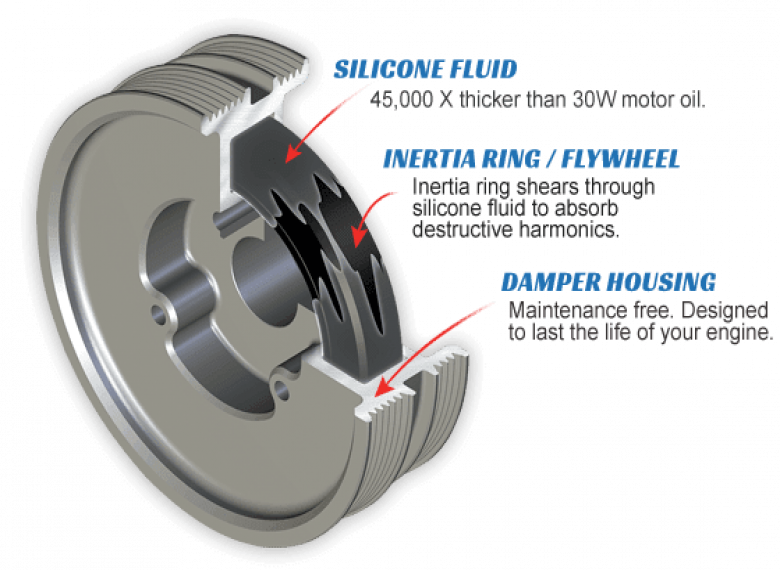
Another widely used option is a viscous damper such as Fluidampr, which uses an internal inertia ring suspended in silicone fluid inside a sealed housing. The silicone fluid absorbs torsional energy across a broader frequency range without needing to be tuned to a specific application, and Fluidampr confirm the fluid delivers consistent damping across a wide range of operating temperatures.
There are a few other construction styles and brands like PowerBond, Innovators West and Romac along with some lost to time like the TCI Rattler and BHJ Dynamics.
As discussed in HPA members only webinar 242 | Harmonic Dampers - Do You Need One?, both designs have been used successfully in high-power builds. The practical difference is that an elastomer damper is matched to a specific application, while a silicone fluid damper covers a wider range of likely harmonics without application-specific tuning.
It's also worth noting that elastomer dampers can be tuned for different RPM ranges. A street engine spends most of its life in the mid-range, while a dedicated race engine operates predominantly at high RPM. Matching the damper's tuning to where the engine actually spends its time is part of why ATI select specific elastomer durometers per application rather than supplying a one-size-fits-all specification and you need to keep this in mind before ordering one.
Does an Internally Balanced Engine Still Need a Harmonic Damper?
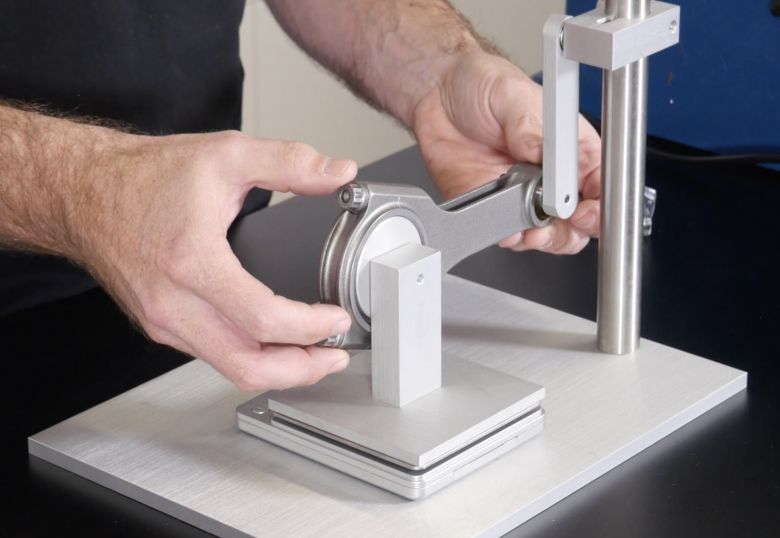
Yes, and this is one of the most common misconceptions in performance engine building. Rotating assembly balancing, including dynamic balancing, addresses mass imbalance. It does not eliminate torsional vibration caused by combustion pulses twisting the crankshaft. Those are two separate problems, and both need to be addressed for a reliable engine.
On externally balanced engines, the damper or flexplate may form part of the balance package. On these engines the inner hub or counterweight on the damper contributes to rotating assembly balance, so using the correct replacement part and following the appropriate balance strategy matters. Also note (thanks to Steve Dinan and others), a dual-mass flywheel, heavy flywheel or well-balanced rotating assembly should not be treated as a replacement for a crankshaft damper. These can influence vibration and driveline harshness, but they do not perform the same job as a harmonic damper mounted at the front of the crankshaft.
It's also worth noting that aftermarket dampers should not be fitted to the crankshaft during the balancing process. ATI specify that zero-balance Super Dampers should not be drilled and should not be on the crankshaft for balancing, as the inertia weight is not bonded and the damper should be installed at final engine assembly. Fluidampr similarly advise against balancing with their damper installed: a balance machine does not generate crankshaft torsional vibration, so the shear forces needed to centre the internal inertia ring are not present, which will cause a slight imbalance reading. For externally balanced applications using a two-piece Fluidampr, the counterweight is removed from the damper and included during balancing separately.
SFI Certification: Why It Matters for Motorsport
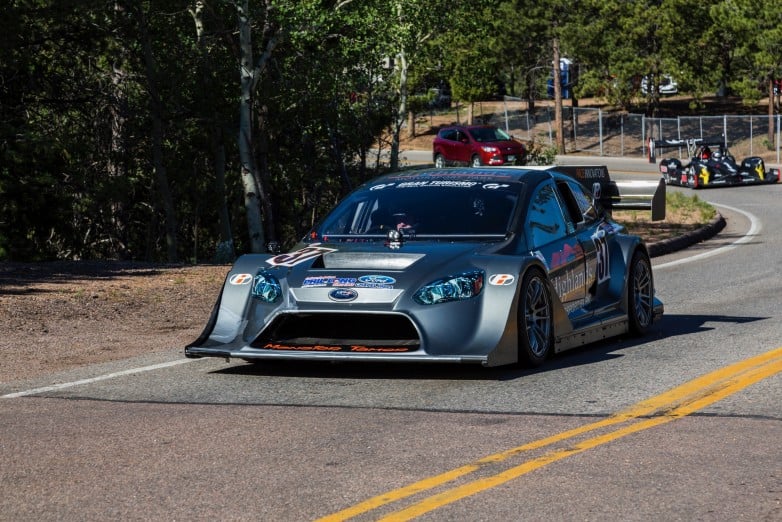
Many motorsport sanctioning bodies require SFI-certified harmonic dampers. The reason is straightforward: the outer ring of a factory damper can separate at high RPM and become a projectile. SFI 18.1 requires the damper to survive a rotational integrity test between 12,500 and 13,500 RPM for one hour, with no part becoming loose or separating. The specification also includes material and documentation requirements, with compliance certified by the manufacturer under the SFI programme.
"SFI 18.1 requires the damper to survive a rotational integrity test between 12,500 and 13,500 RPM for one hour, with no part becoming loose or separating."
The inertia ring on ATI's design is fully encapsulated within the damper rather than retained by a snap ring, which means the unit needs to experience a genuinely catastrophic failure before the ring can separate. Fluidampr also offers SFI 18.1-certified dampers, but the specific part number should be confirmed before purchase. For any level of competition, confirming your damper meets the SFI 18.1 requirement before scrutineering is straightforward. Running without one is not.
Are Harmonic Dampers Serviceable?
This is one area where quality aftermarket dampers offer a clear advantage over factory units. ATI's Super Dampers are designed to be fully rebuildable: the outer shell, elastomer O-rings, fasteners and SFI decal can all be replaced individually. If a rock strike damages the outer shell, only that component needs to be replaced.
ATI publish recommended service intervals based on application and power level:
- Street and drag use up to 800 HP: 10 years
- Pro/fuel drag use: annual, varies by usage
- Circle track and endurance: each engine rebuild
- 5.5" dampers by power level: up to 400 HP every 5 years, 400-600 HP every 2-3 years, 600 HP and above annually
Fluidampr takes a different approach: the silicone fluid is sealed for life and Fluidampr state the fluid is guaranteed to last indefinitely, provided the damper has not been physically damaged or improperly installed. There are no elastomers to replace. The main thing to check on a used Fluidampr is the seal surface, which should be free from corrosion or pitting before installation.
Do You Need A Harmonic Damper?
With all the information above taken into account, we think the answer to this is simple.
In our opinion, YES. For anyone running a serious aftermarket performance engine build, the cost of a damper service is negligible against the cost of engine damage.