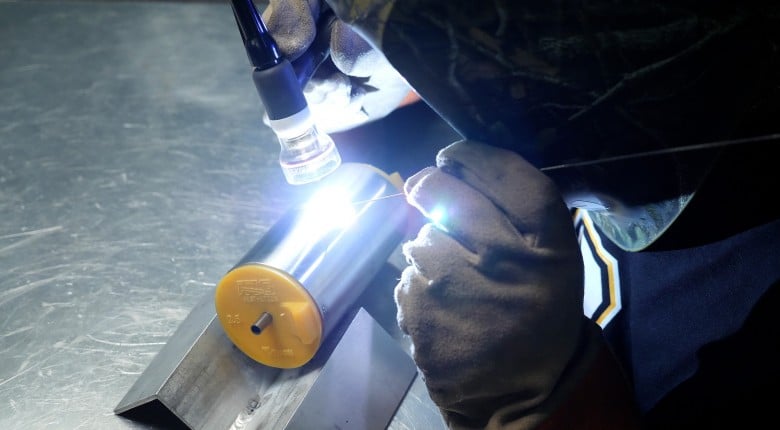
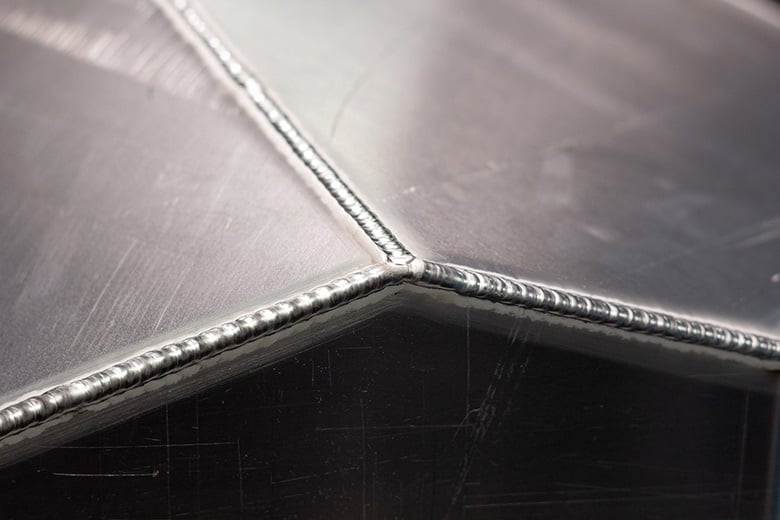
TIG welding aluminium can be extremely satisfying once you master the process and achieve that uniform stacked dime appearance, but getting it right relies heavily on using the correct machine settings and preparation methods. Aluminium behaves very differently from ferrous materials, so understanding its heat characteristics, cleaning requirements, and filler choices is key to consistent and clean results.
In this article: Understanding Heat and Control | Critical Material Preparation | AC Balance and Oxide Removal | Filler Rod Choices | Welding Cast Aluminium | Analysing Weld Quality
Understanding Heat and Control
Aluminium has a very high rate of thermal conductivity. At the beginning of a weld, it can be difficult to get heat into the material, but once the part heats up, that heat will spread rapidly. This means you'll need either to reduce amperage as you progress, or increase travel speed and filler addition to maintain control of the weld pool.
We find that a foot pedal is extremely helpful here, especially when welding long seams on components like radiators, plenums, and pipework, where inconsistencies are far more noticeable.
Critical Material Preparation
Preparation is especially important when welding aluminium. Every part of the weld zone and surrounding material must be thoroughly cleaned and free from contaminants or oils. This includes the back surface of the weld area, where impurities can be pulled through the weld pool if overlooked.
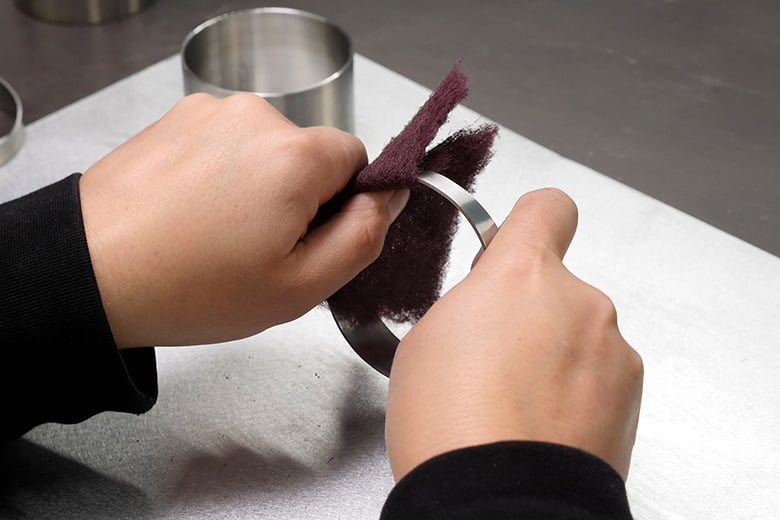
Abrasives used for cutting and linishing aluminium should be dedicated to aluminium only to avoid cross-contamination with ferrous particles. We always clean the weld area with Scotchbrite and then wipe the workpiece and filler rods with acetone. Even brand-new filler rods contain dirt and oils that'll contaminate the weld pool if not cleaned.
AC Balance and Oxide Removal
AC balance is one of the most crucial settings when welding aluminium. Although sometimes misunderstood as a setting that cleans the material, its purpose is actually to break down the oxide layer that sits on all aluminium exposed to oxygen.
This oxide layer melts at more than double the temperature of the parent metal, so insufficient cleaning action will cause contamination to be pulled into the weld pool. If your AC balance is too low, the oxide layer won't be broken down, resulting in impurities and poor weld quality.
The cleaning action appears as a white etched zone on each side of the weld bead. A wide etched area usually indicates too much cleaning action, while little to no etching indicates too little. A correct balance provides a clean, pure weld pool without excessive tungsten balling.
Filler Rod Choices
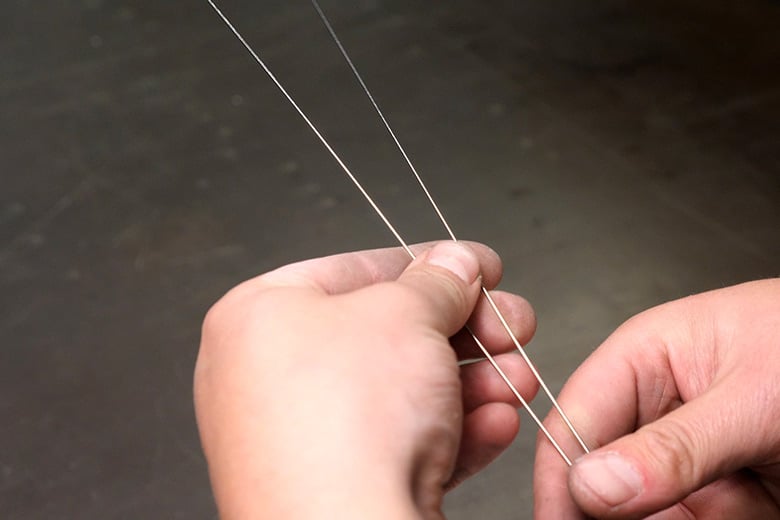
There are many grades of aluminium filler rods available, but in motorsport and automotive fabrication, the two most common are 4043 and 5356.
- 4043 filler rod contains a nominal 5 percent silicon alloy. This makes the weld pool wet out more easily, which helps beginners and makes it a better option for aesthetic applications. It's also suited to applications exposed to sustained temperatures around 70 degrees Celsius.
- 5356 filler rod contains a nominal 5 percent magnesium alloy. It requires a little more skill to weld with and can sometimes produce a less clean appearance, but the added magnesium provides greater shear strength. It's suitable for many 3000, 5000, and 6000 series alloys and is also the better choice if the part is going to be anodised due to improved colour matching.
Welding Cast Aluminium
Choosing filler rod for cast aluminium can be challenging because castings are made from a range of different alloys. Knowing the alloy composition is important, although it's not always possible to identify it accurately.
Common aluminium alloys used in cast parts include:
- 3000 series containing silicon magnesium alloy. These are best welded with 4043 due to the shared silicon content.
- 5000 series, which contains higher magnesium levels. These are better welded with 5356.
Not all aluminium alloys can be welded. Aerospace alloys such as 7075 are not designed for welding and will most likely crack if you try.
Analysing Weld Quality
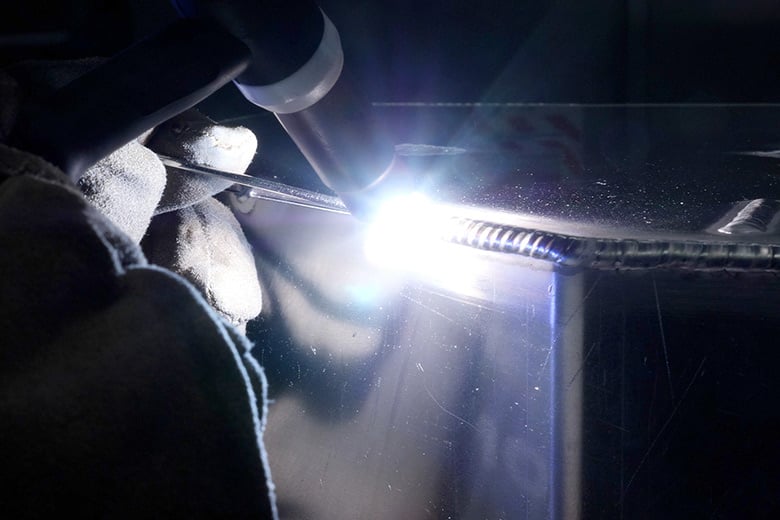
A good aluminium weld should appear shiny. A dull grey weld indicates that something is wrong, which may be caused by poor torch positioning, poor shielding gas coverage, excessive shielding gas flow causing instability, or simply too much heat.
Pinholes or craters usually indicate that the AC balance is too low, meaning the oxide layer isn't being adequately removed. They can also indicate poor shielding gas coverage, so pinholes should not be ignored. The affected section will need to be ground out and re-welded.
In the resources section of the Practical TIG Welding course, you'll find a PDF listing baseline settings for aluminium. Keeping this next to your machine is a very helpful reference to have on hand.
Summary
To summarise, aluminium weld quality depends heavily on cleaning and preparation. The oxide layer melts at far higher temperatures than the underlying metal, so AC balance must be set correctly to allow proper cleaning action. Aluminium spreads heat quickly, so accurate control of amperage or travel speed is essential. Most fabrication work will involve 4043 or 5356 filler rods, and tungsten balling is normal, provided the ball remains shiny.
If you'd like to master the art of TIG welding and start laying down perfect stacked-dime welds time after time, check out the Practical TIG Welding course now.