If you're learning to tune your own car, datalogging is one of the most valuable tools you have. Even a tune that looks perfect on the dyno can behave differently out in the real world, because it's very difficult to replicate the airflow and temperatures the engine sees at speed, in a high gear, on the road or track.
"Without data, you're just another person with an opinion" - probably W. Edwards Deming
Logging the right engine data lets you confirm your tune is safe, see how close you are to your targets, and make accurate corrections rather than guesses.
In this article: AFR Logging | RPM and Load | Fuel Pressure | AFR Drift | Fuel Trims | Engine Protection | Conclusion
Rich or Lean? Why AFR Logging Is Critical
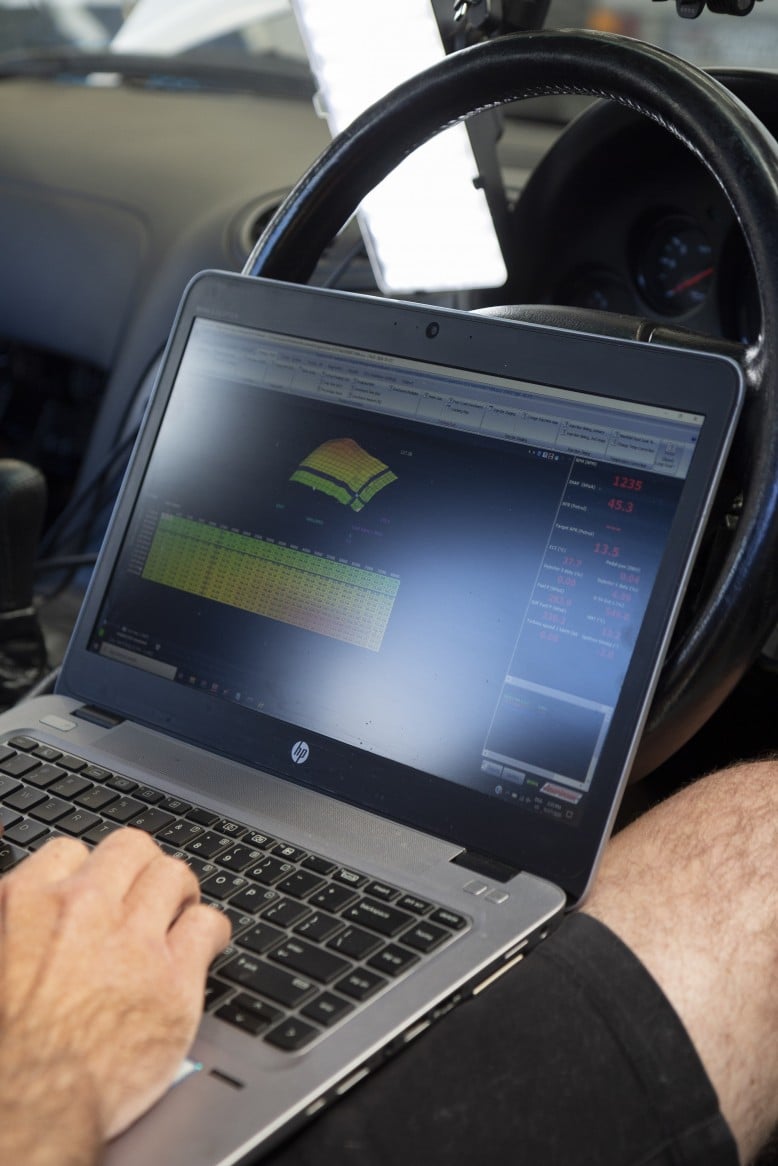
Your wideband air/fuel ratio, or lambda which is the unit we prefer here at HPA, is the number one channel for tuning. Watching a gauge while driving doesn't work because you can't mentally correlate what you're seeing with the exact cell of your fuel table the engine was operating in. Logging lambda into the ECU solves this, letting you see exactly what the mixture was doing at every combination of RPM and load.
The first thing to check in any log is that your air/fuel ratio is safely rich under the most dangerous conditions: high load combined with moderate to high RPM. If the engine is lean there, nothing else matters until it's fixed. Once you know the engine is safe, you can compare your measured lambda against your target and correct the fuel table using the measured value divided by your desired value to get a correction factor for that cell.
Two things to keep in mind when reading lambda data. First, it always moves around a little. Repeated pulls through the same gear can vary by around 0.01 to 0.02 lambda, so base your changes on trends across multiple data points, not a single sample. Second, if you're running an ignition cut for gear shifts, you'll see large lean spikes in the log at every shift. These are caused by unburnt fuel and air passing the sensor during the cut and are not a real lean condition, so they should be ignored or filtered out.
For a deeper dive on AFR data, watch the members' webinar 132 | Using Datalogging to analyse Air / Fuel Ratio.
Why Log RPM and Engine Load With Your AFR Data?
Lambda data on its own is meaningless for tuning unless you can tie it back to your fuel table, so engine RPM and load need to be logged alongside it. Critically, the load channel you log and analyse against should match whatever load axis your fuel table uses. If your engine is tuned on alpha N, that means throttle position. If it uses a conventional speed density setup, that means manifold pressure. If they don't match, it's very difficult to make useful decisions about where in the table to make your changes.
How Does Fuel Pressure Affect Air Fuel Ratio?
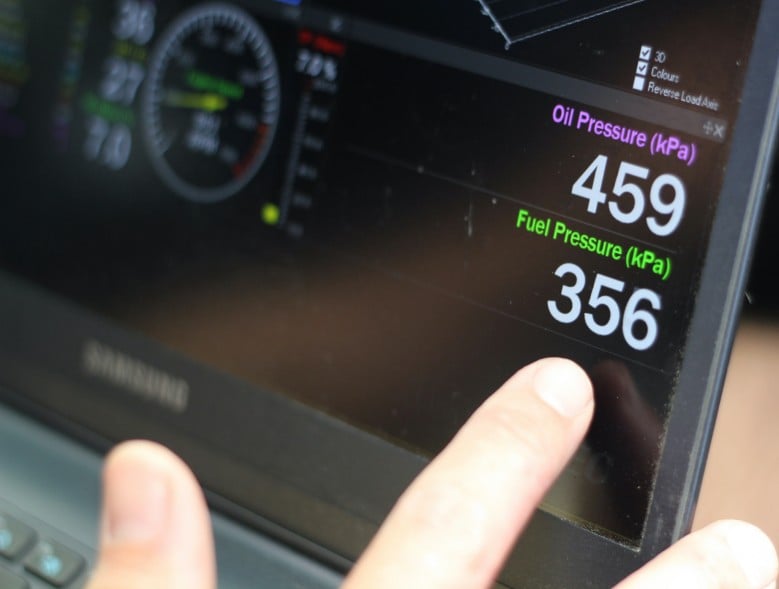
Fuel pressure directly influences your air/fuel ratio, so if your lambda starts drifting from target, fuel pressure is one of the first channels to check. It will also show up problems like a failing lift pump or a blocking fuel filter, and monitoring pressure at the rail is the most sensible place since that's what's actually reaching the injectors.
If you're running a returnless system with fixed rail pressure, this is simple to interpret. With a conventional manifold pressure referenced regulator, what really matters is the differential pressure across the injector, and you can create a calculated channel from fuel pressure minus manifold pressure to monitor this. That's particularly relevant on turbocharged cars where rail pressure varies significantly between idle and full boost.
What Causes AFR to Drift? Logging IAT, Coolant Temp and Baro
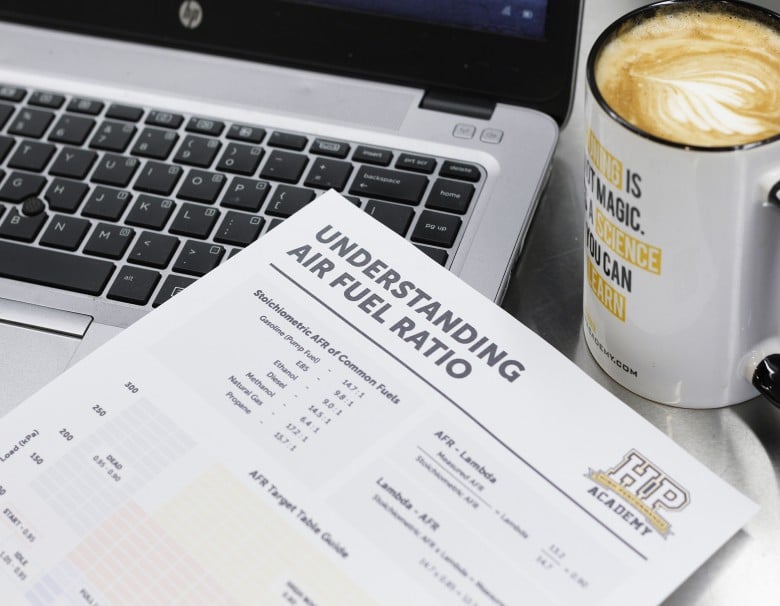
If your lambda is drifting richer or leaner over the course of a session, the cause is usually something affecting air density or the state of tune of the engine, so these channels give you the context to diagnose it:
- Intake air temperature - if IAT is rising or falling through a session and your lambda is drifting with it, your intake air temperature compensation may need work.
- Engine coolant temperature - this has a lesser effect on air/fuel ratio than IAT, but it can still have an influence and is worth logging.
- Barometric pressure - not something that changes lap to lap, but if you tune at sea level and then drive at significant elevation (not uncommon for a hill climb race car), it can influence your air/fuel ratio data.
The key is to avoid looking at lambda in isolation. When you see a trend you don't expect, look across all of these channels to understand what's actually driving it.
How to Use Closed Loop Fuel Trim Logs When Tuning
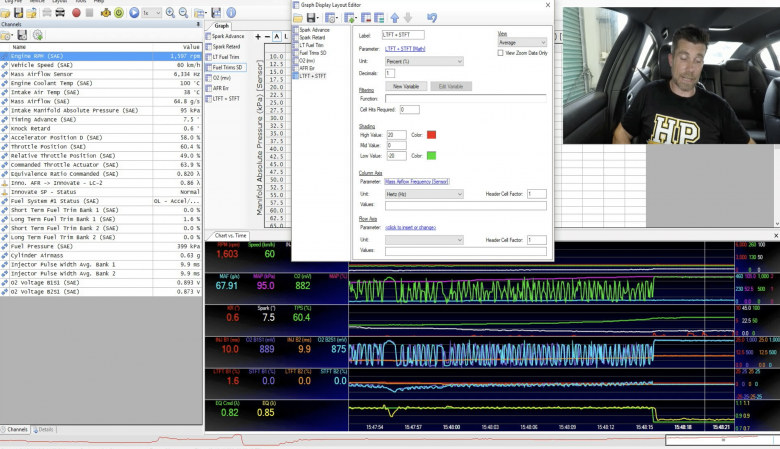
If your ECU is running closed loop fuel control, log the trims. With closed loop active, your measured lambda will often match your target even when the underlying fuel table is wrong, because the ECU is correcting it in the background. The trims tell you the real story. For example, if your air/fuel ratio matches target but your trims are sitting at positive 6% almost everywhere, your fuel table is lean and you need to add fuel until those trims sit close to zero.
What Data Avoids Engine Damage
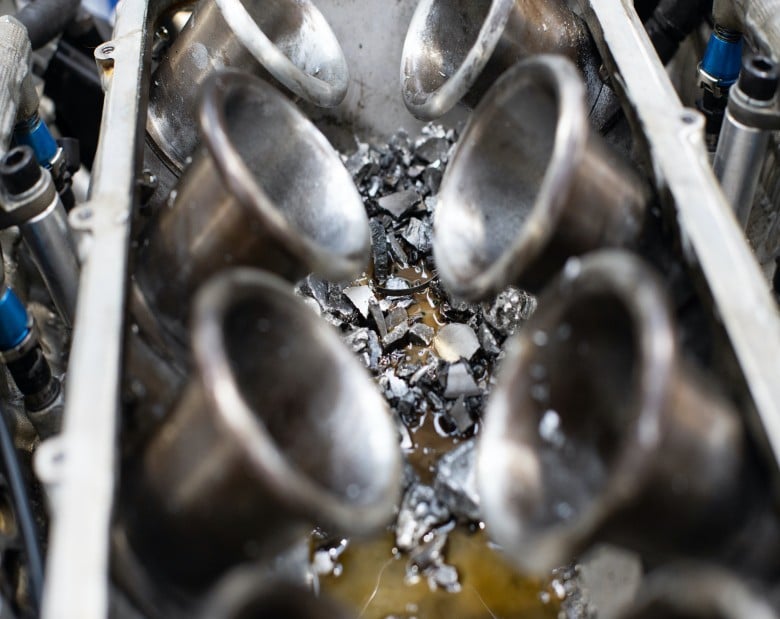
Tuning your own car means spending time at sustained high load, which is exactly when an engine problem does the most damage. Logging these channels protects your investment while you work:
- Oil pressure - the most critical channel of all. A useful rule of thumb is that you should see roughly 10 psi of oil pressure per 1000 RPM, though there are variables in that. Healthy pressure at idle means nothing if it's collapsing at high RPM.
- Oil temperature - worth keeping an eye on alongside coolant temperature, though coolant temperature tends to be a little more critical and moves faster.
- Coolant pressure - an advanced option, most commonly used on high boost engines where head gasket integrity is marginal. Coolant pressure should generally sit at or close to the rated pressure of your radiator cap, and a rapid spike tells you something is wrong.
- Crankcase pressure - another advanced option, and a good way of monitoring engine health over time. As ring seal degrades you'll see crankcase pressure gradually increase, and a catastrophic failure will show as a very sharp rise.
Use HPA members lesson 221 | Save Your Engine With Driver Warnings to learn how to give yourself the best chance of protecting your engine with critical driver alerts.
Conclusion
For tuning your own car, the core channels to log are lambda, engine RPM, engine load matched to your fuel table’s axis, fuel pressure, intake air temperature, coolant temperature, oil pressure and oil temperature, with closed loop trims added if your ECU runs them in the area of the map you’re analysing. Get those into your logs and you'll be able to verify your tune is safe, spot drift before it becomes a problem, and make corrections based on real data instead of guesswork.