“You just press the big green button… dial up how shiny you want the part… and rake in the money.” - There is a lot more to CNC machining custom parts than many people think, and many tips and tricks those doing it don't want you to know.
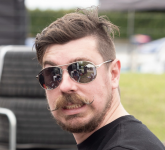
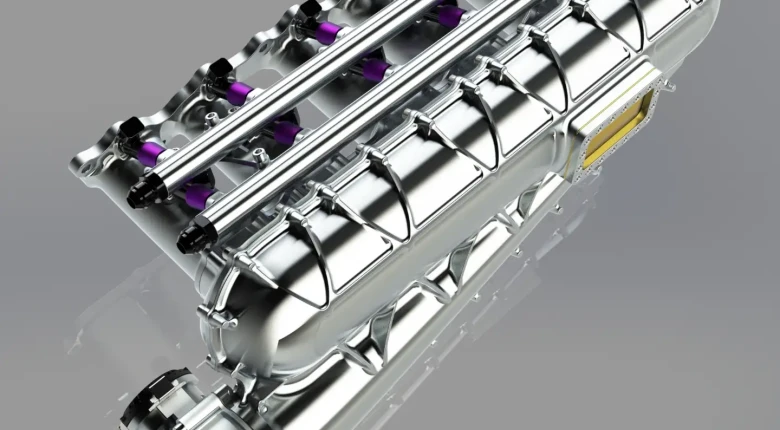
Supplying the baffled cam covers and dual plenum intake for the 1000hp 2JZ giveaway, Dan Melling of Kiwi CNC is one clever guy who’s happy to share some insight into what goes into taking 145kg lumps of billet aluminium and whittling them down to 14kg or less, producing finished parts that fit and work on builds making upwards of 3500hp.
From making aircraft parts and working for one of the world’s largest dairy companies, to billet 4WD dry sumps, uprights, off-road suspension arms, custom gearbox housings and possibly the only billet dual plenum intake for the 2JZ, Dan was an obvious choice for the HPA Legends 1000hp giveaway.
He dives into how a few dollars’ worth of 3D-printed plastic can be a critical step in ensuring a viable design, and how tools like 3D scanners streamline the process for complex parts like an integrated front differential sump without wasting machine time, tooling and raw material.
As well as producing parts for high-level drag cars, Dan’s work can be found on off-road race trucks, performance street cars and the immaculate Dream Projects S15 Time Attack champion.
While producing absolutely incredible work himself, Dan explains that no one ever really designs the perfect part on the first try, and that a lot of the work over time isn’t necessarily about improving performance, but rather dialling in manufacturing processes, making assembly easier, or simply improving the finished look.
On the subject of finish, he touches on anodising for 7075 and 6061 aluminium, the difference between standard and hard anodising, and why, if you plan to hard anodise a part, you need to factor it into your design from the start so the added thickness doesn’t push tolerances out of spec.
But why use a billet part when there are OEM cast parts that might do the same job? As Dan explains using the example of a 3500hp Nissan RB26, factory castings simply weren’t made to handle the clamping forces required to hold a head on at those cylinder pressures, let alone stand the test of time against the incredible temperatures such applications see. His billet RB26 head prototypes are already backing that up, with Rob from Croydon Racing Developments running 5.85 and 5.78 second passes at 252mph in Zeus, then driving it back onto the trailer still fresh for its next outing. With the first production batch of heads now underway, Dan is also developing a more cost-effective version optimised for 1500–2500hp. Not touched on, but also well known, is the fact that billet parts can often be repaired, which isn’t always the case with cast parts due to their metallurgy.
Lastly, he explains the goal behind a dual plenum intake when it comes to even air distribution, the challenges of using CFD during the design process, and how even then, an intake’s performance can be quite specific to the power output of the engine it’s designed and developed for.
0:00 - Building the Best-Looking 2JZ?
1:04 - Inside Kiwi CNC
1:45 - How Custom Parts Have Changed
3:00 - 3D Scanning & Prototyping
4:01 - Our Custom Billet 2JZ Parts
5:11 - Designing for Extreme Power
6:33 - Why a Dual Plenum?
7:22 - Pushing The Limits Of CFD
8:43 - Design for Manufacturing
9:04 - CNC Isn’t a Big Green Button
9:40 - 7075 vs 6061 & Hard Anodising Tolerances
11:41 - Next Up: Turbosmart’s Hot Side