If you have spent any time looking at your tuning options, you have probably seen packages advertised as a “Stage 1” tune. But what does that actually mean?
The first thing to understand is that there is no industry standard defining Stage 1, Stage 2 or Stage 3 tuning. These are not technical or measurable definitions. Instead, they are marketing terms used by tuning companies to group and sell different levels of time or modification.
Without an agreed standard, one company’s interpretation of a Stage 1 tune can differ considerably from another’s, making the term inherently ambiguous. However, like it or not, the terminology is here to stay, and our aim is to help you understand what questions to ask to make sure you're on the same page as your chosen tuner, education provider, or even just your mates at the track, so let's crack into it.
In this article: What Actually Changes? | Do You Need Mods? | How Much Power? | Is It Safe? | What Does Stage 1 Really Mean?
What Does a Stage 1 Tune Change?
Modern engines are controlled by an ECU, or Engine Control Unit, sometimes also called an ECM (Engine Control Module) or VCM (Vehicle Control Module). A Stage 1 tune, or any tune for that matter, changes the calibration inside the ECU to alter how the engine operates.
Depending on the engine and ECU, this can include changes to:
- Ignition timing
- Fuel delivery
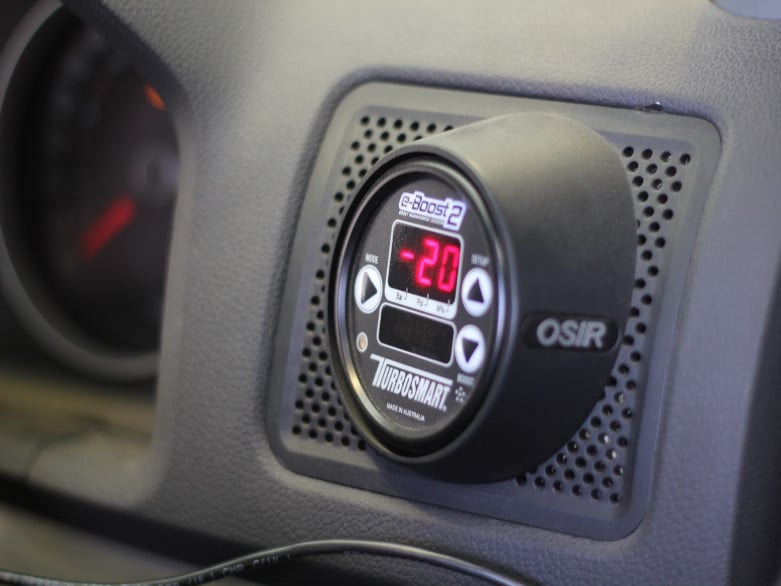
- Boost pressure on turbocharged or supercharged engines
- Torque and load targets
- Throttle response
- Rev, speed or torque limiters
The objective for a Stage 1 tune is generally to produce more power and torque while retaining the standard turbocharger, fuel system, exhaust, intercooler and other major engine hardware.
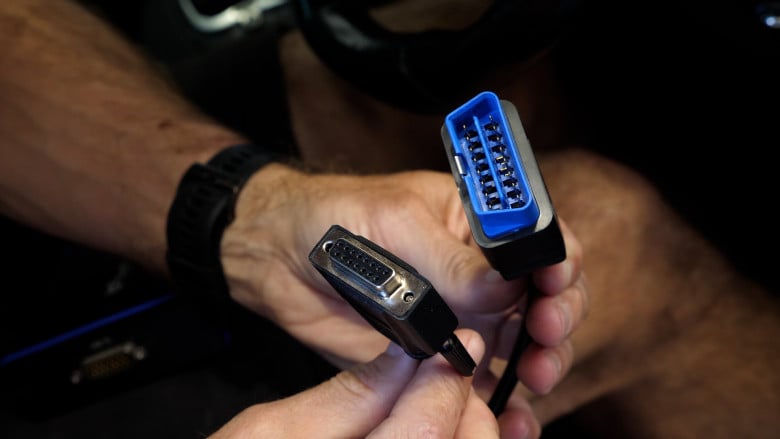
On many modern vehicles, the revised calibration can be flashed through the diagnostic port, although the exact programming method depends on the specific ECU you're working with and there is no universal tuning software that you can install onto your tuning laptop that will work with every and any car.
This is why asking to learn how to perform Stage 1 tune doesn't really make sense. The tuning process itself is not broken into universal stages in any way, shape or form.
Does a Stage 1 Tune Require Modifications?
A typical Stage 1 tune generally does not require physical modifications.
This is probably the most useful practical definition of Stage 1: the tune does not require additional performance parts for the calibration to work correctly.
Now, with that said, some tuners still describe a car with an upgraded air filter, intake or cat-back exhaust as Stage 1 because those modifications are basic and do not greatly change the airflow tuning requirements your engine needs from its calibration, like, say, an aftermarket camshaft or larger turbocharger would.
This is why simply saying a car is “Stage 1” doesn't tell you its exact specification.
You really need to know what the specific company supplying the tune/work means by Stage 1.
How Much Power Does a Stage 1 Tune Add?
There is no useful universal percentage.
The potential gain depends heavily on the engine and how conservatively it was calibrated from the factory.
Turbocharged engines can often gain substantially more power because the tune can increase boost as well as optimising ignition, fuelling and torque control. Naturally aspirated engines generally have much less additional airflow available, so software changes alone tend to produce smaller gains.
Two completely different cars can therefore both have a “Stage 1” tune while gaining very different amounts of power.
Is a Stage 1 Tune Safe?
You might think that, with minimal modifications, it might be fair to call something sold to you as a Stage 1 tune always safe. You're not fitting larger aftermarket injectors, a larger turbo and turning up the boost, after all, right?
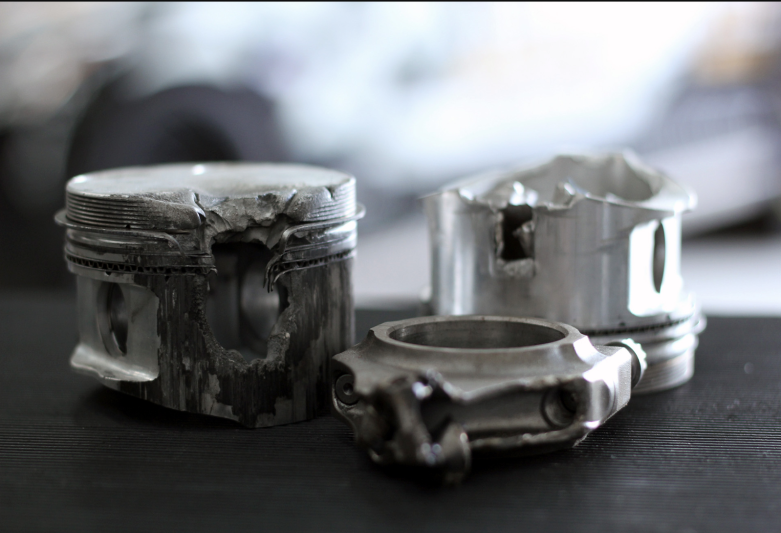
Keeping the car stock or near stock and flashing in a Stage 1 tune is generally less risky than pushing almost 2000 hp out of a stock Toyota 2JZ block, but that DOES NOT automatically make it safe.
Any increase in engine output can increase cylinder pressure, turbocharger speed, temperatures and load on the engine and drivetrain, and more load means more risk. How much additional stress is introduced depends on the engine, the requested performance increase and, most importantly, the quality of the calibration.
Fuel quality also matters. If a tune has been developed for a particular octane rating, you need to follow that fuel requirement.
You should also consider the vehicle's condition before tuning. Increasing the load on an engine with an existing fuel, ignition, cooling or mechanical problem can quickly expose that weakness.
So, What Does Stage 1 Actually Mean?
The simplest answer is:
A Stage 1 tune is generally an ECU performance calibration intended for an otherwise stock or lightly modified vehicle, without requiring major supporting hardware changes.
Just remember that “Stage 1” itself is a marketing label and is in no way 'measurable' when it comes to the tuning process itself.
Stage 1, Stage 11, run-in, base map, soft tune, low boost mode - whatever the label - if you want to learn how to tune your own ECU to suit your own specific performance goals, HPA has your back. Hit the link below.