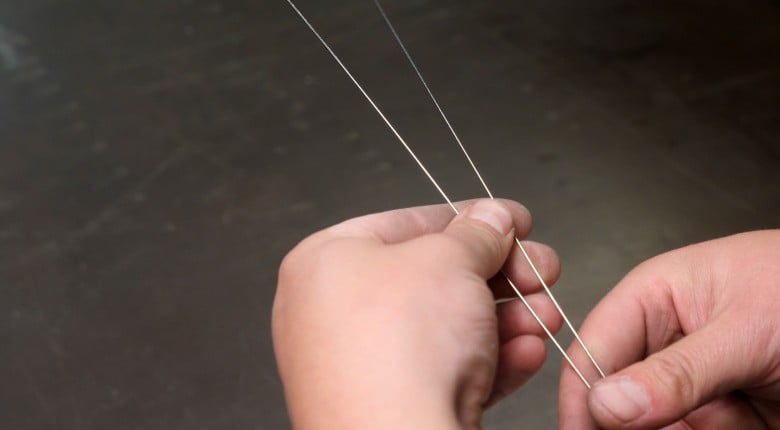
Choosing the correct TIG filler rod is just as important as selecting the right welder settings or tungsten electrode. The filler rod directly affects weld strength, appearance, ductility, and corrosion resistance, as well as how easy the material is to weld.
There are plenty of different TIG filler rods available, but for motorsport fabrication work, the list is usually much smaller than people expect. In most cases, a handful of common filler materials and diameters will cover the majority of fabrication jobs involving steel, aluminium, stainless, and titanium.
Keep in mind that this is very much a high-level surface look into the subject, and HPA's Practical TIG Welding course goes into much more detail.
In this article: What Does Filler Rod Do? | Choosing Filler Rod Diameter | Mild Steel Filler Rods | Chromoly Filler Rods | Aluminium Filler Rods | Stainless Steel Filler Rods | Titanium Filler Rods | Handling and Preparation | Summary
What Does Filler Rod Do?
Before we dive into the individual materials, let's make sure we're on the same page with exactly what filler rod is and what it does.
TIG welding works by using the arc to create a controlled molten weld pool in the base material. Filler rod is then manually added into this molten pool to build the weld bead.
Unlike MIG welding, TIG gives us complete control over how quickly filler material is added. This means we can influence the size, shape, and final appearance of the weld bead much more precisely.
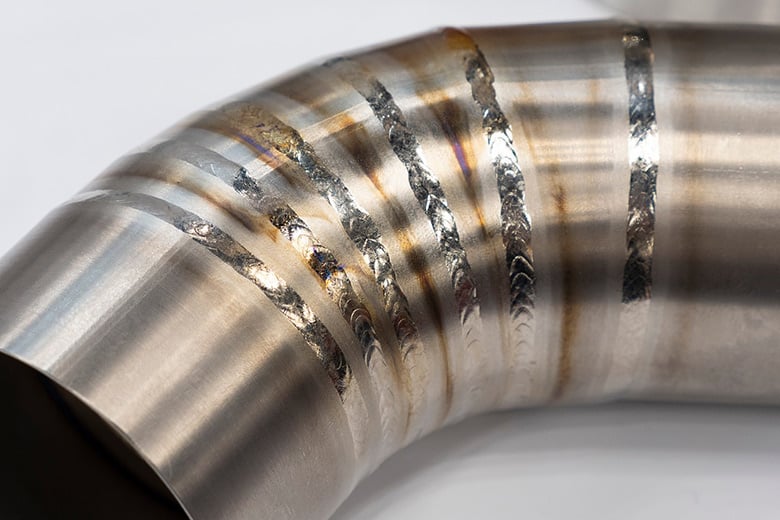
The rate at which the filler rod is introduced into the weld pool is one of the major factors that contribute to the classic “stacked dimes” appearance commonly associated with high-quality TIG welds.
Choosing Filler Rod Diameter
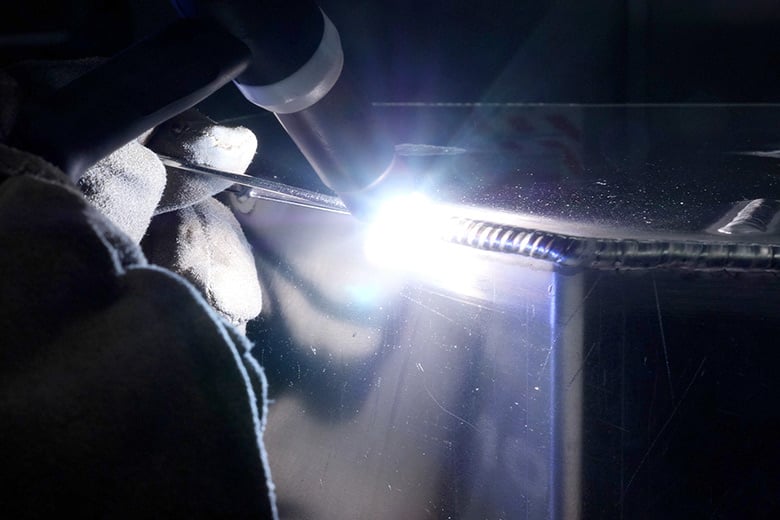
TIG filler rod is commonly available in 1.0 mm, 1.6 mm, 2.4 mm, and 3.2 mm diameters.
The diameter of the rod has a direct impact on weld profile, deposition rate, and heat input. A rod that's too small can make it difficult to add enough filler material into the weld pool, while a rod that's too large can create oversized welds and require additional heat input.
A good general rule is to roughly match the filler rod diameter to the thickness of the material being welded.
So, for most motorsport fabrication work:
- 1.6 mm filler rod is the standard choice for most DC welding applications like mild steel, Chromoly, stainless steel, and titanium.
- 2.4 mm filler rod is commonly used for AC welding aluminium.
- 3.2 mm filler rod is generally reserved for thicker aluminium or higher amperage welding.
Using a smaller 1.0 mm filler rod on thin stainless tubing can help create flatter, lower-profile welds. There's nothing necessarily wrong with either approach, it largely comes down to personal preference and the weld finish you're trying to achieve.
For extremely delicate work, some fabricators will even cut short sections of 0.9 mm MIG wire from a spool and use it as ultra-fine TIG filler material.
Mild Steel Filler Rods
For TIG welding mild steel, the most common filler rod choice is ER70S-2 or ER70S-6.
These filler rods are easy to source, easy to weld with, and work very well for the majority of mild steel fabrication tasks.
ER70S-2 is particularly common in motorsport fabrication because it performs well on thin sheet metal and tubing, making it ideal for modifications to factory body panels, brackets, and fabricated components.
Typical diameter choices are:
- 1.6 mm for thinner material and general fabrication.
- 2.4 mm for thicker sections or larger weld profiles.
Chromoly Filler Rods
A common misconception with Chromoly is that it must always be welded with a matching Chromoly filler rod.
In reality, unless the entire assembly is going to be post-weld heat-treated and normalised, this is generally unnecessary for motorsport fabrication work.
For most applications, ER70S-2 or ER80S-D2 filler rod works extremely well when welding Chromoly tubing and structures. These rods provide excellent weld strength, while also retaining enough ductility to allow some flexibility in the weld zone, reducing the likelihood of cracking around the heat-affected area.
It is worth noting that 4130 Chromoly filler rod is typically reserved for applications where the weld will be post-weld heat treated. It is generally not recommended for race car frames, roll cages, or other sporting applications because of its higher hardness and reduced elongation compared to ER70S-2 and ER80S-D2.
Aluminium Filler Rods
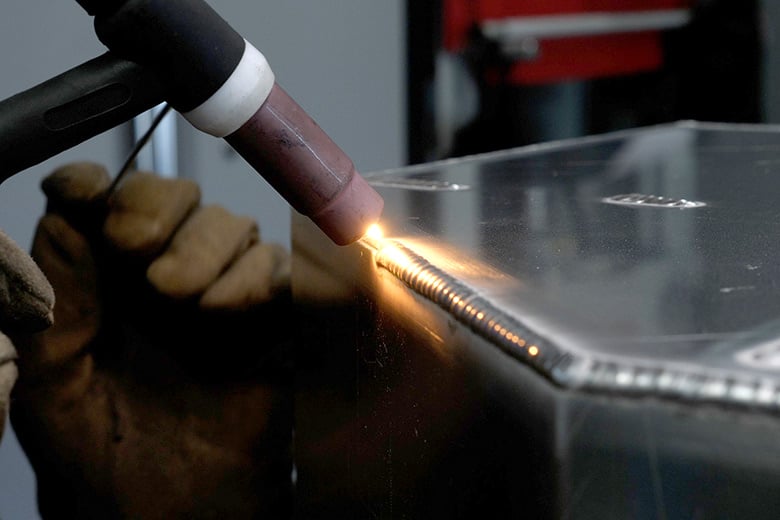
For aluminium TIG welding, the two most common filler rod options are 4043 and 5356.
Both are widely used in motorsport fabrication, but they have different characteristics that make them better suited to specific applications.
4043 filler rod contains approximately 5% silicon. This improves the flow characteristics of the weld pool, helping the weld wet out more smoothly and making it easier to weld with.
Because of this, 4043 is often preferred for:
- Beginner aluminium TIG welding.
- Aesthetic welds.</
- Applications exposed to sustained elevated temperatures.
This means that 4043 generally produces cleaner looking welds and is commonly used for intake piping, intercooler fabrication, and general aluminium fabrication work.
Looking at 5356 filler rod in comparison, this contains approximately 5% magnesium, helping it to produce a stronger weld with improved shear strength compared to 4043, but it can be slightly more difficult to weld cleanly.
5356 is commonly used on many 5xxx and 6xxx aluminium alloys where higher strength, better colour match after anodising, or compatibility with magnesium-bearing base metals is important. For 6xxx alloys, 4043 is often selected for ease of welding and crack resistance, while 5356 may be chosen when strength or anodising colour match matters.
It is also important to note that 5356 is generally avoided for components exposed to sustained elevated temperatures. Magnesium-bearing aluminium filler metals can become susceptible to stress corrosion cracking in elevated-temperature service, so in those cases 4043 or another suitable filler is typically the better choice.
Lastly, cast aluminium can be more complicated to weld because the alloy composition isn't always known.
As a general guide, though:
- 300 series castings usually suit 4043 filler rod.
- 5xx.x series castings generally suit 5356 filler rod.
The challenge is that identifying the exact alloy used in a casting isn't always possible.
TIG welding aluminium is quite different from most other materials you'll turn your torch to, and here are some tips to help you get started.
Stainless Steel Filler Rods
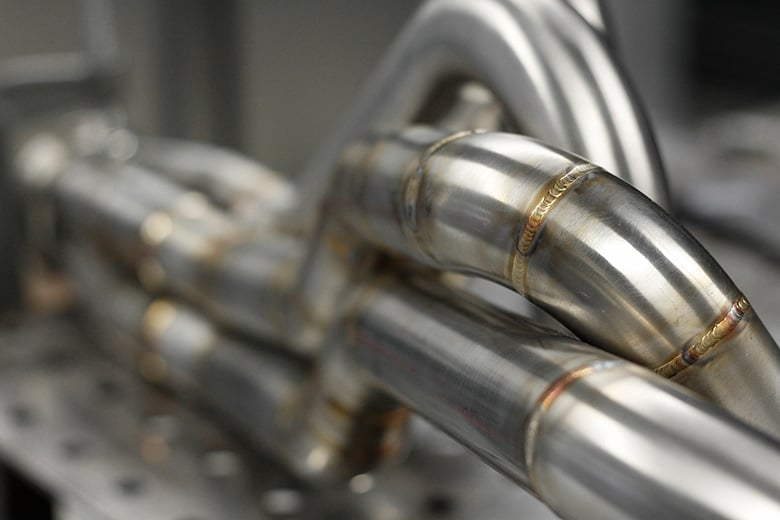
Stainless steel can sometimes be fusion-welded without filler rod where fit-up is excellent, material is thin, and the joint is not highly loaded.
Fusion welding is particularly useful for small, delicate, or aesthetically important stainless welds.
When filler rod is used, the correct material should match the base material:
- 308L filler rod for 304 stainless steel.
- 316L filler rod for 316 stainless steel.
A crucial tip here: when welding stainless, it's important to carefully monitor the weld pool because stainless can burn through quickly if amperage is too high.
For stainless exhaust work, purge quality is also just as important as filler selection. Oxidation or sugaring on the back side of the weld can reduce corrosion resistance and fatigue performance, so adequate back-purging with argon is essential.
Titanium Filler Rods
Like stainless steel, titanium can sometimes be fusion-welded where fit-up is excellent and the weld isn't highly structural.
When filler rod is required, matching filler material is typically used:
- Grade 2 titanium — ErTi-2.
- Grade 3 titanium — ErTi-3.
- Grade 5 titanium (Ti6Al4V) — ErTi-5.
1.6 mm filler rod is commonly used for most titanium fabrication work.
Titanium requires a careful filler rod technique because the rod can easily stick to the base material if introduced incorrectly. Holding the rod more upright and feeding directly into the weld pool can help prevent this.
It's also extremely important to keep the end of the filler rod inside the shielding gas coverage between dabs. If the rod leaves the gas shield, it can oxidise, contaminating the weld the next time it's added into the weld pool.
Handling and Preparation
Before finishing up, here in High Performance Academy's workshop, we've seen time and time again that filler rod preparation is a crucial but often overlooked factor that can have a significant impact on weld quality.
Most TIG filler rods are supplied in lengths close to one metre long. Because we hold the rod relatively close to the weld pool, the long overhang can make feeding less stable and more difficult to control. For this reason, many welders cut the rods in half before use to improve handling.
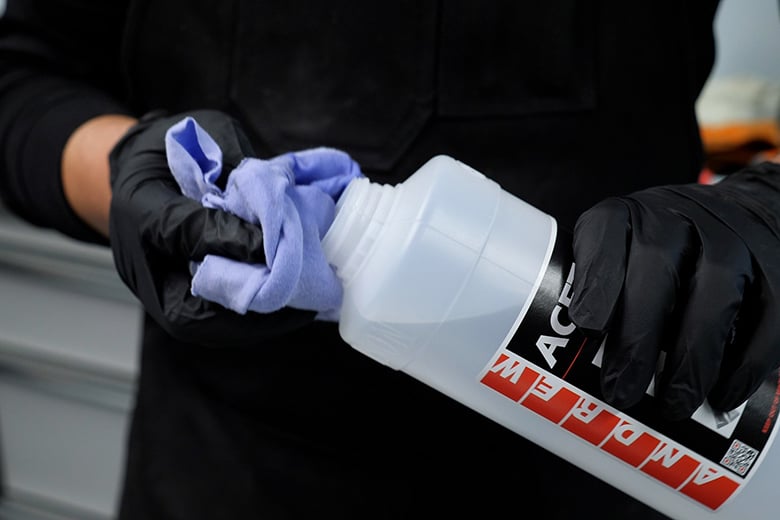
It is also important to clean filler rods before welding. During manufacturing and transport, rods can pick up oils, dirt, and oxidation.
Wiping the rods down with acetone before welding helps remove contaminants and reduces the risk of introducing impurities into the weld pool.
Don't forget the rest of your material also needs good preparation and best practices to help you achieve consistent and quality welding results.
Summary
Choosing the correct TIG filler rod comes down to selecting the right material and diameter for the job.
For most motorsport fabrication work:
- ER70S-2 is the standard choice for mild steel and most Chromoly welding.
- 4043 and 5356 are the primary aluminium filler rods.
- 308L and 316L are used for stainless steel.
- Matching ErTi filler rods are used for titanium.
1.6 mm filler rod is generally ideal for most DC welding applications, while 2.4 mm is commonly used for aluminium AC welding.
Good filler rod technique, proper cleanliness, and choosing the correct rod for the application all play a major role in producing strong, clean, and consistent TIG welds.