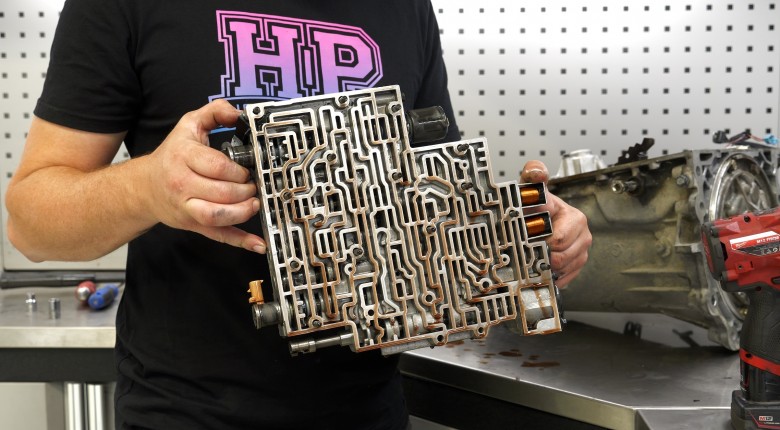
Line pressure can make or break an automatic transmission tune, but it's one of the most misunderstood concepts in the tuning process, despite being a simple factor to understand.
At the heart of it sits the valve body, the assembly responsible for all hydraulic control in an automatic transmission, and where line pressure becomes the critical reference point for everything downstream.
In this article: What Is the Valve Body? | What Is Line Pressure? | Why Line Pressure Matters | Pressure Limitations and Fluid Flow | How Pressure Is Controlled | Clutch Pressure and Ramp Control | Modern Pressure Control Systems | Summary
What Is the Valve Body?
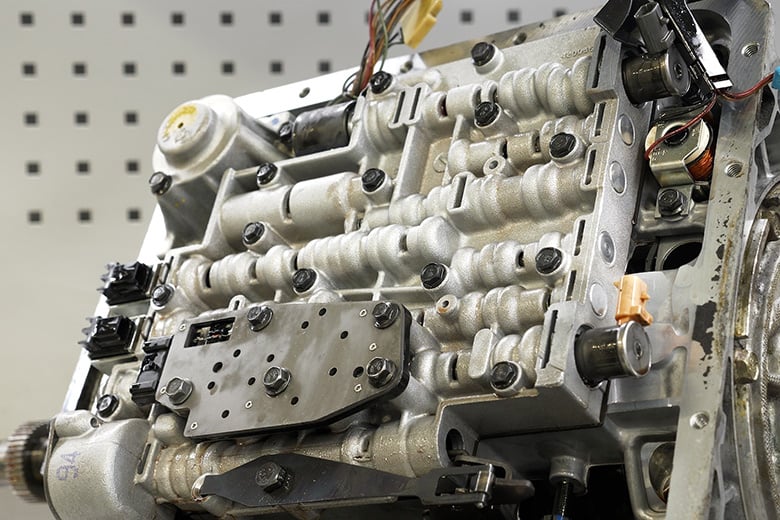
Before understanding line pressure, we need to know what an automatic transmission valve body is and what it does. The valve body isn’t a single component, but rather an assembly made up of fluid passages, solenoids, valves, accumulators, wiring, and electronics. It's basically all of the things that make automatic transmissions look so intimidating when opened up. The valve body's job is to execute the control strategy defined by the Transmission Control Module (TCM), and these are the changes you're making as a tuner to fit your desired performance goals.
This assembly directs hydraulic fluid at different pressures to various parts of the transmission depending on operating conditions. While the exact layout and components can vary widely, we don’t need to understand every design detail inside every transmission to make meaningful improvements through calibration. Like engine tuning, the fundamental concepts apply far and wide to many different applications and use cases.
What Is Transmission Line Pressure?
When discussing pressure in an automatic transmission, the first and most important reference point is line pressure.
Line pressure is the high-pressure hydraulic supply generated by the transmission pump. It acts as the primary feed for other hydraulic circuits within the transmission, including those responsible for clutch actuation.
Because line pressure feeds these downstream systems, it effectively sets the upper limit for how much pressure can be delivered elsewhere in the transmission. Simple right. But being a 'simple' hydraulic system in this area, why does that matter in relation to our tuning changes?
Why Line Pressure Matters
Understanding line pressure is critical because it defines what's actually achievable within the system.
For example, if line pressure is 250 psi and a clutch requires 150 psi, there's more than enough available pressure to meet that target. However, if you request 350 psi at the clutch while only having 250 psi of line pressure available, the system cannot deliver that request. If the system can't meet the clutch pressure target, the clutch won't generate enough clamping force to fully hold the gear. The result is clutch slip, which not only affects shift quality and feel but can also cause accelerated wear or damage to clutch components.
At best, the pressure will equalise at or slightly below the available line pressure, so in our example above, we're going to be 100 psi short of the requested target.
This is why it’s so important to ensure that line pressure is sufficient before increasing pressure targets in downstream components like clutches and we get this information via pressure sensors and good data logging practices.
Pressure Limitations and Fluid Flow
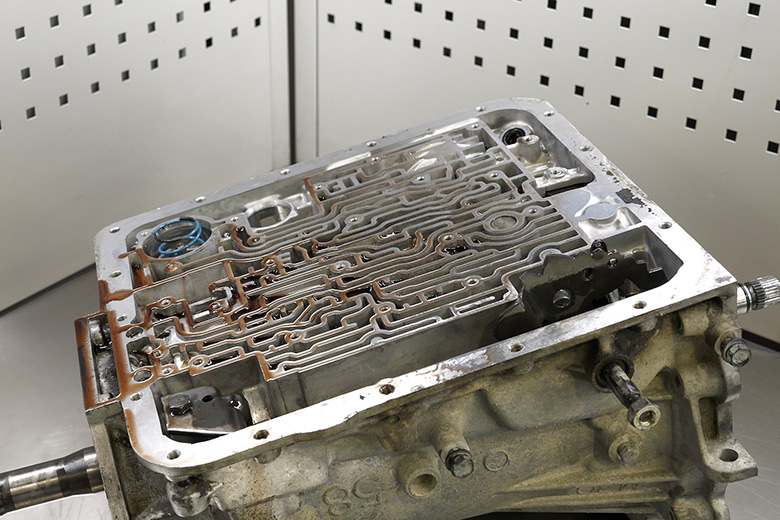
Fluid behaviour follows a simple rule... It moves from areas of high pressure to areas of low pressure.
A useful analogy is filling a tyre with air. If a tyre needs to be filled to 35 psi but your air tank only has 30 psi, you'll never reach 35 psi. The system can only equalise at the highest available pressure.
In fact, if the air tank has less pressure than the tyre, air will flow backwards until both pressures equalise.
Automatic transmission hydraulics behave in exactly the same way. The maximum pressure you can deliver to any component is limited by the available line pressure.
If a clutch is slipping at maximum available pressure, the next step is to increase both the clutch pressure target and the line pressure itself, assuming the pump and hardware can support it.
How Pressure Is Controlled
Different parts of the transmission require different pressures, and in some cases, those pressures must change at specific rates.
Pressure sensors are used in key circuits to allow the system to monitor and control pressure relative to a target, which also enables datalogging and fault diagnosis.
Some circuits that require a fixed pressure below line pressure use mechanical regulators. These typically consist of a spring and valve arrangement that bypasses excess fluid once a set pressure is reached, much like a wastegate.
This approach is simple, reliable, and cost-effective. However, adjusting the regulated pressure requires physically modifying components within the valve body.
Clutch Pressure and Ramp Control
Clutch actuation requires much more control than simple pressure regulation.
If a clutch were applied instantly from zero to full line pressure using a basic on/off solenoid, engagement would be extremely abrupt and harsh. This would negatively affect both driver comfort and component durability. Your driveshafts and axles certainly wouldn't like this, for example, along with the transmission itself and all the related mounts.
To manage this, systems are used to control how quickly pressure increases at the clutch.
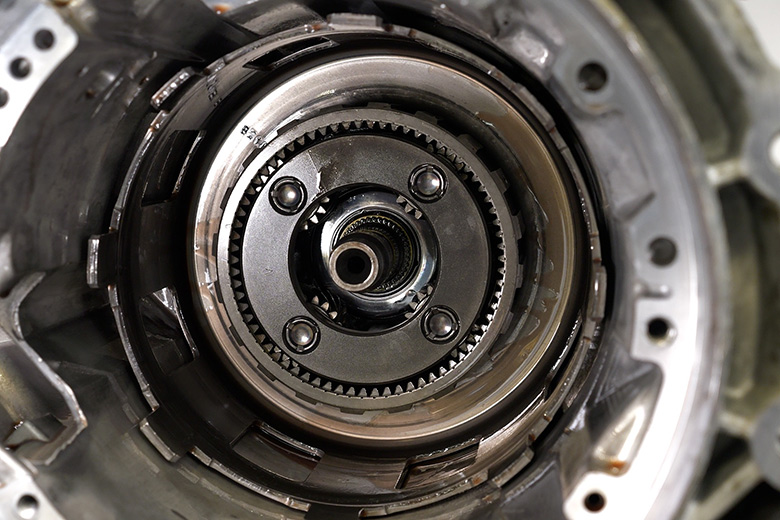
In older transmissions, this is often handled by an oil accumulator. The accumulator uses a spring-loaded valve to absorb and regulate pressure rise. As pressure increases, fluid acts on the valve, compressing the spring inside. As the valve travels, it exposes an orifice that allows fluid to bypass and drain back to the pan, slowing the rate of pressure increase at the clutch.
Some systems also allow additional pressure to be applied behind the accumulator valve, increasing resistance and altering how quickly it moves. This provides another layer of control over how clutch pressure builds.
Modern Pressure Control Systems
Modern automatic transmissions use pulse-width modulated (PWM) solenoids to control fluid pressure with much greater precision.
Rather than relying primarily on mechanical damping, PWM solenoids can actively adjust fluid delivery to achieve optimised pressure curves for different operating conditions.
This allows for smoother shifts, better adaptability, and improved control over transmission behaviour. It also enhances diagnostic capability by allowing more detailed monitoring of pressure response.
Summary
The valve body is a critical assembly in an automatic transmission, responsible for directing hydraulic fluid throughout the system based on the TCM’s control strategy.
Line pressure is the primary high-pressure supply generated by the transmission pump, and it sets the upper limit for all downstream hydraulic circuits. Because fluid can only flow from high pressure to low pressure, it’s essential to ensure line pressure is sufficient before increasing pressure targets elsewhere in the system to avoid an overly aggressive or incredibly weak clutch engagement.
Pressure control is achieved through a combination of mechanical regulators, accumulators, and modern PWM solenoids, with newer systems offering significantly improved precision and control over shift quality and performance.
Understanding how line pressure works provides a strong foundation for improving transmission calibration, diagnosing issues, and making informed upgrade decisions. If you'd like to learn how to tune your own transmission, start here.