Boost creep, boost spikes, lethargic spool, uncontrollable overboost...most of these problems have the same root cause: a poorly set up wastegate.
If you're running a turbocharged engine, understanding how a wastegate works is fundamental to getting the most out of your boost control setup. The wastegate is the primary mechanism that controls boost pressure, and getting its installation, plumbing, and tuning right is the difference between a system that performs consistently and one that causes endless headaches.
In this article, we'll cover how a wastegate operates, the difference between internal and external wastegates, how actuator design affects your plumbing options, how to choose the right wastegate spring, and the most common boost control problems you'll encounter on the street or race track.
In this article: What Does a Wastegate Do? | Internal vs External Wastegates | A Tip On Wastegate Placement | Single-Port vs Dual-Port Actuators | How to Choose a Wastegate Spring | How to Plumb a Boost Control System | Electronic Wastegates | Common Boost Control Problems | Conclusion
What Does a Wastegate Do?
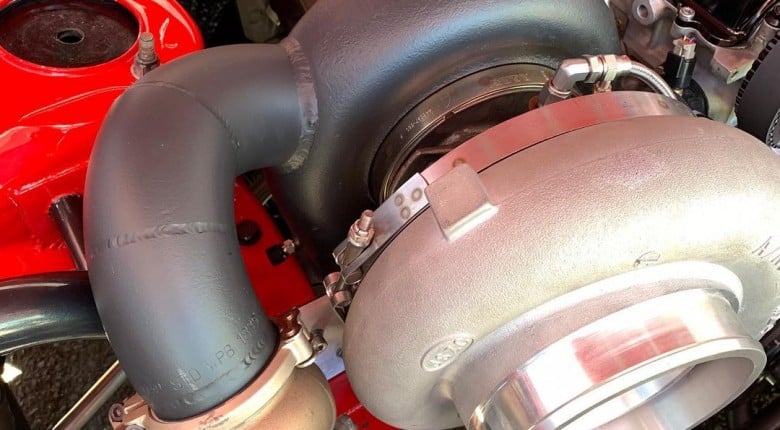
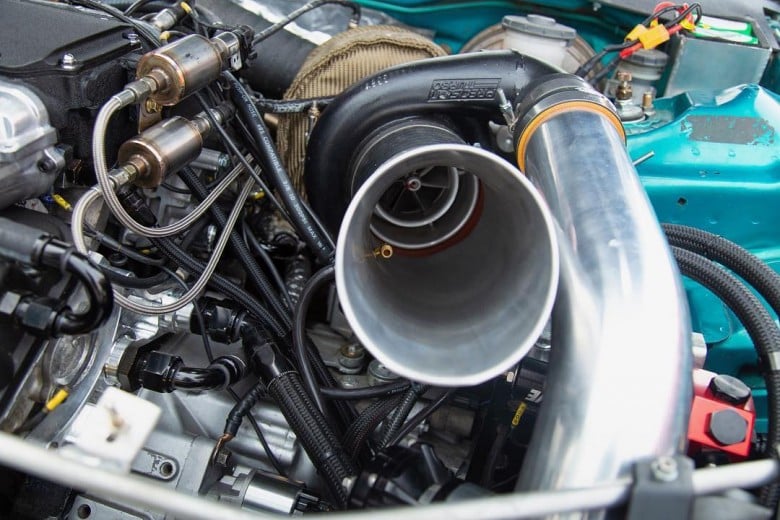
The wastegate is a valve located in the exhaust flow that controls how much exhaust gas reaches the turbine wheel of the turbocharger. When the wastegate is closed, all exhaust flow is directed through the turbine housing, providing maximum energy to spin the turbine wheel. When the wastegate opens, a portion of that exhaust flow is bypassed around the turbocharger, reducing the energy available to drive the turbine and therefore limiting boost pressure.
By controlling how much exhaust bypasses the turbine, you control turbine speed and, in turn, boost pressure. The more the wastegate closes, the higher the boost; the more it opens, the lower the boost.
"Out of every five turbocharged cars that came across my dyno when I was tuning commercially, four of them would have some sort of issue that needed to be resolved -- and most of those traced back to the wastegate." - Andre Simon, HPA
The wastegate assembly itself consists of more than just the valve. It also includes a chamber and a diaphragm that is acted on by boost pressure. This diaphragm is mechanically linked to the wastegate valve, so as the diaphragm moves in response to pressure, the valve opens or closes accordingly. A spring on the diaphragm holds the wastegate closed under normal conditions, and it takes sufficient boost pressure acting on the diaphragm to overcome that spring force and begin opening the valve.
In a simple setup where the wastegate actuator is connected directly to boost pressure, the valve stays closed while boost builds. Once pressure is high enough to overcome the spring, the wastegate begins to open, bypassing exhaust flow and limiting further boost rise. The system reaches an equilibrium point where enough flow is being bypassed to hold boost at a consistent level.
The effect of boost control, whether pneumatic or electronic, is to manipulate the pressure signal reaching the wastegate actuator in order to raise or lower the boost pressure delivered to the engine.
What Is the Difference Between an Internal and External Wastegate?
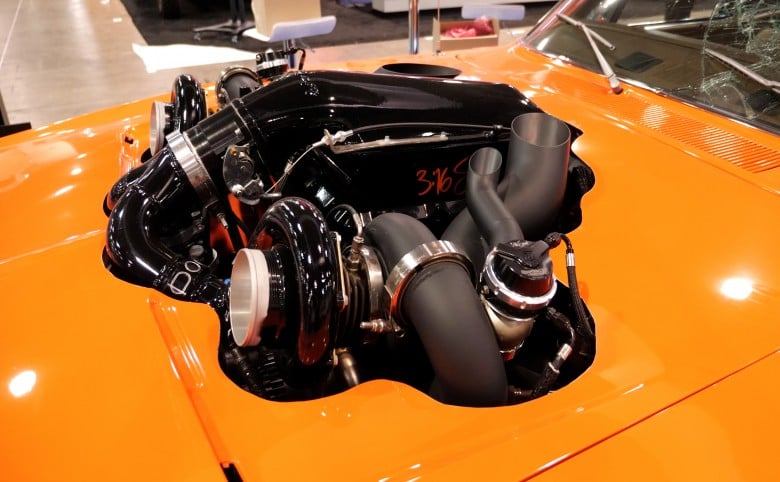
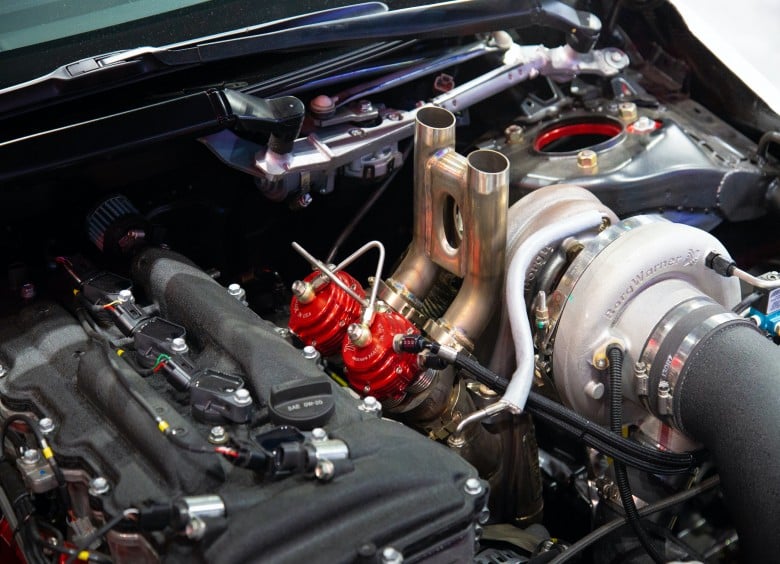
Wastegates can be broadly broken down into two types: internal wastegates, which are housed inside the exhaust housing of the turbocharger itself, and external wastegates, which are mounted remotely on the exhaust manifold. Regardless of which type you are using, the operational principles are the same.
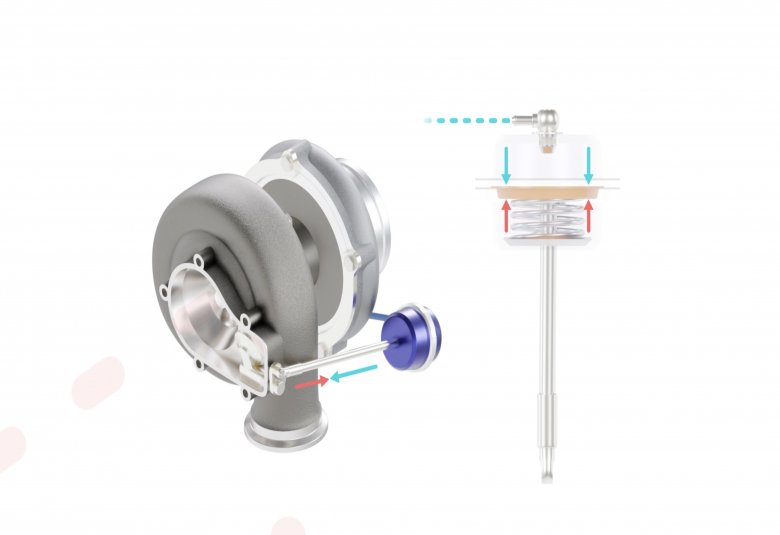
Internal wastegates are the most common configuration on factory turbocharged vehicles. The actuator is typically a single-port design that is sealed and non-adjustable from the factory. The bypassed exhaust flow is routed back into the exhaust system downstream of the turbocharger.
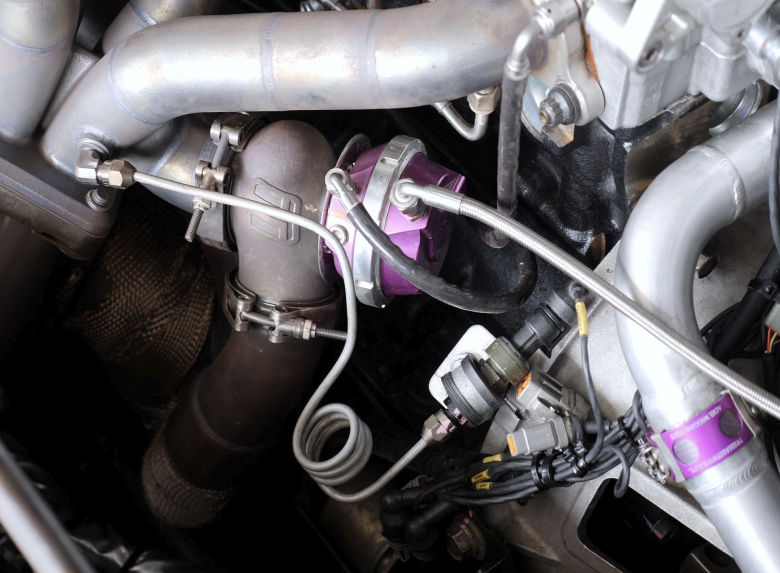
External wastegates are a separate assembly bolted to the exhaust manifold. They are widely used in performance and motorsport applications because they offer more flexible spring selection, larger valve sizes, and in most cases, a dual-port actuator design that provides a wider range of boost control. The bypassed exhaust can either be routed back into the exhaust downstream of the turbo or dumped straight to atmosphere.
What Is The Best Angle For Your Wastegate?
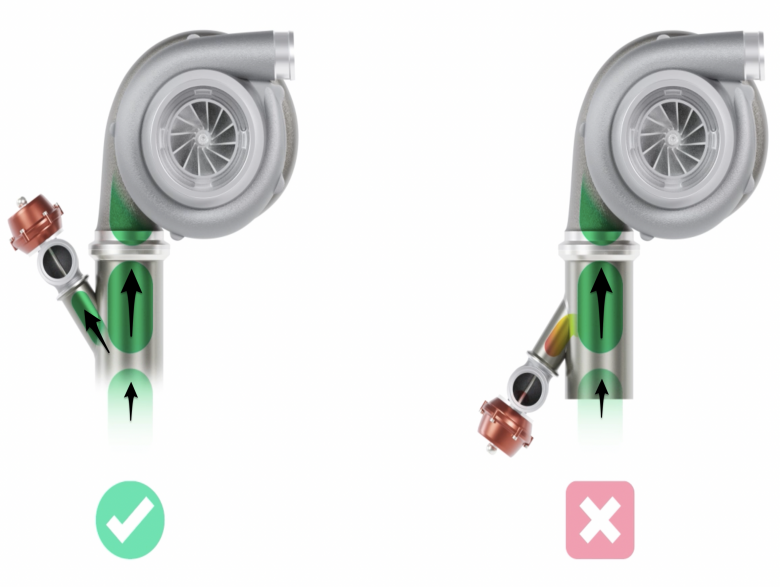
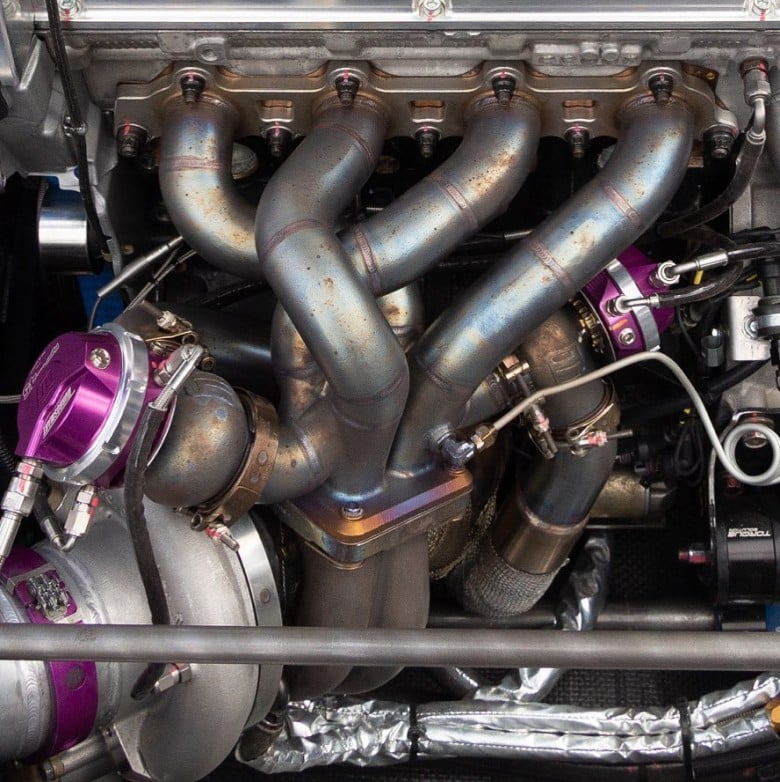
Wastegate placement is one of the most commonly overlooked aspects of a turbo installation, and getting it wrong can cause boost control problems that no amount of electronic tuning can fix. The key principle to understand is that exhaust gas is lazy; it does not like changing direction. When designing or evaluating an exhaust manifold, the goal is to position the wastegate so that exhaust gas can divert into it with as little change of direction as possible. Ideally the wastegate comes off the manifold at a shallow angle in the same direction the exhaust gas is already flowing, making it easy for gas to exit when the valve opens.
Garrett quantifies this for us all nicely in their installation guide for a GVW external wastegate: "the ideal takeoff is at 45° to the direction of flow with a smooth transition, while mounting the wastegate at 90° can reduce its flow capacity by up to 50% — with even greater losses beyond 90°" - Garret Advancing Motion
The worst-case scenario is where the wastegate is positioned so that exhaust gas must make an abrupt turn, or near a 180-degree reversal, to flow through it. In this situation, the gas simply will not flow through the wastegate effectively, the valve loses authority over boost pressure, and boost climbs exponentially as RPM and exhaust energy increase. There is no tuning solution for this, it's a 'garbage in garbage out' situation that requires physical changes to the installation.
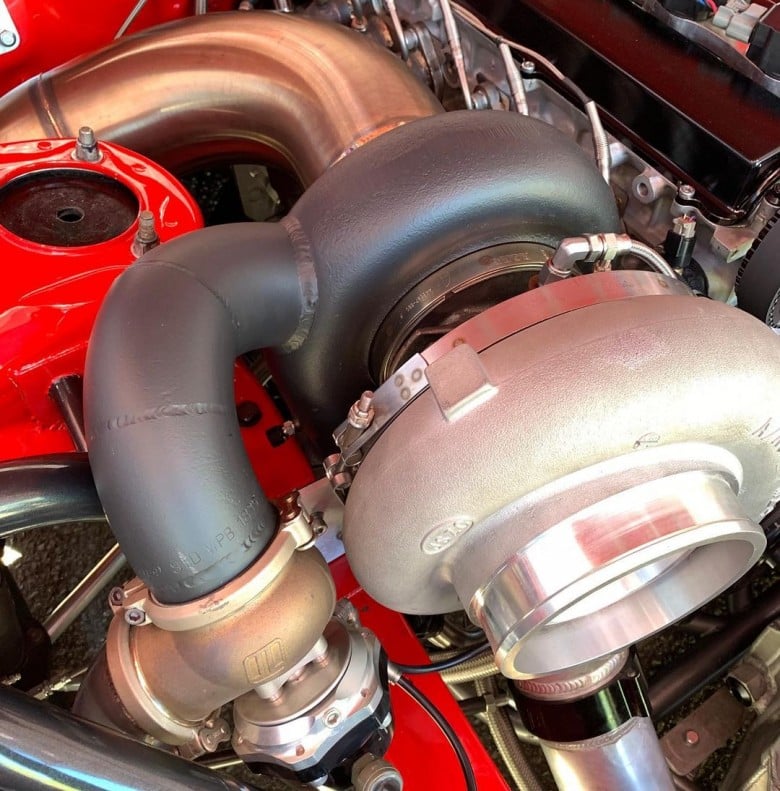
Conventionally the wastegate is taken off the manifold near the collector, but that is not the only option. In tight engine bays where integrating a wastegate in a way that promotes good flow is difficult, an alternative is to weld the wastegate directly to the exhaust housing of the turbocharger. A well-known example is the successful 2100 hp 2JZ-powered 101 Motorsport Toyota Supra that competed in the X275 radial drag racing class, where this exact approach is used. According to builder and driver Varun Sharma, the setup allows boost control from as low as 6 psi to over 100 psi with consistent, precise results across the entire run. There are considerations around packaging and also welding to a cast exhaust housing; if this is not done correctly the weld risks cracking and failing, so it must be approached carefully. It's also going to void any sort of warranty you have on your turbo, and this example is a pretty specific use case that saw a lot of testing and close competition in its chosen racing class.
For a detailed walkthrough of wastegate selection, installation, and setup, see the How to Select, Install and Set Up a Wastegate webinar.
What Is the Difference Between a Single-Port and Dual-Port Wastegate Actuator?
The number of ports on a wastegate actuator determines how it functions and how it can be connected to a boost control system. Understanding what is happening inside the actuator makes it straightforward to work out how to plumb it correctly.
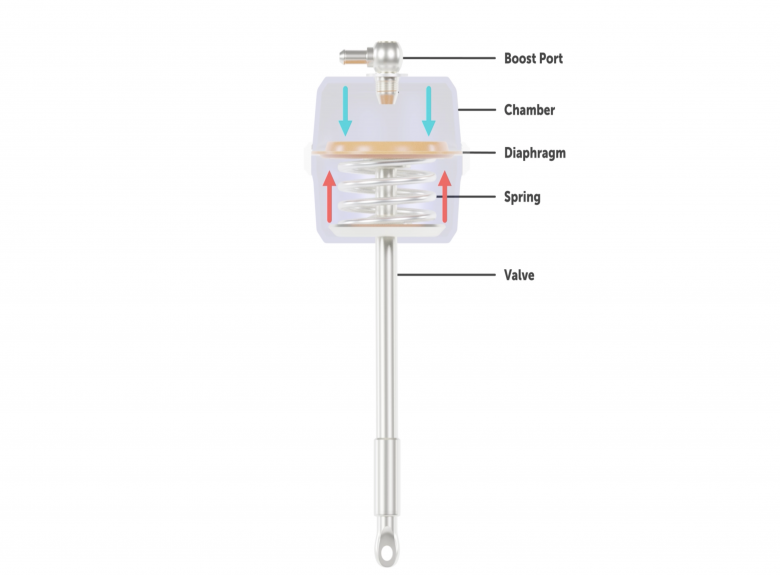
A single-port actuator has one sealed chamber. Boost pressure supplied to the port pressurises this chamber, and when that pressure is sufficient to overcome the spring, the wastegate valve opens. To raise boost pressure above the spring rating, you reduce the pressure signal reaching the actuator. This is the configuration you will typically find on factory internal wastegate setups, where the actuator is sealed and non-adjustable.
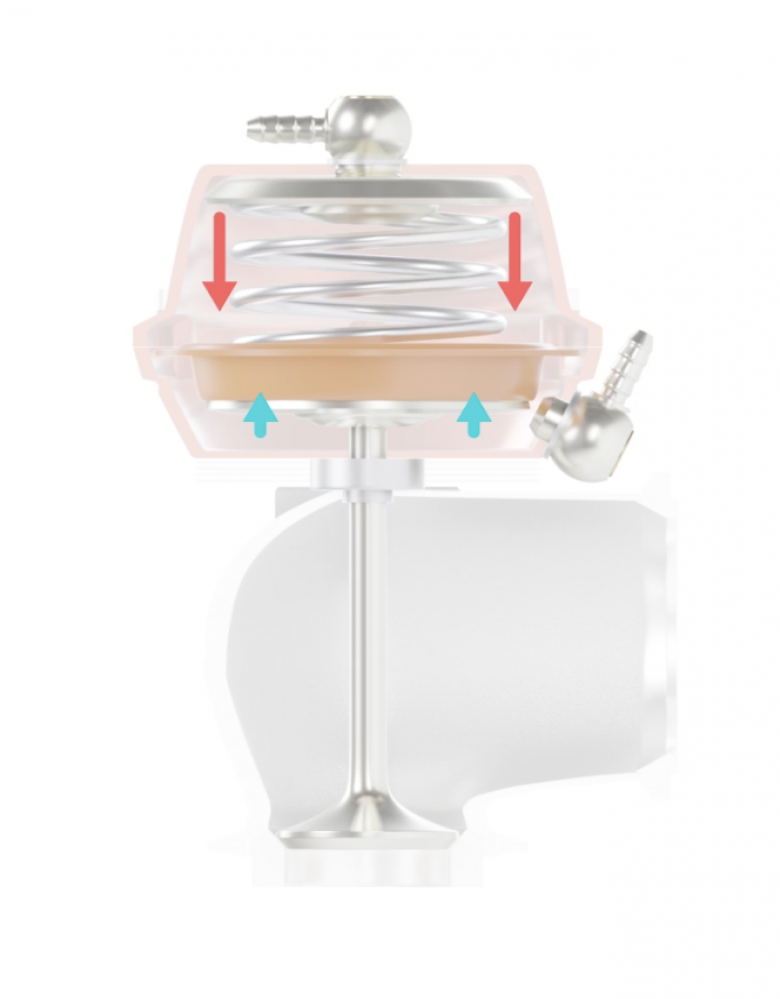
A dual-port actuator has two chambers. The port closest to the valve should be connected to boost pressure. When the lower chamber is pressurised, it works against the spring and lifts the valve off its seat. The second port, located on the top of the actuator, provides an additional method for increasing boost: by applying boost pressure to the top port, you force the valve closed, effectively working with the spring rather than against it. This gives you a wider range of boost control compared to a single-port setup. Dual-port actuators are most commonly found on external wastegates, where the spring is housed in the top of the actuator for easy replacement.
While internal wastegates typically have single ports and external wastegates typically have dual ports, this is not a hard and fast rule. Occasionally you will come across an internal wastegate with dual ports or an external wastegate with a single port. What matters is understanding the chamber arrangement, not just the type of wastegate.
How Do You Choose the Right Wastegate Spring?
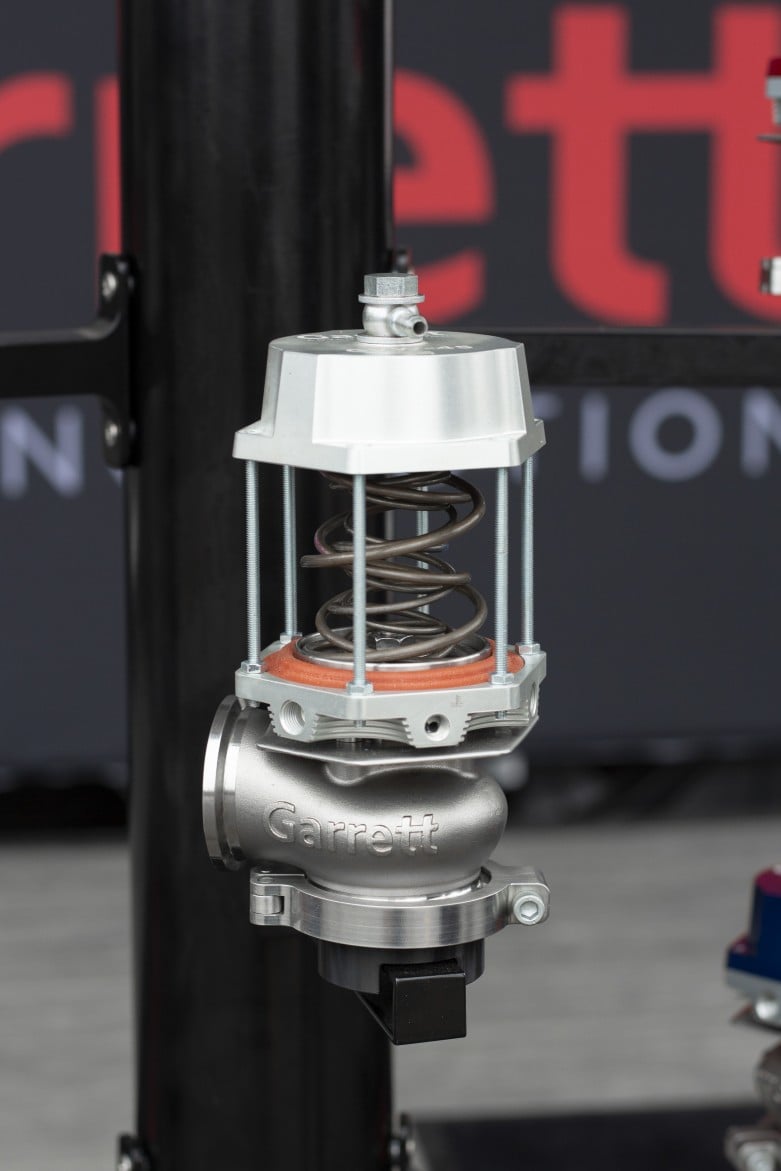
Most wastegate manufacturers offer a range of springs, each rated to a certain pressure. The goal when selecting a spring is to find one that gives you a base boost pressure close to the minimum boost level you want to run before any electronic control is applied.
This matters for two reasons. First, you want to be able to control the minimum power output of the engine, both for reliability and drivability. On a two-wheel-drive car, for example, having the ability to reduce boost low enough to manage wheelspin on a wet road is a practical benefit. Second, you cannot achieve unlimited boost pressure through electronic control alone. The upper limit of what you can achieve is constrained by the turbo, the engine, and the back pressure in the exhaust system.
That exhaust back pressure is an important factor to understand. The turbocharger presents a significant restriction to exhaust flow, which creates back pressure in the exhaust manifold between the exhaust valves and the turbine housing. In a factory turbo installation it is not uncommon for turbine inlet pressure to reach approximately double the boost pressure. If you are seeing 15 psi in the intake manifold, there could be 30 psi of back pressure acting on the wastegate valve, pushing it open. This is why, even if you remove the pressure source from the wastegate actuator entirely, boost will not climb indefinitely. At some point the back pressure alone will force the wastegate open and cap the boost level.
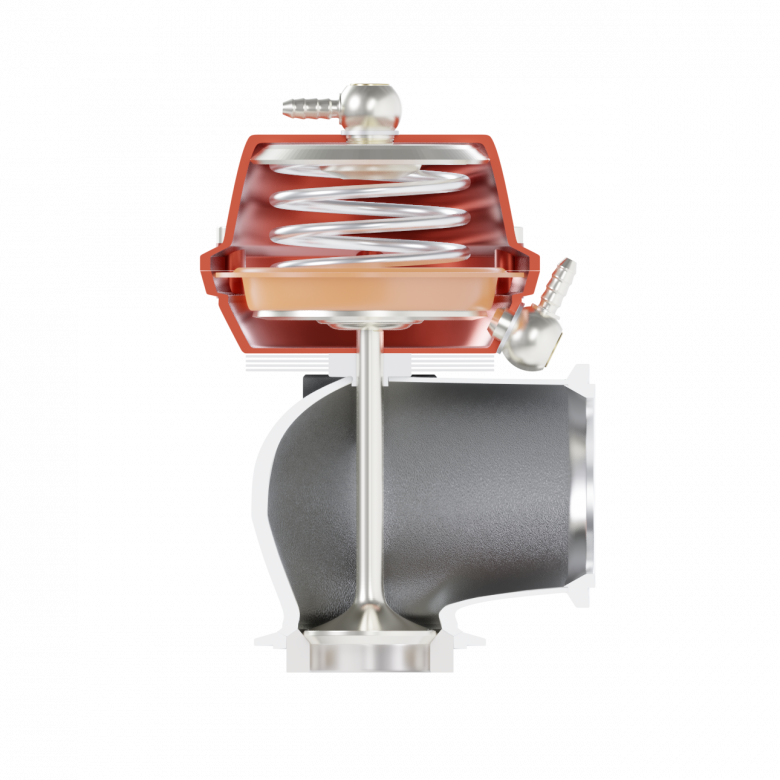
In practice, a wastegate spring rated to your minimum desired boost pressure is the right starting point. For example, a spring close to 15 psi might allow boost to be raised to 30 to 35 psi with the boost control solenoid at maximum duty cycle, depending on the turbo and engine combination. Fitting a much lower rated spring, such as a 7 psi spring when your minimum target is 15 psi, unnecessarily limits the upper range of boost you can achieve.
It is also worth noting that the spring pressure rating provided by the wastegate manufacturer assumes a certain level of exhaust back pressure. If your turbine inlet pressure is significantly higher or lower than what the manufacturer assumed, the actual boost level you achieve at the spring pressure alone may differ from what is printed on the spring. The manufacturer's rating is a useful guide, but not always a precise figure.
How Should You Plumb a Boost Control System?
Incorrect vacuum hose routing between the boost pressure source, the boost control solenoid, and the wastegate is consistently the most common cause of boost control problems. A solid understanding of what you are trying to achieve with the plumbing makes the correct approach straightforward.
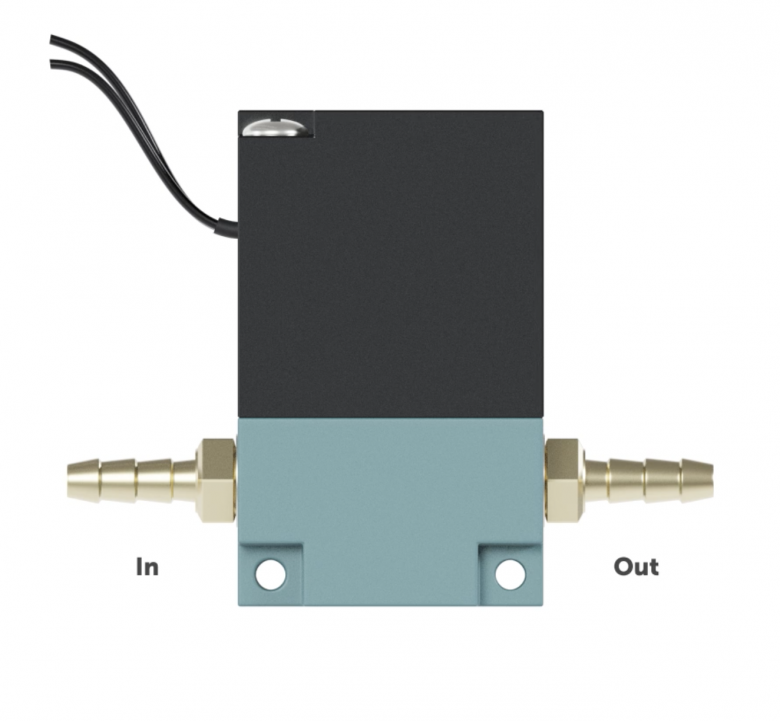
Two-port solenoids are used exclusively with internal wastegates and act as a bleed valve, venting boost pressure away from the wastegate actuator to raise boost above the spring pressure. The pressure source is tee'd off to both the wastegate actuator and the solenoid. When the solenoid is closed, full pressure reaches the actuator, giving minimum boost. When energised, the solenoid bleeds pressure away from the actuator, reducing the pressure acting on the diaphragm and allowing boost to rise. A restrictor in the pressure line is necessary with this setup to limit the volume of air reaching the wastegate, giving the solenoid enough authority to meaningfully reduce the pressure in the actuator.
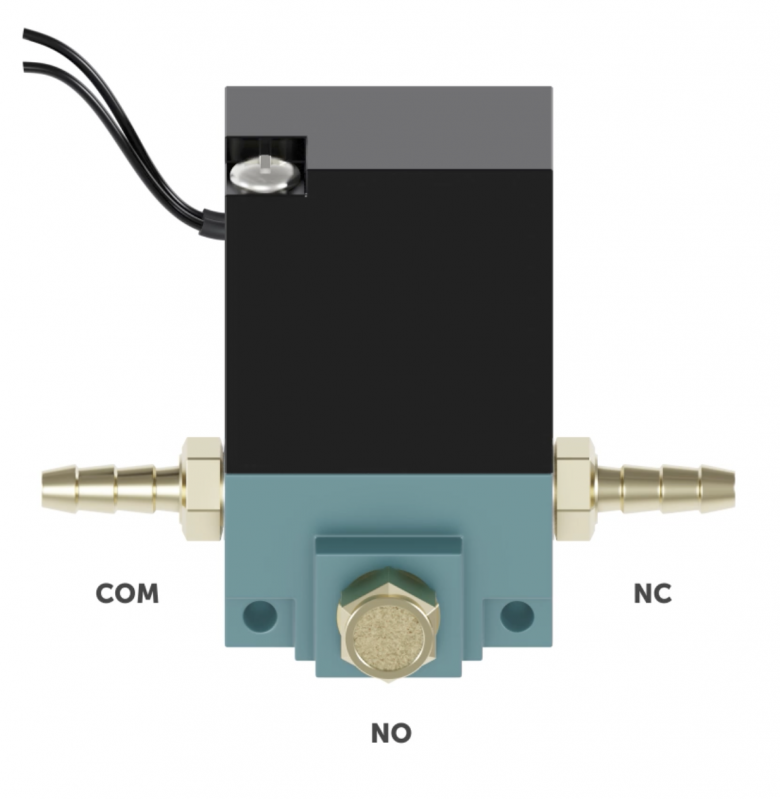
Three-port solenoids are the preferred method for controlling an internal wastegate actuator because they allow complete control over the pressure reaching the actuator. With the common port connected to the wastegate, the normally open port connected to the pressure source, and the normally closed port vented to atmosphere or back to the intake pre-turbo, the solenoid can completely isolate the wastegate from boost pressure while the turbo is spooling up. This ensures the wastegate stays fully closed during spool, and the boost control range is wider because pressure can be varied from the minimum spring pressure all the way to the maximum achievable boost with no pressure reaching the actuator at all.
For external dual-port wastegates, a three-port solenoid is the most common choice and will be adequate for most applications. There is however a limitation to its control range because boost pressure is always present at the underside of the wastegate, working to push it open. With a 10 psi base spring for example, a three-port solenoid at maximum duty cycle may only be able to raise boost to around 20 to 25 psi.
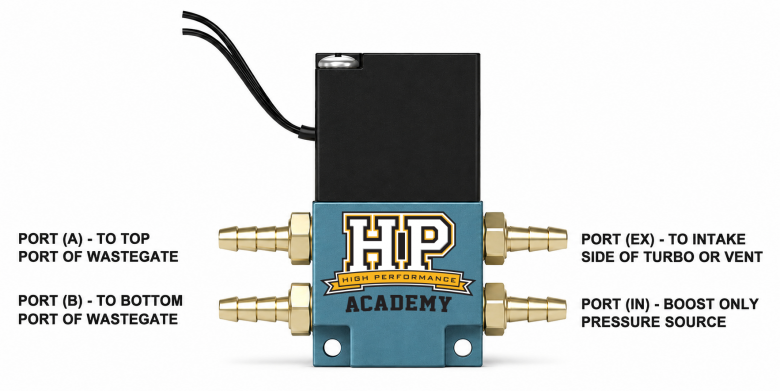
Where a wider range of control is needed, a four-port solenoid is the solution, and is only suitable for use with dual-port external wastegates. Port A connects to the top port of the wastegate, Port B connects to the bottom port, the IN port takes the boost-only pressure source from the turbo compressor housing, and the EX port vents to atmosphere or back to the intake pre-turbo. When the solenoid is de-energised, pressure is fed to the bottom port of the wastegate and the top port is exhausted. When energised, pressure is fed to the top port and the bottom port is vented. This allows the solenoid to actively add pressure above the diaphragm, effectively increasing the wastegate spring pressure and holding the valve closed to a much higher boost level than the spring rating alone would allow.
This is particularly relevant in high-powered drag applications where the engine needs to leave the line at low boost to manage traction, then ramp up to much higher boost levels as traction improves further down the track.
On twin-turbo engines, you will have a wastegate for each turbocharger. You can either run two separate solenoids controlled by the same ECU output, or use a single solenoid to control both wastegates. A single solenoid generally works well with internal wastegates, but dual solenoids are often preferable on twin-turbo installations.
When installing boost control plumbing, keep hose lengths as short as possible. Excessive hose length or volume creates a delay in pressure reaching the wastegate, which can cause boost to overshoot on gear changes or quick throttle reapplication. As a general guide, aim to keep boost control plumbing under 500 mm where possible. For internal wastegates, vacuum hose with an inside diameter of 3 to 4 mm is typically appropriate. For external wastegates, use a larger hose with an ID of 5 to 6 mm to account for the larger actuator chamber volume.
Protect all vacuum hose from heat sources using quality heat sheathing or heat shields, and route hoses away from sharp edges, rotating components, and anything that could cause physical damage. Allow enough slack for engine movement under acceleration and braking, but avoid leaving excess length that could contact hazards. Secure all connections firmly; a hose that pops off under boost can result in uncontrollable boost and engine damage.
While a three or four-port solenoid is the standard approach to boost control, interestingly, compressed natural gas (CNG) injectors have also been used for the same purpose particularly in rally applications. Being fuel injectors, they are precise and high-flowing, performing exactly the same function as a conventional solenoid. A well-known example is the Julian Godfrey-built YB Cosworth of the late (and great) Ken Block, where two CNG injectors are used in place of solenoids on a twin-port wastegate; one directing air to the bottom port to lift the valve off its seat and reduce boost, the other directing air to the top port to hold it closed and raise boost. This setup allows an extremely wide range of boost control, with the YB Cosworth capable of 46 psi and 700 lb/ft of torque from low RPM.
How Do Electronic Wastegates Work?
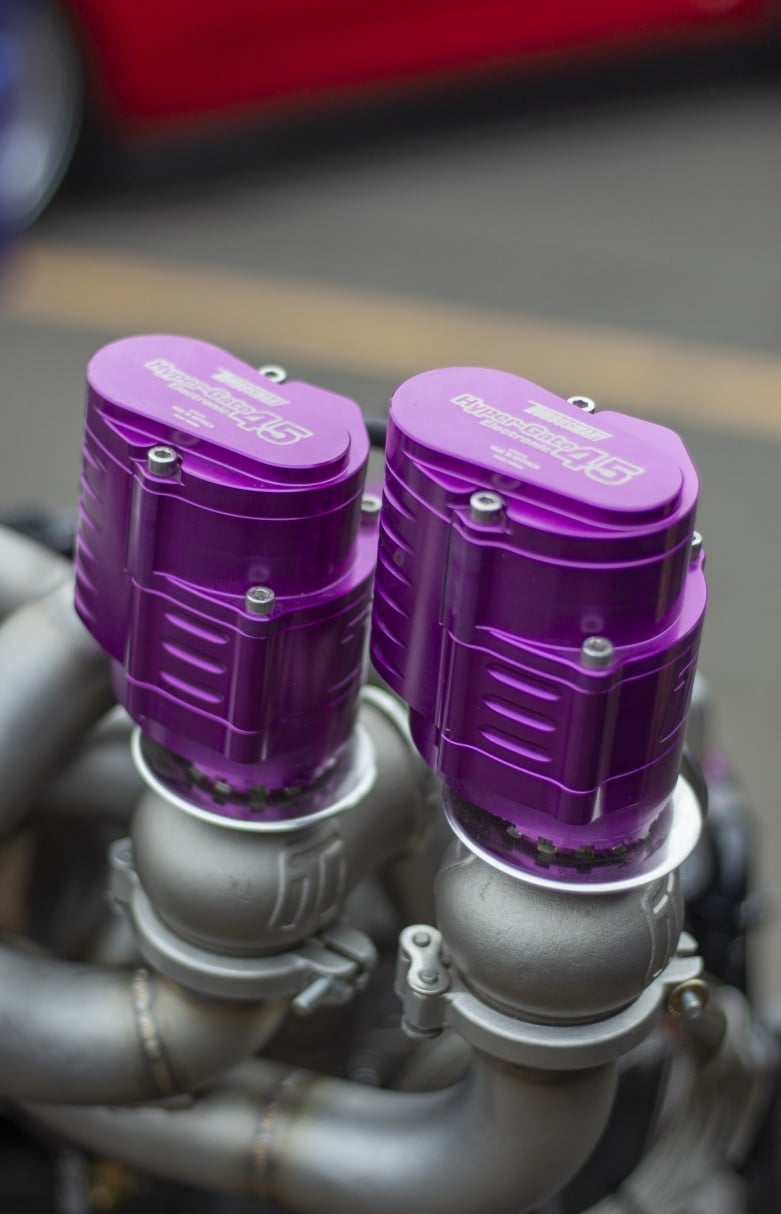
Everything covered so far has dealt with pneumatic wastegate control, which remains the right solution for the vast majority of turbocharged vehicles. There is however a growing case for electronic wastegate actuators such as Turbosmarts eWG or eGates in specific applications, and understanding where they genuinely offer an advantage over a well-set-up pneumatic system is worth knowing.
OEM manufacturers began moving to electronic wastegates to gain precise control over exhaust back pressure, enable exhaust gas recirculation, and integrate boost control with direct injection and emissions management. In the aftermarket, the motivation is different. The focus is on repeatability and reliability, particularly in drag racing, where consistent boost pressure at launch can decide a race.
The limitation of a pneumatic wastegate on the two-step is that the valve is never truly stationary. Exhaust manifold back pressure fluctuates as the engine pops and bangs on the limiter, and that pressure acts directly on the underside of the poppet valve, moving it around regardless of what pressure is being applied to the diaphragm above it. When the clutch is released, the valve could be at any position, moving in any direction, and that inconsistency directly affects the first 60 feet of a drag pass. An electronic wastegate eliminates this because it commands and holds a position. It does not matter what is happening in the exhaust; the valve stays where it is told to stay.
The other major driver for electronic wastegates in drag racing has been CO2 boost control. Running a compressed CO2 system to extend boost range introduces bottles, regulators, lines, and the very real possibility of human error. As Matt Wright from Turbosmart puts it, having CO2 on the car has cost countless races because someone forgot to turn the bottle on, ran it low, or had a line come off. An electronic wastegate removes all of those variables.
Beyond repeatability and eliminating CO2, the electronic wastegate also solves the boost range problem that a four-port solenoid only partially addresses. Because the valve position is commanded directly rather than being the result of competing pressure forces, you are no longer fighting exhaust back pressure to keep the valve closed. This means a much wider range between minimum and maximum boost is achievable without the resolution trade-off that comes with a four-port solenoid setup.
Turbosmart's aftermarket electronic wastegates are also built to withstand the exhaust back pressure levels that OEM actuators simply were not designed for. OEM units were engineered for factory applications and can be back-driven under high boost. The Turbosmart unit is rated to handle around 80 psi of exhaust manifold pressure on its 60mm valve, with that figure climbing to over 150 psi on smaller valve sizes as the same actuator force acts over a reduced area.
One of the more interesting engineering decisions Turbosmart made with their electronic wastegate range is the move to a butterfly valve rather than the conventional poppet style. A butterfly valve offers more linear flow relative to valve position than a poppet valve, which flows a large percentage of its total capacity within the first few millimetres of lift. The butterfly also equalises exhaust back pressure across both sides of the shaft, eliminating the force that would otherwise try to push a poppet valve open. From a packaging standpoint, Turbosmart's 50mm butterfly orifice outflows their 60mm poppet wastegate, effectively covering the full range of their external wastegate lineup in a single unit.
Controlling an electronic wastegate works on the same principle as a drive-by-wire throttle body: a motor moves the valve to a commanded position, and an encoder provides position feedback. The complexity lies in the current requirements. The motor can draw up to 20 to 25 amps when moving quickly, which exceeds what most aftermarket ECU connectors and output drivers can handle continuously. The solution is an external high-power driver module between the ECU and the wastegate. Turbosmart produces their own black box controller for this purpose, and ECU manufacturers including Haltech, FuelTech, and MoTeC have developed compatible drivers. Some ECUs now have 25 amp drivers built in, though using a dedicated external driver remains the preferred approach, a Link Razor PDM or similar for example, to keep high current loads away from the ECU itself.
"For 90% of applications, the pneumatic gate is still king." - Matt Wright, Turbosmart
That said, for the majority of applications, a traditional pneumatic wastegate remains the right choice. As Matt Wright puts it, in 90% of applications the pneumatic gate is still king. Street cars, circuit cars, and most road-going performance builds do not need electronic wastegate control, and a well-plumbed, correctly sprung pneumatic system with a quality three-port solenoid will deliver stable, accurate boost control with far less complexity. The electronic wastegate earns its place in drag racing and high-powered applications where traction management demands a wide boost range, precise launch control, and consistent repeatability that pneumatics cannot match.
For a closer look at the Turbosmart electronic wastegate hardware, watch this interview, or check out this podcast with Matt Wright of Turbosmart.
What Are the Most Common Boost Control Problems?
Electronic boost control can only work as well as the turbo system allows. If boost pressure is unstable or inconsistent with no electronic boost control in place, adding a boost controller will not fix that. Before attempting to configure any electronic boost control, confirm that the engine is capable of producing stable, consistent boost on the wastegate spring alone. If it cannot, address the mechanical installation first.
Common problems that cannot be resolved by boost control tuning include:
- Undersized or incorrectly positioned wastegate. The wastegate must be sized to bypass sufficient exhaust flow for the engine and turbo combination. Even a correctly sized wastegate can cause problems if it is positioned so that the exhaust flow must make an abrupt change in direction to reach it. The result is boost climbing exponentially with RPM, and there is nothing a boost control system can do to bring it down.
- Missing wastegate seat. The wastegate seat is a separate component that must be installed before the wastegate is fitted to the manifold. Without it, the valve has nothing to seal against and boost response will be extremely lethargic, with boost arriving very late in the rev range.
- Insufficient preload on internal wastegate actuators. Some internal wastegate actuators have an adjustable clevis on the wastegate arm. If there is insufficient preload, boost response will be slow and you will often hear the wastegate rattling at idle. Winding additional preload onto the arm will help improve response.
- Boost dropping at high RPM. Common on factory-sized turbos, which are sized for low RPM response at the expense of high RPM back pressure. This back pressure can force the wastegate open and cap peak boost. Electronic boost control can compensate to a degree, but there is a ceiling to what can be achieved.
- Boost overshooting on gear changes or quick throttle reapplication. Usually caused by a sticking or damaged wastegate valve, or excessive length and volume in the boost control plumbing delaying the pressure signal to the actuator. Small inside diameter vacuum hose can also restrict airflow and slow valve response.
- Damaged boost control hose or wastegate diaphragm. A melted, cracked, or otherwise damaged vacuum hose will cause uncontrolled boost immediately. A torn wastegate diaphragm will prevent the wastegate from opening at all, resulting in boost spiralling to the maximum with no control. Both are worth inspecting early in any fault-finding process.
If you are experiencing boost control issues, the most effective first step is to remove electronic boost control from the equation entirely and test the system in open loop. This quickly separates a tuning problem from a mechanical or plumbing problem. For a detailed walkthrough of diagnosing and resolving boost control issues, see members webinar 345 | Boost Control Troubleshooting.
Learn More About Boost Control
Understanding how a wastegate works is the foundation for everything that follows when it comes to tuning boost control. Whether you are trying to achieve a consistent street boost pressure or dialling in a wide boost range for motorsport use, the principles covered here apply across the board. If you want to go further and learn how to configure and tune electronic boost control from the ground up, the Boost Control course covers:
- How the wastegate controls boost pressure
- Differences between internal and external wastegates
- How a 2 port and 3 port boost solenoid works and which you should be using
- How to plumb a wastegate for the best results
- Common boost control problems that can effect your results
- How a PID control system works and the correct approach to tuning it
- How to configure and tune an open loop boost control system
- How to configure and tune a closed loop boost control system
Enrol instantly, lifetime access.