More boost = more power, right?
If you're tuning a diesel engine and the only change you plan to make is more boost, you probably won't notice any practical difference in power. In fact, you could increase boost pressure significantly and see almost no difference on the dyno, let alone the seat of your pants. But that doesn't mean nothing else is happening behind the scenes, both good and bad.
What Happens When You Turn Up the Boost?
As we've explained previously, in a turbocharged petrol engine, increasing boost allows us to get more air into the cylinders. Add the corresponding fuel and, assuming everything else is in order, we can generally expect an increase in torque and power.
With a diesel, things work a little differently.
The amount of torque a diesel produces is primarily controlled by how much fuel we inject. Increasing boost without increasing fuel quantity doesn't necessarily give us anything more to burn, so there's little reason to expect a significant increase in power.
What we will change is the air/fuel ratio (AFR). Note that when tuning, we do prefer to work in lambda but it's great to be familiar with both. With AFR vs lambda, it is just personal preference at the end of the day.
Six PSI More Boost, Less Than 10 HP Difference
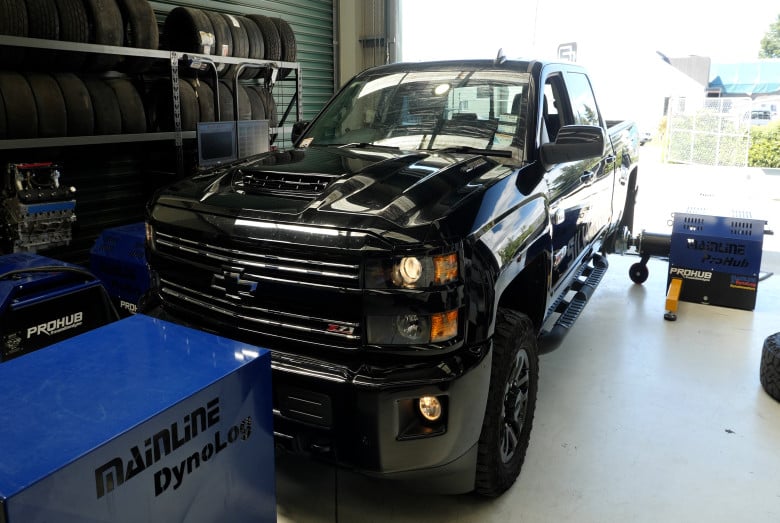
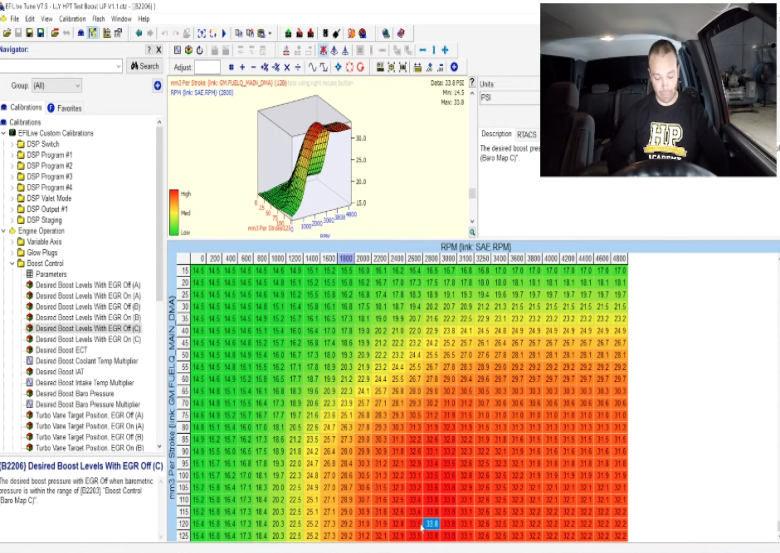
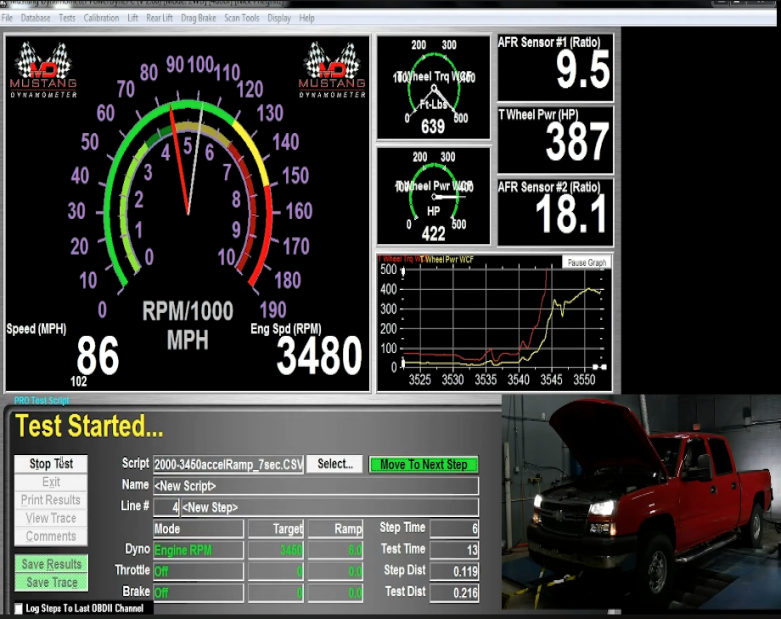
HPA tutor Nick Priegnitz ran three calibrations on a stock 2005 LLY Duramax, changing only the commanded boost pressure and logging the results. Boost pressure for his runs was:
- 19 psi or 1.31 bar
- 22 psi or 1.52 bar
- 25 psi or 1.72 bar
Note these are boost pressure targets, rather than absolute manifold pressure readings, but all runs were done on the same dyno with the same vehicle. Fuel quantity remained the same for all three.
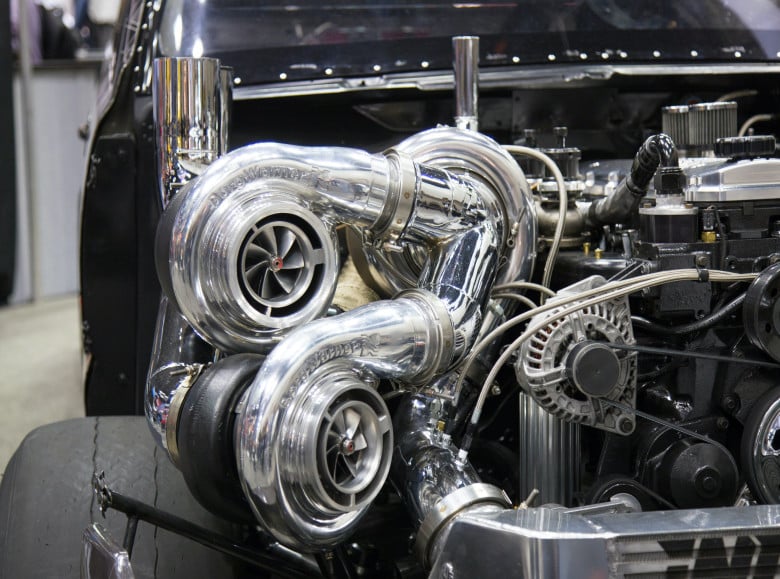
The turbocharger responded exactly as requested. The variable geometry vanes adjusted, actual manifold pressure followed the boost targets, and the engine received more air with each increase.
This is where the AFR data gets interesting, so let's take a look.
On the lowest boost calibration, AFR varied from approximately 17.5:1 to 19:1.
On the highest boost calibration, it reached the sensor's 19.5:1 upper measurement limit and remained there for much of the run, meaning the actual AFR may have been even leaner. Either way, we made a substantial and measurable difference to the AFR.
But what did that do for power? Pretty much nothing is the answer. Less than 10 horsepower separated the three dyno runs.
Is More Boost A Waste Of Time?
Not necessarily. The higher boost calibration ran leaner (we've previously discussed how being lean in a diesel isn't a bad thing), meaning there was more oxygen available relative to the injected fuel. This can help reduce soot production and, depending on the operating conditions, lower exhaust gas temperature (EGT). Less soot means less work for the DPF, while keeping EGT under control is important for engine and turbocharger reliability.
Those benefits become especially useful when you start increasing fuel to make more torque. As Nick explains on the HPA Tuned In podcast, more boost can help, but only within the turbocharger's capabilities. For every change you make, there is always a trade-off. Always. The catch here is that asking the turbocharger to make more boost can mean working it harder.
In our Duramax example, the turbocharger used its variable geometry vanes to increase boost. Continue closing those vanes and eventually the resulting increase in drive pressure can start working against what we're trying to achieve.
There's little point forcing the turbocharger to work harder if the engine already has enough air to burn the injected fuel efficiently. Nick makes this point during the podcast when discussing his own tuning approach:
“I don't want to run the turbocharger needlessly harder. I don't want to clamp the vanes down or clamp the wastegate down to get 1.4 lambda [roughly 20:1 AFR] if I don't need it.”
Why that can be bad could be a whole other post, but in a nutshell, the potential drawbacks include:
- Higher exhaust manifold pressure (drive pressure) relative to boost pressure
- Increased pumping losses and reduced engine efficiency
- Potentially pushing the turbocharger beyond its efficient operating range or mechanical limits
Not sure what pumping losses are? Have a quick read here.
Can You Add Boost Without Adding Fuel?
With all this in mind, we need to consider fuel quantity, AFR and boost pressure together, rather than treating boost as a standalone power adjustment, as we can to an extent with petrol or alcohol-fuelled engines.
The lesson from our practical test is pretty straightforward. We increased boost by about 6 psi, made the mixture noticeably leaner, and gained almost no power. So if you're turning up the boost purely to chase horsepower, make sure your engine gets the fuel it needs to use that extra air.