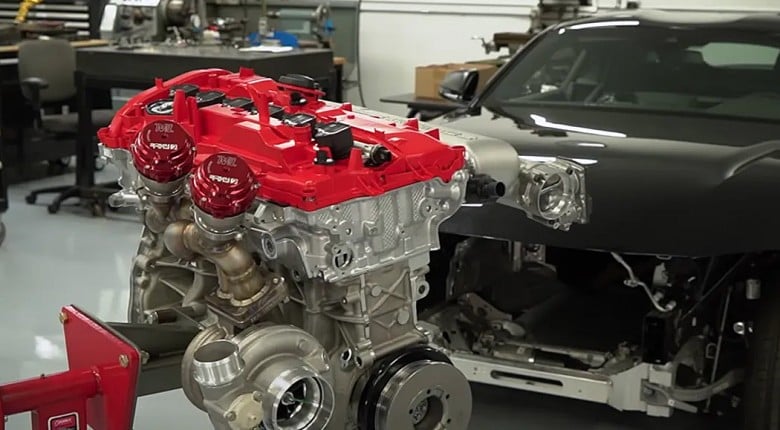
Strong, easy to find, and capable of BIG power... Is the BMW B58 one of the best straight sixes ever made?
Let's dig into it.
A Brief History of the BMW B58
The story of BMW’s three-litre straight-six B58 engine has its roots in the company’s long-running inline-six traditions, and more recently, the turbocharged N54/N55 engines that powered much of BMW’s performance lineup through the early 2000s and 2010s. While the N54 and N55 proved successful (if problematic in some regards), tightening emissions regulations, increasing efficiency demands, and the need for greater performance potential meant BMW required a more advanced straight-six engine platform moving forward.
Introduced in 2015 as part of BMW’s new Modular engine family, the B58 was designed around a common 500cc-per-cylinder architecture shared with the company’s B38 three-cylinder and B48 four-cylinder engines. Instead of simply evolving the N55, BMW carried out a substantial redesign for the B58, focusing on improved thermal efficiency, strength, and responsiveness.
Debuting in the F30-generation 340i, the 3000cc B58 addressed a lot of shortcomings found in its predecessors, using a closed-deck aluminium block, forged crankshaft, water-to-air intercooler integrated into the intake plenum, and an impressive single twin-scroll turbocharger setup with a big hike in boost, as well as a much-improved cooling system.
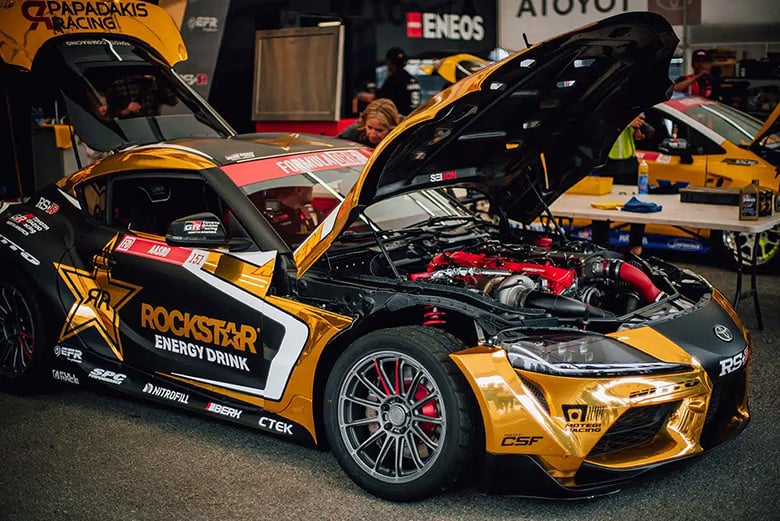
This represented a major leap forward over the outgoing N55. Not only was the B58 considerably more efficient and emissions-friendly, but it also delivered a broader torque curve, smoother power delivery, and significantly improved reliability under higher boost pressures. Early versions produced around 320hp, though enthusiasts (as we tend to do) discovered the engine was capable of far more with only minor modifications, thanks to pioneers like Stephan Papadakis, who discusses his 1000+hp B58 build in this HPA interview.
Several updates followed over the following years, including the improved B58TU “Technical Update” introduced in 2018. This featured a redesigned cylinder head with an integrated exhaust manifold, revised timing chain layout, higher-pressure fuel injection system, and a larger turbocharger on some higher-performance applications. These changes improved throttle response, thermal management, and overall efficiency.
The B58’s reputation grew rapidly thanks to its combination of smooth inline-six character and immense tuning capability. It found its way into a wide range of BMW models, from the M340i and Z4 M40i through to the A90 Toyota Supra, developed in partnership with Toyota. In higher-output factory applications, power climbs beyond 430hp while still maintaining very good drivability and durability.
As of 2026, the B58 is still being produced and is widely regarded as one of BMW’s best modern engines. In the next chapter, we'll discuss exactly why that is.
It's also worth noting that there is an ultra-high-performance version of the B58, known as the S58. This was first introduced in the 2019 X3 and X5 M, and can also be found in various M2, M3, and M4 models. Because this is a less accessible, more specialist engine, we won't be focusing any further on the S58 in this particular article.
Why Do People Love the BMW B58 Engine?
The B58 has quickly earned a reputation as one of the best modern turbocharged inline-six engines on the market. It combines strong factory performance, impressive reliability, and huge tuning potential, all while retaining the smoothness BMW’s straight-six engines are known for.
From the factory, the B58 delivers a broad and highly usable torque curve, mostly thanks to its twin-scroll turbocharger.
A major part of the B58’s appeal for us as tuners is the strength of its core architecture. The closed-deck block design provides significantly more rigidity than the older open-deck N54 and N55, while the forged crankshaft and robust bottom-end components allow the engine to comfortably handle substantial increases in boost pressure, which we'll get into soon.
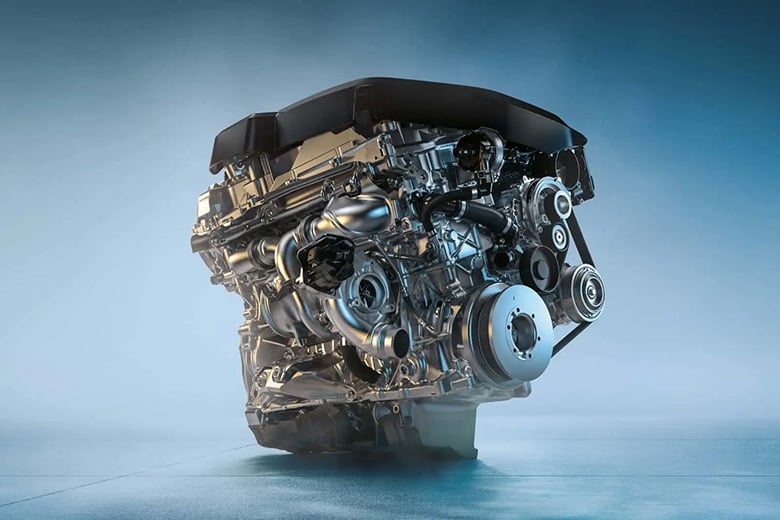
Up to a certain point, the integrated water-to-air intercooler built directly into the intake manifold is also praised. This reduces intake charge volume and improves throttle response while also helping maintain more consistent intake temperatures under repeated load. Of course, there comes a point where a bigger intercooler system is required, and that requires more significant changes than would be needed for a conventional intake, but for stock and reasonably modified builds, it does an excellent job.
Although the factory internals aren’t fully forged throughout, featuring cast pistons, the B58 has repeatedly proven capable of handling serious power figures on stock components. Basic bolt-ons and ECU tuning (which you can master yourself) can unlock significant gains, and many examples have comfortably exceeded well over 600hp through bolt-ons alone, and without requiring the engine to be opened.
Another reason enthusiasts gravitate toward the B58 is its availability. The engine has been used across a huge range of BMW models, from luxury sedans and SUVs through to performance-focused cars like the M340i and A90 Toyota Supra. As a result, aftermarket support has exploded, with extensive tuning solutions, upgraded turbocharger options, fueling systems, and drivetrain components easily available.
Most importantly, the B58 manages to balance modern turbocharged performance with the smooth, linear character that BMW's inline-six has always been known for. That combination of refinement, strength, and tuning capability is a big reason why it has become one of the most well-regarded modern performance engines in recent years.
Where Can You Find BMW B58 Engines?
Beginning in 2015, the B58 has been the go-to straight-six engine for BMW, and that means that it can be found in a huge variety of models in different specifications. Here's a complete list:
- 2015–2019 BMW 340i (F30/F31/F34)
- 2016–2019 BMW 440i (F32/F33/F36)
- 2016–2019 BMW 740i/Li (G11/G12)
- 2016–2019 BMW M140i (F20/F21)
- 2016–2021 BMW M240i (F22/F23)
- 2017–2019 BMW 540i (G30/G31)
- 2017–2019 BMW X3 M40i (G01)
- 2018–2019 BMW X4 M40i (G02)
- 2018–2023 BMW X5 xDrive40i/sDrive40i/xDrive45e (G05)
- 2018–2023 BMW X7 xDrive40i (G07)
- 2019–2024 BMW X4 M40i (G02)
- 2019–2026 BMW Z4 M40i (G29)
- 2019–2025 Morgan Plus Six
- 2019–present Toyota GR Supra (A90)
- 2019–2026 BMW 840i (G14/G15/G16)
- 2020–2023 BMW 540i (G30/G31)
- 2020–2023 BMW 640i (G32)
- 2020–2023 BMW X6 xDrive40i (G06)
- 2020–2022 BMW 740i (G11/G12)
- 2019–2024 BMW M340i (G20/G21)
- 2020–2024 BMW X3 M40i (G01)
- 2021–present BMW M440i (G22/G23/G26)
- 2021–present BMW M240i (G42)
- 2022–present Ineos Grenadier
- 2022–present BMW X7 xDrive40i (G07)
- 2023–present BMW 740i (G70)
- 2024–present BMW X5 xDrive40i (G05)
- 2024–present BMW X6 xDrive40i (G06)
- 2024–present BMW 540i xDrive (G60)
- 2024-present BMW X5 50e (G05)
- 2025–present BMW M340i (G20/G21)
- 2025–present BMW X3 M50 (G45)
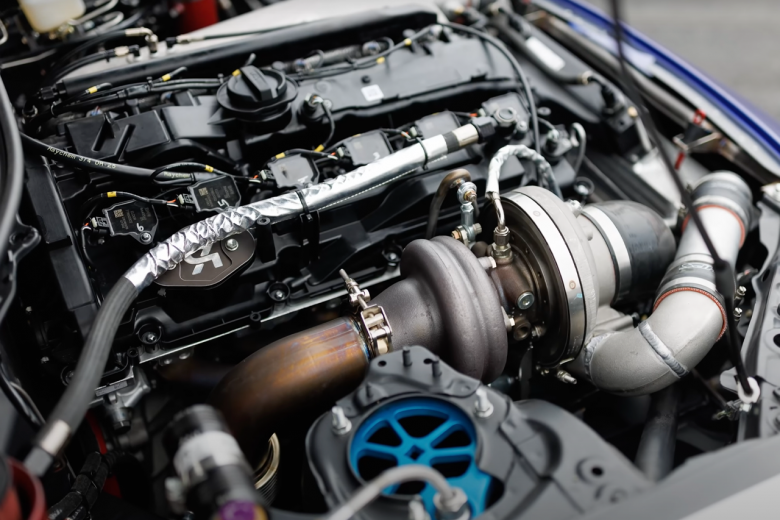
Factory Specifications of the BMW B58
Architecture: Four-stroke, straight six cylinder
Bore/Stroke: 82mm bore / 94.6mm stroke
Compression Ratio: 10.2:1
Production: 2015 - present
Displacement: 2998cc
Block: Aluminium construction, closed deck, forged crank, forged rods, cast pistons
Head: Aluminium DOHC four-valves per cylinder, Valvetronic and Double VANOS
Load measurement metering: MAP + MAF
Fueling: Direct injection
Cam timing: Chain
Pros & Cons of the BMW B58
Pros
- Excellent power and response from the factory.
- Huge power potential with modifications.
- Very strong and capable of handling high boost levels.
- Easy availability.
- Inline six smoothness.
- Extensive aftermarket support.
Cons
- More frequent maintenance requirements.
- Tight packaging in factory-fitted applications.
- Integrated intake/intercooler system limitations.
Known Weaknesses of the BMW B58
While the B58 is one of the best modern engine choices for aftermarket modification and tuning, it still has a few limitations that enthusiasts regularly run into once things start escalating. Although the engine is very capable in factory form, chasing bigger power figures often exposes weaknesses in the supporting systems, rather than the engine itself.
Some of the more common downsides tuners tend to encounter when modifying the B58:
- The stock high-pressure fuel system becomes a restriction once power levels start climbing. Bigger turbo setups will generally require upgraded high-pressure fuel pumps, port injection, or methanol injection to safely support additional boost and ethanol blends.
- The factory twin-scroll turbo delivers excellent response, but it runs out of efficiency at higher boost levels.
- The factory cooling package works well for a mild build, but repeated hard driving or track use can cause intake temperatures and oil temps to climb rapidly.
- Later-model B58s feature increasingly aggressive security in their ECUs, often requiring bench unlocks or FEMTO unlock services before tuning is even possible.
- If we're working with a factory-fitted B58, the extremely tight packaging makes projects like turbo swaps and larger aftermarket components more difficult to install compared to older inline-six platforms.
- Like most DI engines, intake valve carbon buildup remains a maintenance item.
- The PCV valve is known to fail, however it is cheap and easy to replace.
- It's common for the oil filter housing to start leaking due to warpage, cracks, or failed gaskets.
Tuning a BMW B58
Tuning a B58 is no different to tuning any engine -- all the same rules and techniques apply (which you can learn here). That said, there are a few things that should be considered before diving in. It's also worth noting that the power figures discussed below need to be taken with a grain of salt, as the starting point varies considerably depending on which version of the B58 you're working with. For example, some versions can be as low as 286hp, while others, like the B58 found in the current Final Edition A90 Supra, produce over 430hp straight off the showroom floor.
Let's start with the very basics and work our way towards maximum power.
At the entry level, the B58 responds well to a simple ECU reflash. Because the factory calibration is relatively conservative, substantial gains can be made through software alone. An increase in boost, revised ignition timing, and optimised fuel delivery can net anything from 60-120hp extra.
There are plenty of software options here. BM3 and MHD Tuning are the most popular choices for street and enthusiast builds, with MHD offering a particularly accessible entry point for those new to B58 tuning. MG Flasher is also well-regarded. Each has its own pros and cons, so it's worth investigating in detail within the community to work out what's going to suit your needs best.
Next, we move into the aftermarket bolt-on realm.
Here, by pushing the factory turbo to its limits, we can expect to see upwards of 5-600hp on a completely stock motor. This would involve ditching the integrated intercooler and going aftermarket for both the cooler and the intake system, as well as an exhaust upgrade, a higher-pressure fuel pump, and a retune for ethanol using a flex-fuel sensor.
At this point, we've reached the limitations of the stock turbocharger, as well as the fuel and cooling systems.
This is where things get interesting.
Still retaining the stock engine internals, we can push power levels up to around 650-750hp at a maximum, through the use of a hybrid turbocharger. This retains the original housing (meaning no custom work is required for fitment) but replaces the internals to allow for higher flow. As with most power-adding modifications, this will move the power delivery higher up into the rev range, affecting driveability mildly, but not to a point where it becomes unpleasant.
To support this, we'll also need to convert the fuel system from direct to port injection. Like most things B58, there are plenty of kits out there to allow you to do this without too much hassle.
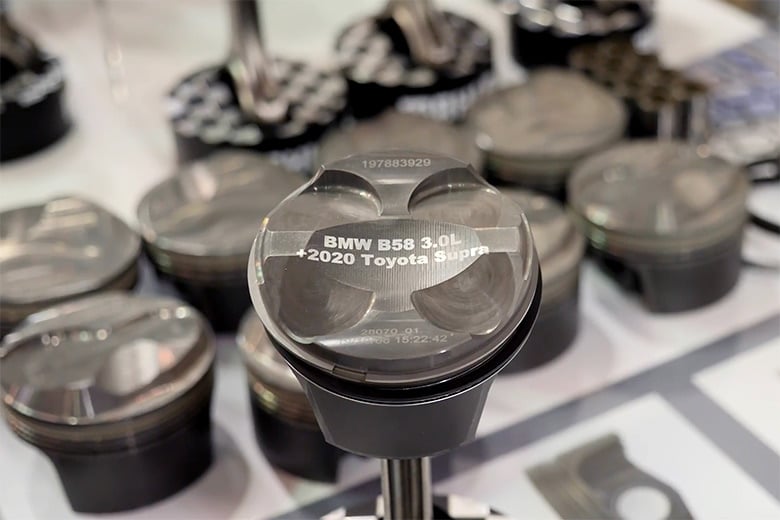
At this point, we've reached the limits of the stock internals. For high-horsepower builds above this level, it's time for a built engine.
This means new pistons and rods from suppliers like Carillo, JE, or Mahle, as well as upgraded rod bearings and fasteners. Thankfully, the factory forged crank is bulletproof, so there's no need to replace it.
With an aftermarket full-frame turbo, plus further upgraded fuelling and ECU tuning, we're looking at 750-1000hp. At this point, it may make sense to move to a standalone ECU, depending on your needs.
Beyond 1000hp, we're getting into very serious territory. Driveability will suffer heavily from now on, but the performance will make it all worth it.
The next step forward has seen B58s reaching upwards of 1500hp, and requires a more extensive engine build using a sleeved block and upgraded headgasket to go with the forged internals and aftermarket fasteners and bearings mentioned earlier. At this point, extensive valvetrain upgrades also become necessary in order to support the flow levels of what will be a very large turbocharger. Of course, this turbo requires a lot of intake and exhaust work to fit, as well as some serious fuelling and cooling system upgrades in support.
At this point, driveability takes a serious hit, but for the right application (hunting down 2JZ and LS builds), the sacrifice is more than worth it.
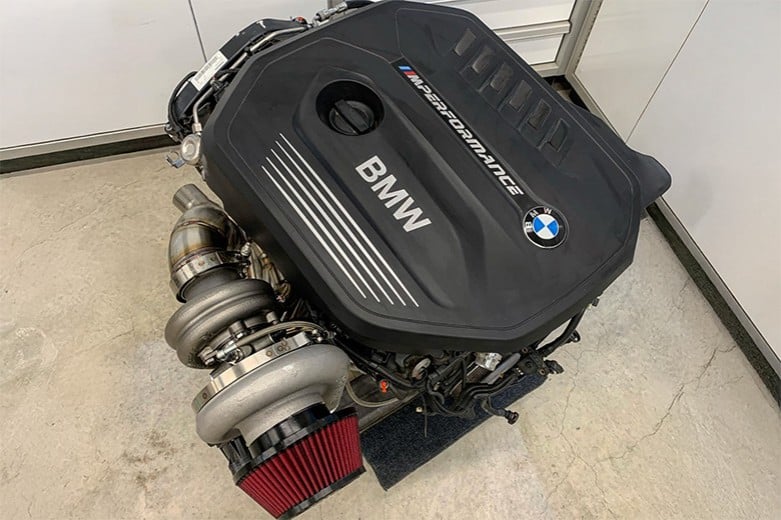
BMW B58 Engine Alternatives
Because the B58 is so abundant, there's not too much need to go out hunting for an alternative option, but with that said, there are always rival motors out there that can foot it with the B58 in the big-power world. Fellow straight sixes are the obvious go-to here, but it's also worth considering some V8 options if you're not committed to a six-cylinder.
- BMW N54/N55 (3.0 litre straight six)
- BMW S58 (3.0 litre straight six)
- Toyota 2JZ-GTE (3.0 litre straight six)
- Nissan RB26DETT (2.6-litre straight six)
- Nissan VR38DETT (3.8-litre V6)
- GM LS (5.7-7.0 litre V8)
Get the Most From Your BMW B58 Engine
It's time to get serious about your BMW B58-powered project. The question is, where should you start?
To set yourself up for good results, check out HPA's range of engine building and tuning courses.
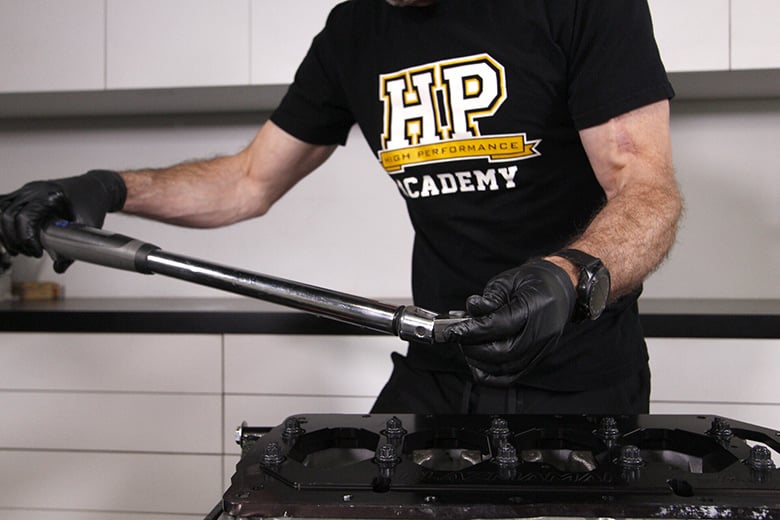
If you're looking to build a B58 (whether it's a rebuild using factory-spec parts or a fully built motor), you'll want to start with the Engine Building Fundamentals course, followed by Practical Engine Building.
You can also grab the heavily discounted Engine Building Starter Package, which includes these two courses plus a course dedicated to degreeing cams.
Once you've built your B58, it's time to tune it.
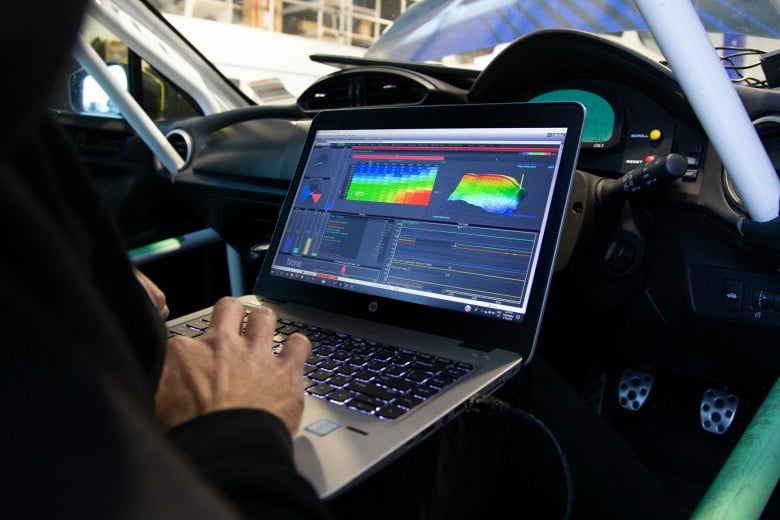
The B58 is an excellent motor that's capable of massive power, provided you know what you're doing.
You can learn everything you need to know to successfully tune your motor with the EFI Fundamentals, Understanding AFR (air-fuel ratio), Practical Reflash Tuning, and Practical Standalone Tuning courses -- these can all be bundled together for a healthy discount with the Tuning Starter Package.
Throughout this process, if you ever find yourself stuck, you'll have access to our support forums, where you can post any questions you've got and get answers from tutors and the wider tuning community.