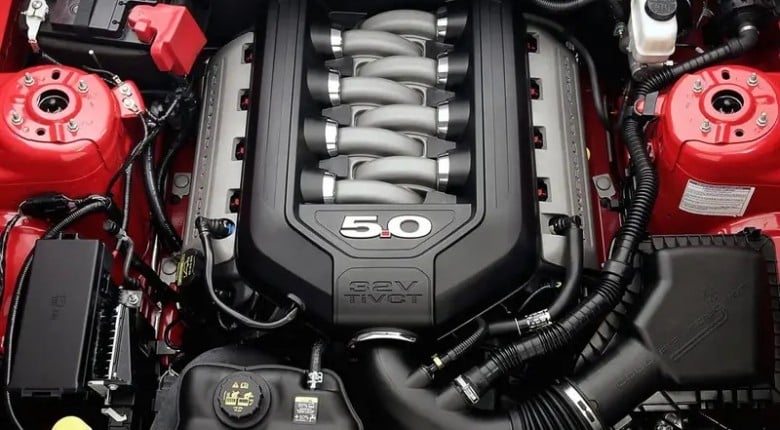
Is this the greatest Ford V8 engine of all time?
Ford has produced plenty of great V8 engines in its history, but we think the Coyote and its variants go down as one of the very best.
This article looks into all aspects of this ubiquitous five-litre aluminium DOHC V8, covering its history, various versions, specifications, weaknesses, tuning formulas, and more.
- History of the Coyote V8
- Special Edition Coyote-Based Engines
- Why Do People Love the Coyote V8?
- Where Can You Find the Coyote V8?
- Factory Coyote V8 Specifications
- Pros and Cons of the Coyote V8
- Known Weaknesses of the Coyote V8
- Tuning a Coyote V8
- Coyote V8 Engine Alternatives
- Getting the Most From Your Coyote V8
A Brief History of the Ford Coyote V8
The story of the Coyote has its roots in Ford's "modular" family of V8s that dominated the blue oval's offerings throughout the 90s and 2000s. Rather than a completely clean sheet design, the Coyote can be thought of as more of an evolution of this older Modular V8 that, by the mid 2000s, was finding its limitations in cylinder head flow, valvetrain stability at high RPM, and meeting efficiency/emissions targets without taking an axe to performance.
Confusingly known as the "Boss" program internally, the Coyote was designed with a strong focus on improved airflow, efficiency, and emissions compliance while still delivering the horsepower and torque expected of a V8 sitting between the struts of a Mustang, as well as a true rival to GM's LS.
Debuting in 2010, the five-litre Gen 1 Coyote featured an all-aluminium construction, DOHC four-valve heads, and the introduction of Twin Independent Variable Cam Timing (Ti-VCT), allowing separate control over both intake and exhaust camshafts.
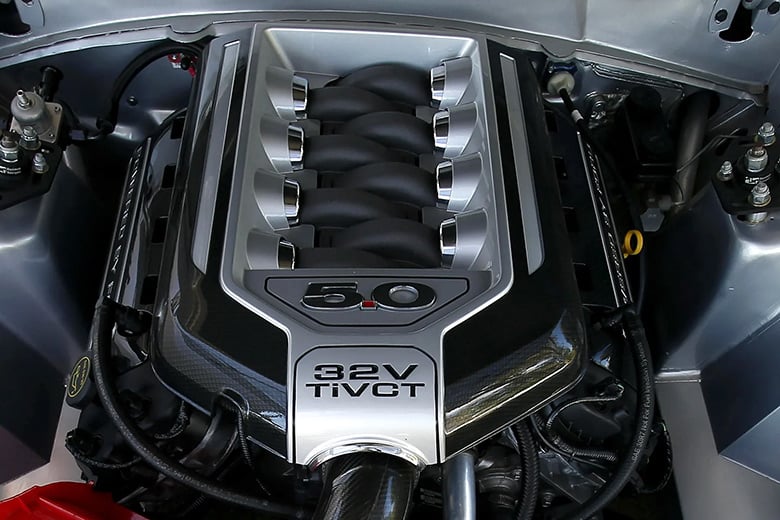
This represented a massive step forward for Ford. Not only was the new motor far more efficient than the Modular V8, but it also featured a more usable powerband that peaked at 412hp in the 2011 Mustang GT.
Various revisions and special editions followed over the subsequent years, with the second generation arriving in 2015. This brought revised cylinder heads with larger intake and exhaust valves, higher-lift camshafts, stiffer valve springs, and a new intake manifold featuring charge motion control valves (CMCV).
Arriving in 2018, the Gen 3 Coyote represented a more substantial redesign that added direct injection to the existing port injection. The iron cylinder sleeves were replaced with a plasma wire arc transfer liner process, which also increased the bore diameter from 92.2mm to 93mm. The compression ratio was bumped up, and the ECU saw a significant upgrade to cope with the dual injection setup. This resulted in power jumping to the 460hp mark.
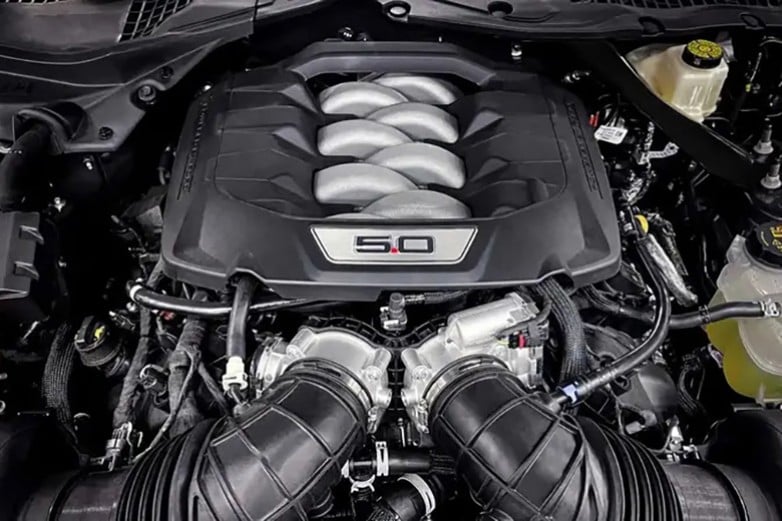
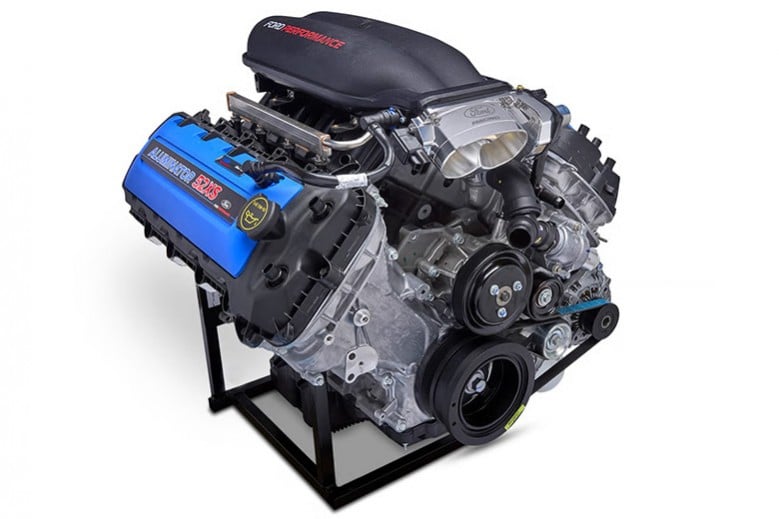
The final and current generation, introduced with the 2024 Mustang, sees new four-into-one headers and other refinements, and is most easily identified by dual throttlebodies at the front of the motor, as seen in the image above. These tweaks push power up to 500hp.
Special Edition Coyote-Based Engines
Throughout its production, the Coyote has been used as the base for a few "limited" powerplants destined for special versions of the Mustang.
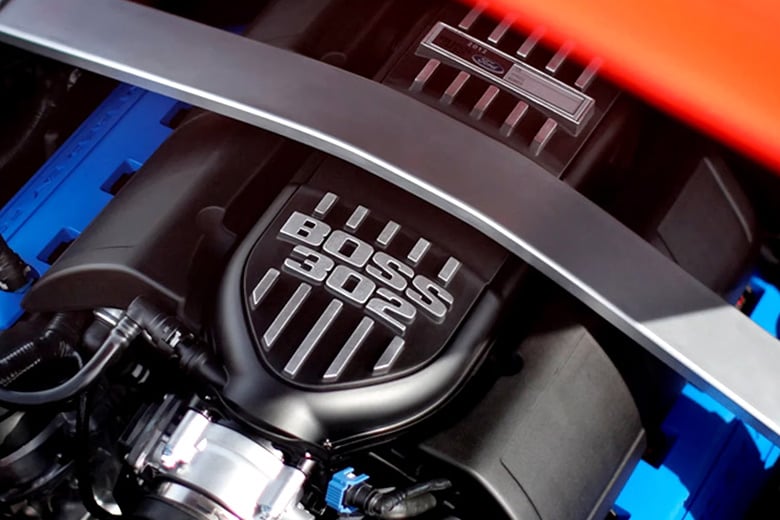
The earliest of these is the "Road Runner" engine, introduced in the 2012-2013 Mustang Boss 302. This featured CNC-ported cylinder heads, more aggressive camshafts, upgraded valve springs, and a revised intake manifold. It was designed to live higher in the rev range, with a factory redline of 7,500 rpm.
A more radical evolution came with the "Voodoo" engine, used in the Shelby GT350 and GT350R. Although it's based on the Coyote architecture, the Voodoo is quite different, most famously featuring a flat-plane crankshaft that gives it a unique, high-pitched exotic sound. Combined with revised cylinder heads, a unique intake system, and lightweight internals, the Voodoo is capable of 8,250 RPM and produces a distinctive exhaust note.
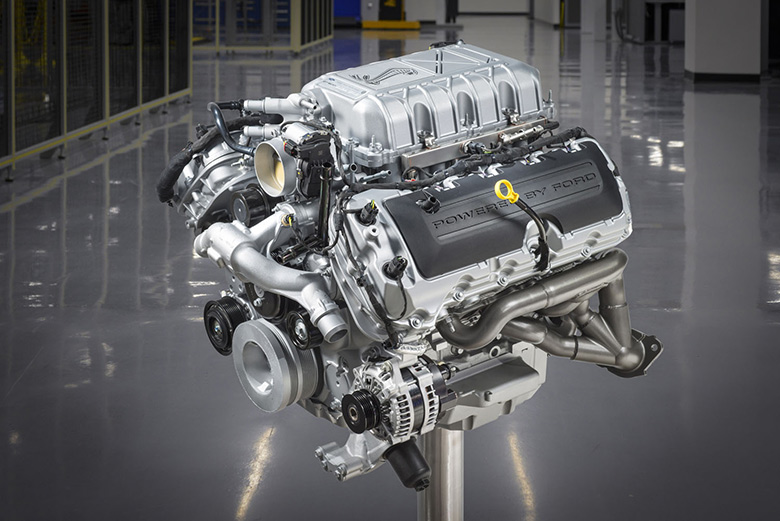
At the top of the food chain is the "Predator" engine, found in the Shelby GT500. This variant goes back to a cross-plane crankshaft but is force fed air via a supercharger, producing over 700 horsepower. The engine uses forged internals, revised cooling systems, and an upgraded lubrication system to handle the demands of the substantially increased power.
It's also worth noting that Ford Australia produced its own supercharged Coyote variant named the "Miami". Developed by Prodrive and Ford Australia between 2007 and 2010 as a replacement for the 5.4L Boss engine, the Miami was assembled in Victoria and powered FPV FG and FGX models from 2010 to 2016. It features a Harrop supercharger and produces between 315kW and 335kW, with specialised versions reaching 345kW.
Lastly, the "Aluminator" crate engines, while not tied to a specific production vehicle, are offered through Ford Performance. These engines are built with forged pistons and rods to handle increased power levels, particularly in forced induction applications.
Why Do People Love the Coyote Engine?
No engine is perfect, but the Coyote does have a solid reputation for reliability and stock performance, and thanks to the popularity of the Mustang platform, aftermarket support is absolutely massive.
From the factory, it delivers impressive power for a naturally aspirated V8, but more importantly, it does so across a wide rev range. Thanks to its four-valve cylinder heads and Ti-VCT system, the engine produces solid low-end torque while still making good power at high RPM.
A big part of the Coyote's appeal is the cylinder head design and overall airflow capability. The heads flow exceptionally well straight out of the box, which means these motors respond well to both NA modifications and boost.
While not a fully forged engine in standard form, the Coyote has been proven to handle substantial power increases without internal upgrades. Combine that with an ability to cope with high RPM, and you've got a versatile motor for both street and motorsport applications.
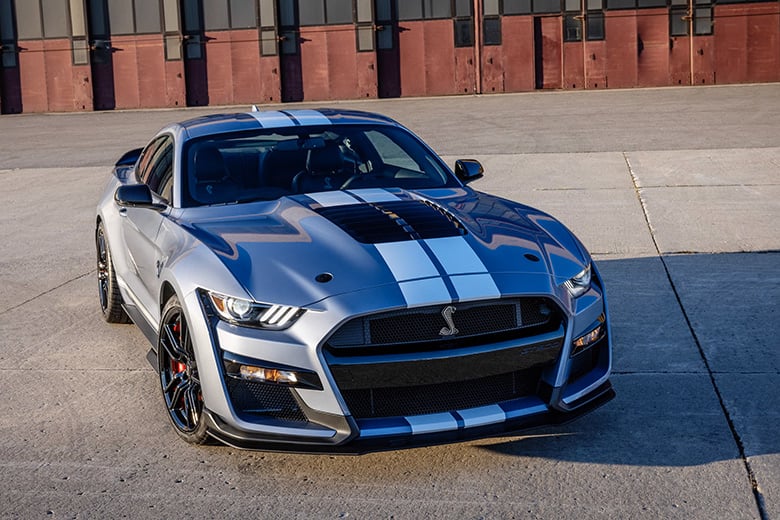
Another reason for its popularity is its adaptability. The same core architecture has been used in everything from daily-driven Mustangs and work-focused F-150s through to high-performance variants like the GT350 and GT500. This has led to massive aftermarket support, with a wide range of parts, tuning options, and industry knowledge available.
Where Can You Find Coyote Engines?
From 2011 right up to today, the Coyote has been the engine of choice for Ford's performance vehicles. It can still be bought as a crate motor directly from Ford, and can also be found in the following models:
- 2011-Present Ford F-150 (P415, P552, P702)
- 2011-Present Ford Mustang (S197, S550, S650)
- 2010-2016 Ford Falcon Australia (FG/FGX)
The Coyote can also be found in a host of specialist cars, including the De Tomaso P72 and the TVR Griffith -- the latter being a long-anticipated British sports car that uses a Cosworth-tuned version of the 5.0L Coyote V8, though it has yet to enter full production. A limited second-generation run of the Panoz Esperante Spyder GT also made use of the Coyote as its base engine.

Factory Specifications of the Coyote
Architecture: Four-stroke, V8
Bore/Stroke: 92.2mm bore / 92.7mm stroke (Gen 1/2); 93.0mm bore / 92.7mm stroke (Gen 3/4)
Compression Ratio: 11.0:1 (Gen 1/2 Mustang); 12.0:1 (Gen 3/4)
Production: 2011 - present
Displacement: Approximately 4,951cc (Gen 1/2); 5,035cc (Gen 3/4)
Block: Aluminium construction, forged crank, powdered metal rods, cast pistons
Head: Aluminium four-valve DOHC with Twin Independent Variable Cam Timing (Ti-VCT)
Load measurement metering: MAF + MAP
Fueling: Port injection (Gen 1/2); port + direct injection (Gen 3/4)
Cam timing: Chain
Pros & Cons of the Coyote Engine
Pros
- Lightweight alloy construction.
- Excellent usable power from the factory thanks to variable cam timing.
- High revving.
- Huge aftermarket support.
Cons
- Weaker factory internals when compared to the LS, especially earlier generations.
- Increased mechanical complexity.
- More complex ECU calibration systems.
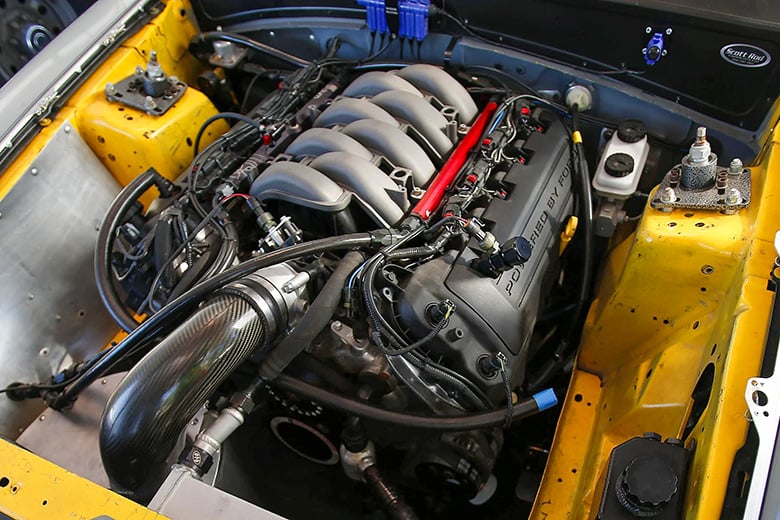
- Physically larger size due to DOHC heads that can make swaps more challenging.
Known Weaknesses of the Ford Coyote
While the Coyote is a great motor, like any engine, it does have several known weaknesses that tend to rear their head when the horsepower starts creeping upwards.
- One of the most common limitations is the strength of the factory rotating assembly, especially in earlier generations. The use of powdered metal connecting rods and cast or hypereutectic pistons means that while the engine is reliable at stock or mildly modified power levels, it can become a failure point under high boost or aggressive tuning. Because of this, builds targeting significant power increases often require upgraded forged internals to ensure long-term durability. Compare this to GM's super-tough LS platform, and the Coyote is at a disadvantage.
- Another area of concern is the oil system and lubrication control, particularly in very high-performance or track environments. Under sustained high RPM or lateral G-forces, oil pressure stability can become an issue.
- The Coyote's Ti-VCT system is part of what makes this motor so good, but it does add complexity to both tuning and reliability. Luckily, the tuning is something you can learn. Issues with the system's solenoids can also arise over time, especially in high-mileage or heavily modified engines.
- The engine's packaging and design complexity can present challenges. The DOHC layout makes the engine physically large, which can complicate swaps and increase maintenance difficulty compared to simpler pushrod designs like the LS. Combined with the complex ECU strategies on later dual-injection engines, and we have a motor that is quite demanding from both a mechanical and calibration standpoint.
Tuning a Coyote V8
Tuning a Coyote is no different to tuning any engine -- all the same rules and techniques apply (which you can learn here). With that said, there are a few things worth considering before you strap your Coyote-powered car to the dyno. It's also worth noting that the power figures discussed below will vary depending on which generation of Coyote you're working with.
Let's start with the very basics and work our way towards maximum power.
At the entry level, the Coyote responds well to simple airflow improvements and an ECU reflash. Typically, we'd see a cold air intake, cat-back exhaust, and ECU reflash using something like HPTuners or SCT Performance. Although the factory calibration is quite conservative, this is still an NA motor, so modest gains of 20-30hp are to be expected. With that said, throttle response and usable mid-range torque improvements will be noticeable.
The next step typically includes long tube headers, a high-flow intake manifold, a larger throttle body, and flex fuel or an E85 conversion. At this level, airflow is significantly improved, and the engine can take advantage of increased octane from ethanol blends. This is where the Coyote starts to show its strength as a naturally aspirated platform, with meaningful gains of around 50-80hp over stock, depending on generation.
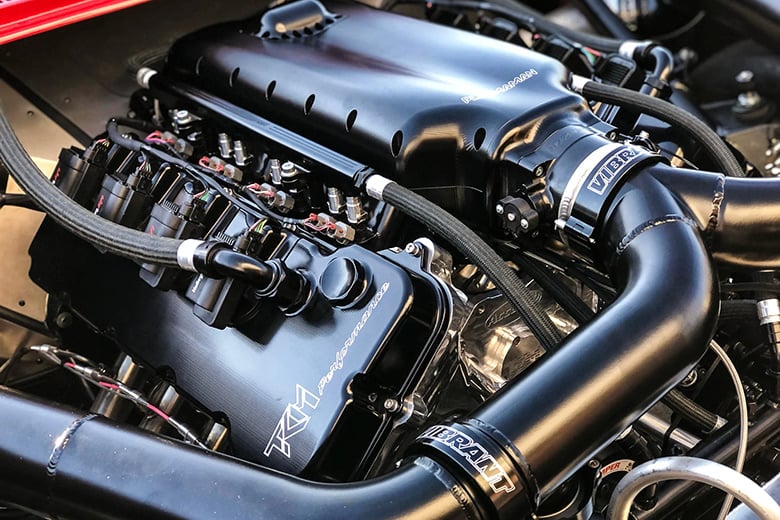
Upgrading camshafts, valve springs, and optionally porting the cylinder heads pushes the engine further into high-performance NA territory, allowing for more power and an increased rev limit. The Coyote's Ti-VCT system adds complexity here, as cam timing must be carefully mapped to suit the new cam profiles.
This level of modification sees somewhere around the 550-580hp mark (depending on generation), but is heavily dependent on how aggressive you're going with the cams and porting. It's also worth noting that this will involve compromises in drivability as peak power moves higher up the rev range.
Now we get to the really fun stuff.
Fitting a supercharger or turbocharger setup is the next logical step for significant power gains on the Coyote. Both centrifugal and positive displacement superchargers are popular, as well as single and twin turbo setups. This is a big job, and it often makes the most sense to purchase a complete conversion kit that ideally includes all the intake, exhaust, and fuelling modifications needed to support the move to forced induction.
Once we move into boost, the reflashed stock ECU can still be used, but the factory internals become a limiting factor, so conservative tuning is essential. Depending on which generation you're working with, 650hp is about as far as you'd want to go on a stock motor.
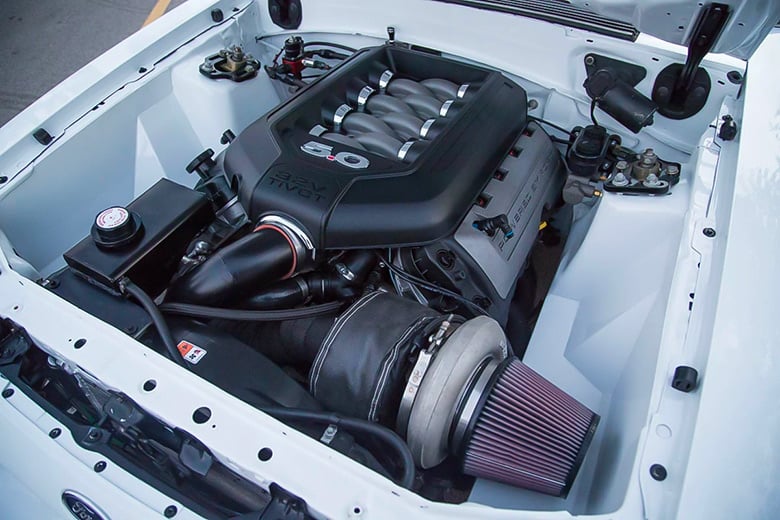
For high-horsepower builds above this level, the Coyote requires forged pistons and rods, upgraded lubrication systems, and often sleeved or reinforced blocks. At this point, the engine is capable of handling substantial boost and high RPM reliably, and there are plenty of examples of motors pushing well over 1000hp.
Tuning complexity increases significantly, though, requiring a custom speed-density or hybrid modeling setup, advanced knock control and individual cylinder tuning, and careful management of dual injection systems (Gen 3 and 4). While this can all still be done on the factory ECU with a lot of work, at this point a standalone aftermarket ECU starts to make sense, particularly for motorsport applications.
Coyote Engine Alternatives
Coyote swaps are understandably popular within the Ford community, however it's not that often you see these motors swapped into different manufacturer's chassis. If you're looking at the Coyote as a transplant option for your project, it's also worth considering other V8 options if you're not committed to the blue oval that might be less complex and have less packaging restrictions.
- GM LS (5.7-7.0 litre V8)
- Toyota 1UZ/3UZ (4.0-4.3 litre V8)
- Nissan VK56 (5.6-litre V8)
- Chrysler Hellcat (6.2 litre V8)
Get the Most From Your Coyote Engine
It's time to get serious about your Ford Coyote-powered project. The question is, where should you start?
To set yourself up for good results, check out HPA's range of engine building and tuning courses.
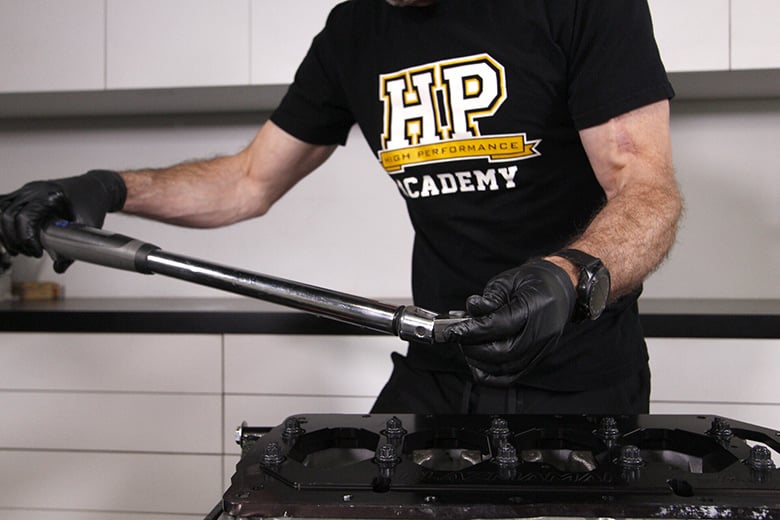
If you're looking to build up a new Coyote (whether it's a rebuild using factory-spec parts or a fully built motor), you'll want to start with the Engine Building Fundamentals course, followed by Practical Engine Building.
You can also grab the heavily discounted Engine Building Starter Package, which includes these two courses plus a course dedicated to degreeing cams.
Once you've built your Coyote, it's time to tune it.

The Coyote is a great motor that's capable of massive power, provided you know what you're doing...
You can learn everything you need to know to successfully tune your motor with the EFI Fundamentals, Understanding AFR (air-fuel ratio), Practical Reflash Tuning, and Practical Standalone Tuning courses -- these can all be bundled together for a healthy discount with the Tuning Starter Package.
Throughout this process, if you ever find yourself stuck, you'll have access to our support forums, where you can post any questions you've got and get answers from tutors and the wider tuning community.