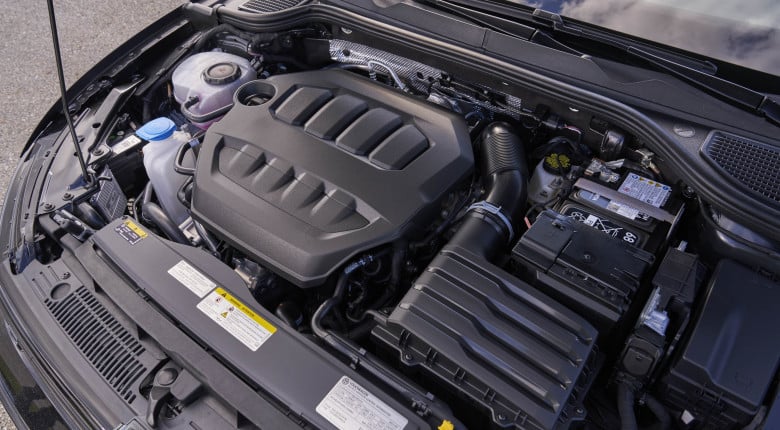
Compact, absolutely everywhere, and capable of big power... the Volkswagen Group's (VAG) EA888 is one of the most commonly modified four-cylinder turbo engines for very good reasons.
Let's dig into this ubiquitous performance workhorse.
In this article:
A Brief History of the EA888
The story of the Volkswagen Group's EA888 begins with the engine it replaced: the EA113-based 2.0 TFSI. That motor powered the very popular Mk5 Golf GTI, the 8P Audi S3, and a host of other Volkswagen Group performance models through the mid-2000s, and it earned a strong following among tuners. However, it relied on a timing belt, it was expensive to build, and tightening emissions regulations meant VAG needed a more modern, more flexible four-cylinder platform that could be shared across its brands.
Introduced in 2007, the first-generation EA888 arrived in both 1.8 and 2.0-litre form. Rather than simply evolving the EA113, Volkswagen took a fresh approach, switching to a chain-driven valvetrain, revising the balance shaft arrangement for refinement, and retaining direct injection and turbocharging. It quickly found its way into the Audi A3 and A4, the Volkswagen Passat, and US-market Golf GTIs.
The second generation followed in 2008, bringing Audi Valvelift System (AVS) variable valve lift on the exhaust cam in some applications, along with a range of detail improvements. Unfortunately, Gen 1 and Gen 2 engines also became known for a couple of serious problems, namely excessive oil consumption caused by the piston ring design, and timing chain tensioner failures that could lead to the chain jumping a tooth (with very expensive results). We'll discuss these in more detail further into the article.
This is where the EA888 really came into its own. The Gen 3 engine, developed alongside Volkswagen's MQB platform and launched in 2012, was a substantial redesign. It featured an exhaust manifold integrated into the water-cooled cylinder head, thinner-walled block castings, a lighter crankshaft, variable timing on both camshafts, an electronically controlled thermal management system, and, in many markets outside North America, dual injection, with port injectors added alongside the direct injectors. Early versions in the Mk7 Golf GTI produced around 220hp, while the Golf R and S3, fitted with the larger IS38 turbocharger, produced around 300hp straight from the factory. Crucially, the oil consumption and tensioner problems were largely sorted.
Several variations followed, including the efficiency-focused Gen 3B (which uses a Miller-style "B-cycle" with early intake valve closing), as well as the evo4 (often also referred to as gen 4) generation, launched with the Mk8 Golf in 2019/2020. The evo4 brought a higher-pressure direct injection system, a new ECU and wider adoption of the petrol particulate filter while power climbed to 333PS (around 330hp) in the most potent factory applications. The latest evo5 version is now featured in selected Tiguan models, so the EA888 story is far from over.
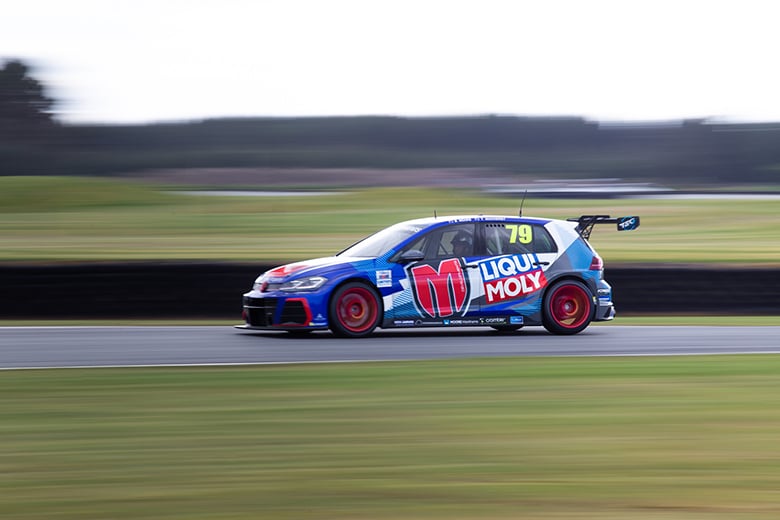
The EA888 has also proven itself in motorsport. The TCR touring car category, which is built around production-based front-wheel-drive cars, has seen the Golf GTI TCR, Audi RS 3 LMS TCR, and Cupra Leon TCR all run race-prepared EA888-based engines, often against each other.
As of 2026, the EA888 is still in production and powers millions of vehicles across Volkswagen, Audi, SEAT, Cupra, Škoda, and even Porsche. In the next chapter, we'll discuss why it's so popular with enthusiasts.
It's also worth noting that there is a smaller 1.8-litre version of the EA888, as well as some lower-output 2.0-litre versions designed purely around economy. Because the 2.0-litre performance versions are where the vast majority of tuning activity happens, these are what we'll be focusing on in this particular article. Also note that the five-cylinder engine found in the Audi RS 3 and TT RS is an entirely different engine (the EA855), so it isn't covered here either.
Why Do People Love the EA888 Engine?
The EA888 has earned a reputation as one of the most tuner-friendly modern four-cylinder engines on the market. It combines strong factory performance, small size, and huge tuning potential, all in a package that fits in an enormous range of cars.
From the factory, the EA888 delivers a broad and highly usable torque curve, with peak torque arriving low in the rev range and hanging on for a long time. That's what makes everything from a Tiguan to a Golf R feel so effortless in everyday driving.
A major part of the EA888's appeal for us as tuners is how much headroom Volkswagen left in it. The cast iron block is very strong for a production four-cylinder, and while the factory pistons and rods do have their limits (which we'll get into soon), the core of the engine handles substantial increases in boost pressure very well.
The Gen 3 and later engines also respond extremely well to tuning alone without any physical modification. Because the factory calibrations are relatively conservative, and the ECUs are well understood by the aftermarket, a simple reflash (which you can master yourself) can unlock big gains. A Golf R or S3 can exceed 400hp using the factory IS38 turbocharger, a few supporting bolt-ons, and a good tune, without ever needing the engine to be opened.
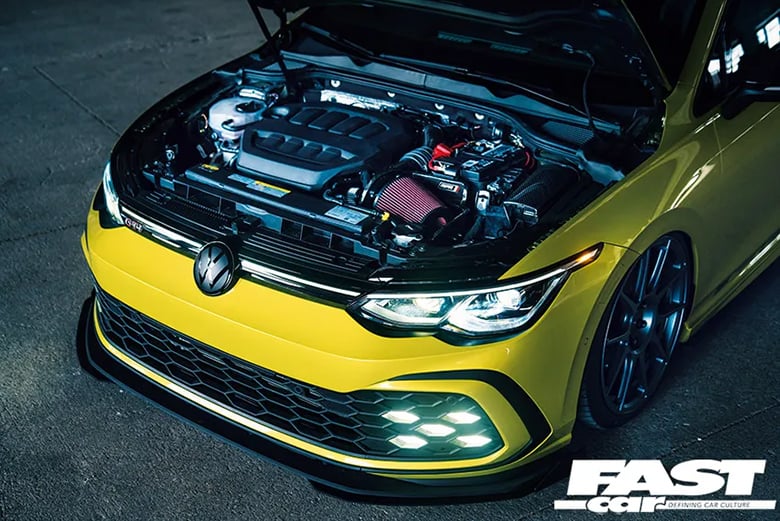
Another reason enthusiasts gravitate toward the EA888 is its availability. The engine has been used across a huge range of Volkswagen Group models, from family hatchbacks and SUVs through to hot hatches like the Golf GTI and Golf R. As a result, aftermarket support has exploded, with extensive tuning solutions, turbocharger upgrades, fuelling systems, and drivetrain components easily available. Better still, many of these parts swap straight across between models, so a part designed for a Golf R will often bolt straight into an S3, Cupra, or Octavia vRS.
Most importantly, the EA888 manages to balance genuine everyday usability and economy with the ability to make big power. That combination of refinement, flexibility, and tuning capability is a big reason why it has become one of the most popular modern performance engines in the world.
Where Can You Find Volkswagen EA888 Engines?
Beginning in 2007, the EA888 has been the go-to four-cylinder engine across the Volkswagen Group, and that means it can be found in hundreds of models and specifications worldwide. A truly complete list would run for pages, so here are the most popular performance-focused applications:
- 2008–2016 Audi A4 2.0 TFSI (B8)
- 2008–2016 Audi A5 2.0 TFSI (8T)
- 2008–2017 Audi Q5 2.0 TFSI (8R)
- 2009–2013 Volkswagen Golf GTI (Mk6)
- 2012–2020 Audi A3 2.0 TFSI (8V)
- 2013–2020 Audi S3 (8V)
- 2013–2020 Volkswagen Golf GTI (Mk7/Mk7.5)
- 2013–2020 Škoda Octavia vRS 2.0 TSI (5E)
- 2013–2020 Volkswagen Golf R (Mk7/Mk7.5)
- 2014–2020 SEAT León Cupra (5F)
- 2014–2018 Audi S1 (8X)
- 2015–2023 Audi TT and TTS (8S)
- 2015–2024 Audi A4/A5 2.0 TFSI (B9)
- 2016–2024 Volkswagen Tiguan 2.0 TSI (AD1)
- 2016–2025 Porsche Macan 2.0 (95B)
- 2017–2024 Audi Q5 2.0 TFSI (FY)
- 2017–present Volkswagen Polo GTI (AW)
- 2018–2024 Audi SQ2 (GA)
- 2019–present Volkswagen Jetta GLI (A7)
- 2019–2025 Volkswagen T-Roc R (A1)
- 2020–present Volkswagen Golf GTI (Mk8/Mk8.5)
- 2020–present Škoda Octavia vRS 2.0 TSI (NX)
- 2020–present Audi S3 (8Y)
- 2020–present Cupra Leon (KL)
- 2020–present Cupra Formentor (KM)
- 2021–present Volkswagen Golf R (Mk8/Mk8.5)
- 2024–present Volkswagen Tiguan 2.0 TSI (CT)
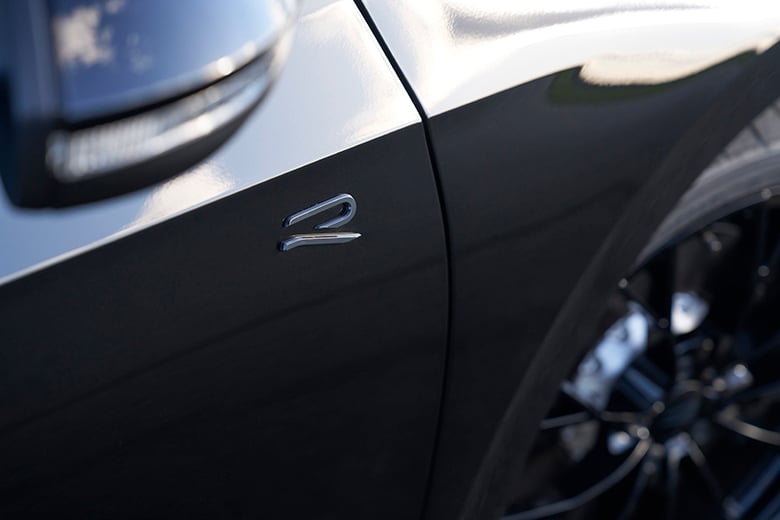
Factory Specifications of the Volkswagen EA888
Architecture: Four-stroke, inline four-cylinder
Bore/Stroke: 82.5mm bore / 92.8mm stroke (2.0-litre)
Compression Ratio: 9.3:1 - 9.6:1 (Gen 3 performance versions, varies by engine code)
Production: 2007 - present
Displacement: 1984cc
Block: Cast iron construction, forged steel crank (2.0-litre), forged steel cracked rods, cast pistons
Head: Aluminium DOHC four-valves per cylinder, integrated exhaust manifold (Gen 3 onwards), variable cam timing, and variable valve lift (Audi Valvelift System or AVS) on selected versions.
Load measurement metering: MAP and/or MAF depending on engine version.
Fueling: Direct injection (dual direct and port injection on many Gen 3 versions outside North America)
Cam timing: Chain
Engine Management (ECU): Bosch MED17, Bosch MG1, Continental Simos 18 or Continental Simos 19 are used in various applications.
Pros & Cons of the Volkswagen EA888
Pros
- Strong, flat torque curve from the factory.
- Huge power potential relative to its size.
- Excellent response to ECU tuning alone.
- Easy availability.
- Compact and lighter than previous options.
- Extensive aftermarket support.
Cons
- Factory pistons and rods limit power on stock internals.
- Gen 1 and Gen 2 engines have well-known reliability problems.
- Factory transmissions often become the limiting factor before the engine does.
Known Weaknesses of the Volkswagen EA888
While the EA888 is one of the best modern four-cylinder engines for aftermarket modification and tuning, it still has a few limitations that we regularly run into once things start escalating. Although the engine is very capable in factory form, chasing bigger power figures tends to expose weaknesses in the internals and supporting systems, and on older engines, there are some known issues to be aware of before you even start.
Some of the more common downsides tuners tend to encounter when modifying the EA888:
- The stock high-pressure fuel system becomes a restriction once power levels start climbing, especially on ethanol blends. Bigger builds will generally require an upgraded high-pressure fuel pump, along with port injection to safely support additional boost.
- The factory turbochargers (most commonly the IS20 in the GTI and the IS38 in the Golf R and S3) deliver excellent response, but they run out of efficiency fairly quickly once pushed beyond their factory boost levels.
- The factory intercooler is quite small, and repeated hard driving or track use can cause intake temperatures to climb rapidly.
- The cast pistons and factory rods are the weak link in the bottom end, and they're widely considered to be at their limit somewhere around 400-450hp, depending on how aggressively the engine is tuned.
- Later-model evo4 engines feature much stronger ECU security, which initially made tuning far more difficult and can still require unlocking before tuning is possible. Learn more here.
- The factory dual-clutch transmissions (and the Haldex all-wheel-drive system in some models) have torque limits of their own, so transmission tuning and clutch upgrades are often needed alongside engine work.
- Like most DI engines, intake valve carbon buildup remains a maintenance item, particularly on versions without port injection.
- The plastic water pump and thermostat housing are known to crack and leak on Gen 3 engines, and the PCV diaphragm in the valve cover is also a common failure.
- Gen 1 and Gen 2 engines are known for excessive oil consumption (particularly Gen 2) and timing chain tensioner failures (particularly Gen 1 and early Gen 2).
Tuning an EA888
Tuning an EA888 is no different to tuning any other 4-stroke petrol-fed piston engine. All the same rules and techniques apply (which you can learn here).
With that said, there are a few things that should be considered before diving in. It's also worth noting that the power figures discussed below need to be taken with a grain of salt and, unless stated otherwise, are approximate flywheel ratings. The starting point also varies considerably depending on which version of the EA888 you're working with. For example, some economy-focused versions produce as little as 150hp, while others, like the version found in the Mk8 Golf R 20 Years edition, produce 333PS (around 330hp) straight off the showroom floor. We'll focus on the popular Gen 3 and evo4 engines found in the GTI and Golf R.
Let's start with the very basics and work our way towards maximum power.
At the entry level, the EA888 responds extremely well to a simple ECU reflash. Because the factory calibration is relatively conservative, substantial gains can be made through software alone. An increase in boost, revised ignition timing, and optimised fuel delivery can net anything from 50-80hp extra, with a Golf R typically landing somewhere around 360-380hp.
There are plenty of software options here. APR, Unitronic, and the COBB Accessport are the most popular off-the-shelf (OTS tuning) choices for street and enthusiast builds, while HP Tuners, Integrated Engineering and EQT are also well-regarded, particularly for those who want more control over their calibration. Each has its own pros and cons, so it's worth investigating in detail within the community to work out what's going to suit your needs best.
Next, we move into the aftermarket bolt-on realm.
Here, by pushing the factory turbo to its limits, a Golf R or S3 can expect to see somewhere in the region of 400-450hp on a completely stock motor. This would involve an aftermarket intake, a larger intercooler, a downpipe, an upgraded high-pressure fuel pump, and a retune for ethanol using a flex-fuel sensor which also helps avoid knock/detonation. For GTI owners, a very popular move is swapping the smaller IS20 for the Golf R's IS38, which is a largely bolt-on swap and opens the door to the same sort of power levels.
At this point, we've reached the limitations of the stock turbocharger, as well as the DI fuel system.
This is where things get interesting.
Still retaining the stock engine internals, we can push power levels up to around 450hp at a maximum through the use of a hybrid or drop-in upgraded turbocharger. Some have pushed stock-internal engines closer to 500hp, but this is right on the edge of what the factory pistons and rods can take. These retain the factory mounting points, bolting straight to the head using factory plumbing, but have larger internals to allow for higher airflow. As with most power-adding modifications, this will move the power delivery higher up into the rev range, affecting driveability mildly, but not to a point where it becomes unpleasant.
To support this, we'll also need additional fuel, usually in the form of a port injection kit running alongside the factory direct injection system (or simply larger port injectors on engines that came with port injection from the factory). Like most things concerning the EA888, there are plenty of kits out there to allow you to do this without too much hassle. It's also important to be realistic about the stock pistons and rods here. Keeping torque under control in the tune is what keeps an engine at this level alive.
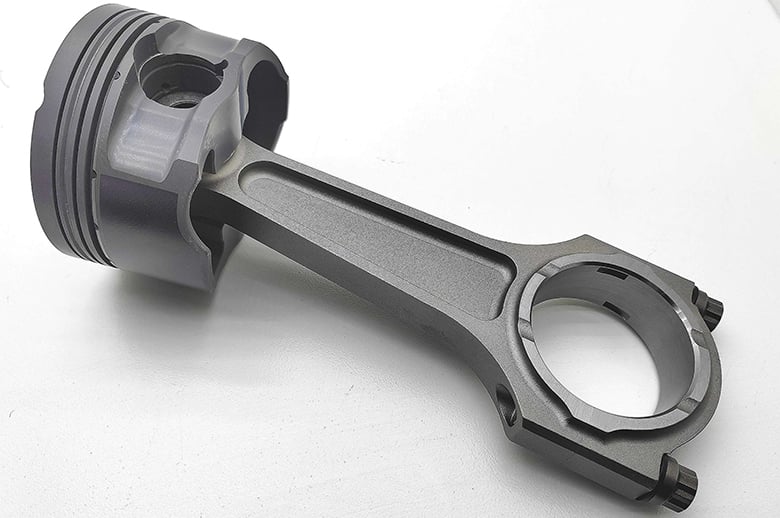
At this point, we've reached the limits of the stock internals. For high-horsepower builds above this level, it's time for a built engine.
This means new forged pistons and rods from suppliers like JE, CP-Carrillo, or Integrated Engineering, as well as upgraded rod bearings, head studs, and fasteners. Thankfully, the factory forged crank is very strong, so there's no need to replace it at this level.
With an aftermarket full-frame turbo kit, plus further upgraded fuelling and ECU tuning, we're looking at 550-700hp. At this point, it may make sense to move to a standalone ECU, depending on your needs. This is also where the factory transmission becomes a serious consideration, as the stock dual-clutch units will need upgraded clutch packs and transmission tuning (at a minimum) to survive. You can learn to tune your transmission here.
Beyond 700hp, we're getting into very serious territory. Driveability will suffer heavily from now on, but the performance will make it all worth it.
The next step forward has seen drag-focused EA888s reaching upwards of 900-1000hp, and requires a serious engine build with extensive cylinder head work, including upgraded valve springs, aftermarket camshafts, and porting to support the flow levels of what will be a very large turbocharger. Of course, this turbo requires a lot of intake and exhaust work to fit, as well as some serious fuelling, cooling, and drivetrain upgrades in support.
At this point, driveability takes a serious hit, but for the right application, the sacrifice is more than worth it.
Volkswagen EA888 Engine Alternatives
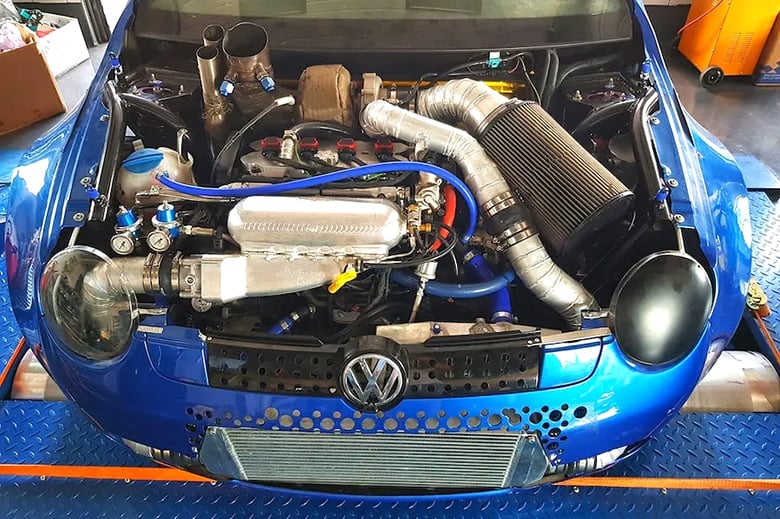
Because the EA888 is so abundant, there's not too much need to go out hunting for an alternative option, but with that said, there are always rival motors out there that can foot it with the EA888 in the big-power world. Fellow turbocharged four-cylinders are the obvious go-to here, but it's also worth considering a couple of other options if you're not committed to four cylinders.
- Volkswagen/Audi EA113 2.0 TFSI (2.0-litre inline four)
- Honda K20C1 (2.0-litre inline four)
- Mitsubishi 4G63 (2.0-litre inline four)
- Ford EcoBoost (2.3-litre inline four)
- Toyota G16E-GTS (1.6-litre inline three)
- Audi EA855 (2.5-litre inline five)
Get the Most From Your Volkswagen EA888 Engine
It's time to get serious about your EA888-powered project. The question is, where should you start?
To set yourself up for good results, check out HPA's range of engine building and tuning courses.
If you're looking to build an EA888 (whether it's a rebuild using factory-spec parts or a fully built motor), you'll want to start with the Engine Building Fundamentals course, followed by Practical Engine Building.
You can also grab the heavily discounted Engine Building Starter Package, which includes these two courses plus a course dedicated to degreeing cams.
Once you've built your EA888, it's time to tune it.
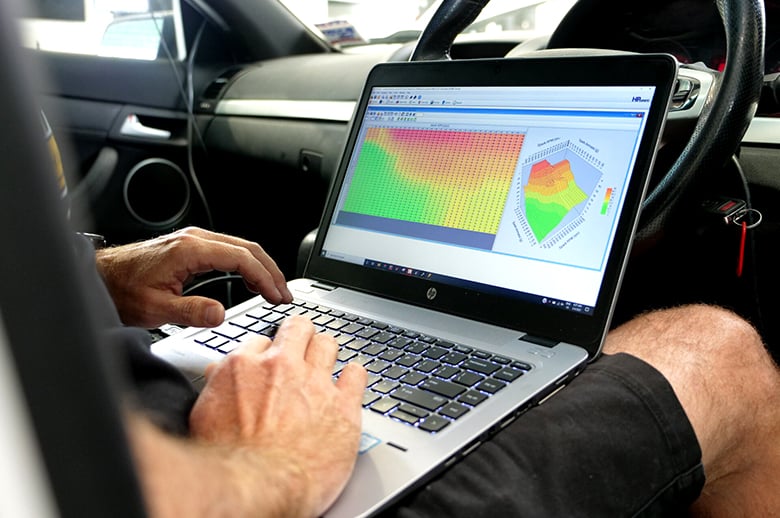
The EA888 is an excellent motor that's capable of massive power, provided you know what you're doing.
You can learn everything you need to know to successfully tune your motor with the EFI Fundamentals, Understanding AFR (air-fuel ratio), Practical Reflash Tuning, and Practical Standalone Tuning courses. These can all be bundled together for a healthy discount with the Tuning Starter Package.
Throughout this process, if you ever find yourself stuck, you'll have access to our support forums, where you can post any questions you've got and get answers from tutors and the wider tuning community.