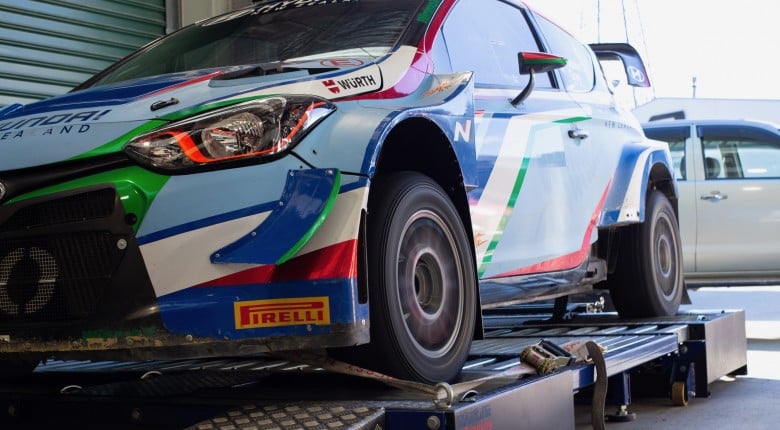
They are the gold standard for EFI tuning tools, yet thousands of well-tuned performance cars have never seen a dyno.
Whether you're working with a tight budget, live somewhere remote, or simply want to develop your skills outside of paid dyno time you can tune your car without a dyno. That decision comes with some important, but not show-stopping, caveats. Even when a full dyno tune has been completed, taking the car out on the road or track to confirm the results is always worthwhile. A dyno is an excellent tool, but we don't drive our cars on dynos. Verifying that what was achieved in the workshop translates correctly to real-world conditions is the final step in any thorough tune.
Let's dive on in to how you can tune your own car on the road, street or track and why it's worth your time to road tune.
In this article: What Is a Dyno? | What Is Road Tuning? | Ignition Timing Without a Dyno? | Knock & Road Tuning | Is Steady State Road Tuning Possible? | What Are the Limits of Road Tuning? | Is Road Tuning Safe? | The Smart Approach: Road Tune First, Dyno to Finish
What Is a Dyno?
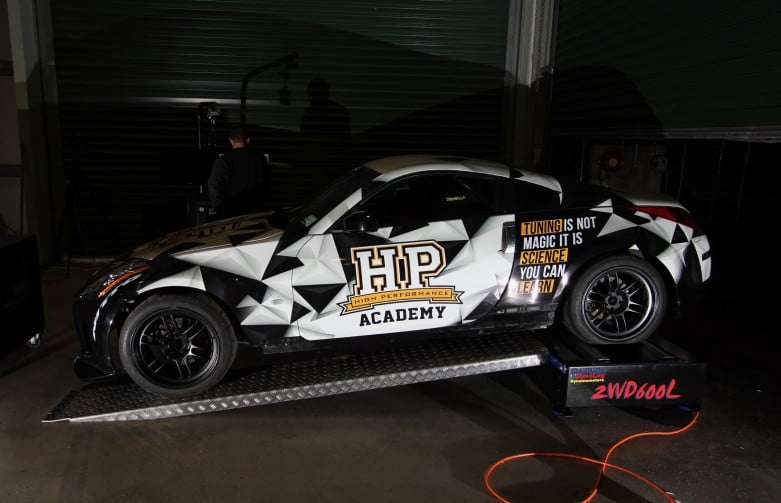
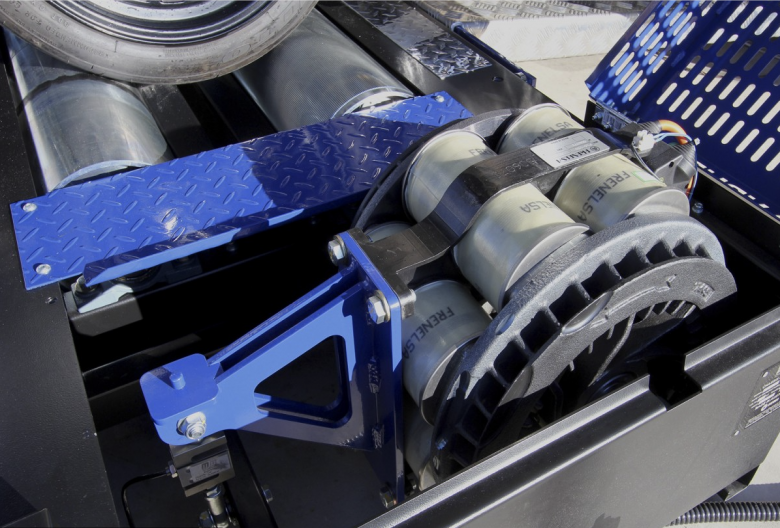
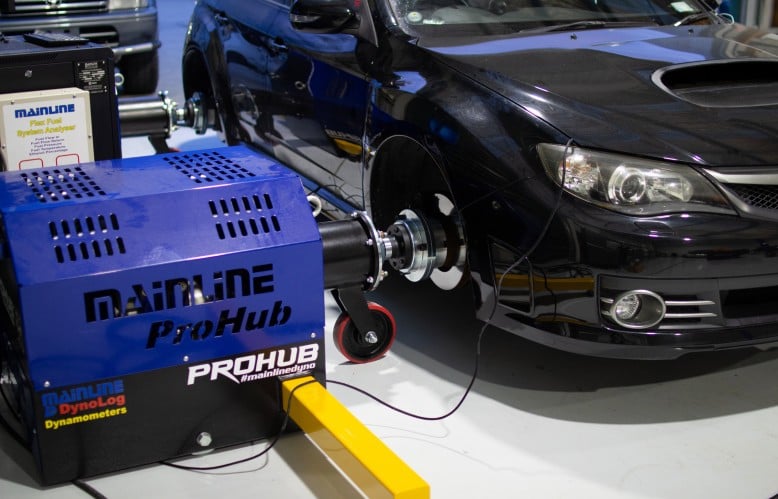
A dyno (short for dynamometer) is a piece of equipment used to measure an engine's power output under controlled conditions. The engine drives into a power absorber, which applies a controllable load, allowing the tuner to hold the engine at a fixed RPM and throttle position while measuring torque and power output in real time. This combination of steady-state control and immediate feedback makes the dyno the preferred tool for EFI tuning, particularly for tasks like optimising ignition timing where small changes in output need to be detected accurately.
What Is Road Tuning?
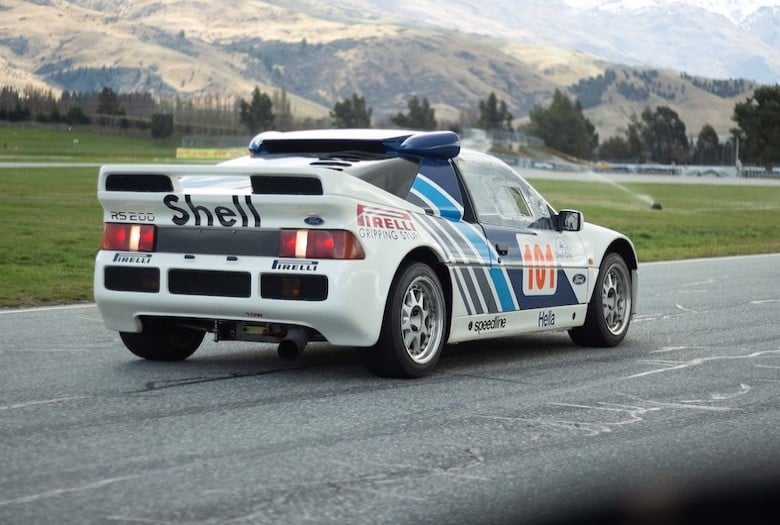
Road tuning, also known as street or track tuning, is the process of tuning a car's ECU out on race tracks or public roads rather than on a dyno. Instead of applying load through a power absorber, the tuner uses real-world driving conditions to work through the fuel and ignition tables. This might mean full-throttle acceleration runs on an open stretch of road, steady cruising to access light-load areas of the map, or a combination of both.
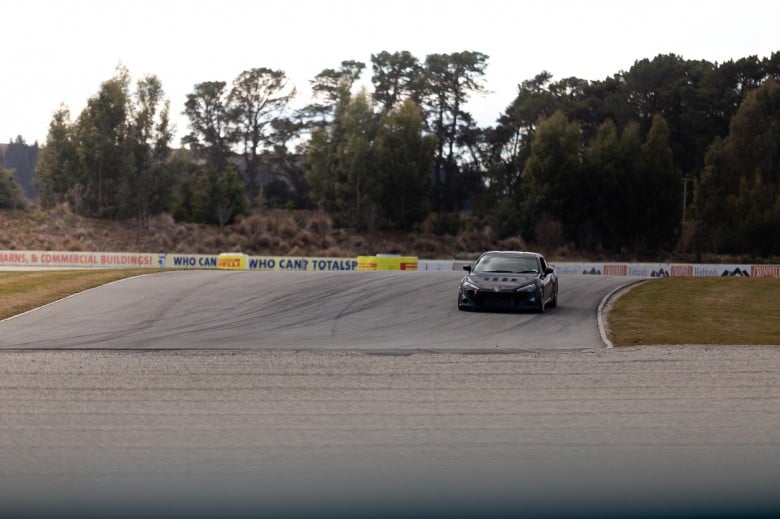
Tuning at the track follows the same principles as road tuning but offers some practical advantages. A closed track environment removes the safety concerns around other road users, pedestrians, and the legality of having a laptop open while driving. Full-throttle runs can be performed more safely and repeatably, and conditions on the same stretch of track tend to be more consistent than on public roads where surface condition, gradient, and wind can all affect results.
While many professional tuners are vocal in their dislike of tuning on public streets, that reputation isn't entirely deserved. Done correctly and safely, road tuning can produce excellent results, and in some respects, it has advantages over the dyno that are easy to overlook. When you're tuning on the road, you're tuning the engine in exactly the conditions it will actually operate in. Replicating real-world airflow, inlet temperatures, and atmospheric conditions seen on the road and transferring that to a dyno is very difficult, even with a professionally built dyno cell and millions of dollars.
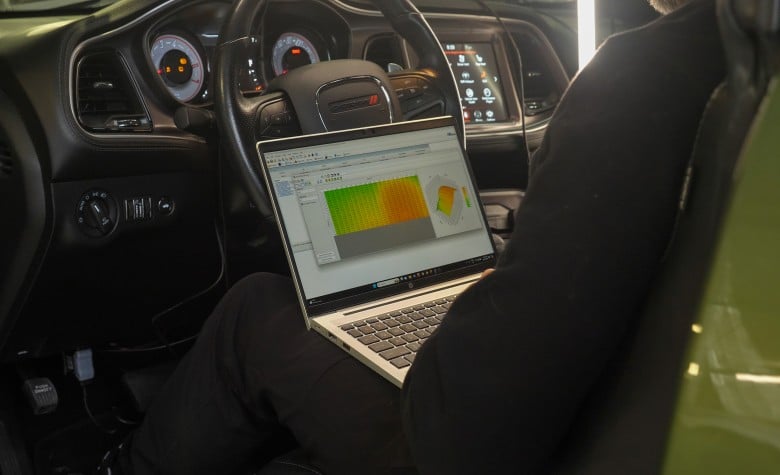
Can You Tune Ignition Timing Without a Dyno?
This is where most people assume road tuning falls apart. On a dyno, you get instant torque feedback as you adjust ignition timing, allowing you to find MBT (Minimum timing for Best Torque aka Maximum Brake Torque) precisely. Out on the road, you have none of that. You can't feel a 3 kW change through the seat of your pants, and no amount of confidence in your instincts will change that.
However, for the majority of engines tuners work with, this limitation matters less than you'd expect. Most engines running on pump fuel, and particularly turbocharged or supercharged engines on pump fuel, will be what's known as knock-limited. This means that as you advance ignition timing towards MBT, the engine will begin to suffer from knock or detonation before MBT is actually reached. In this situation, the knock threshold becomes the limiting factor for how much timing you can run, and that's the same whether you're on a dyno or out on the road. The results you can achieve with ignition timing on a knock-limited engine are broadly identical in either environment.
For engines running on high-quality fuels such as E85, methanol, or race fuels, the picture is different. These engines are unlikely to be knock limited, which makes ignition timing optimisation significantly harder without dyno feedback. In this case, street tuning requires a conservative approach, accepting that some power may be left on the table.
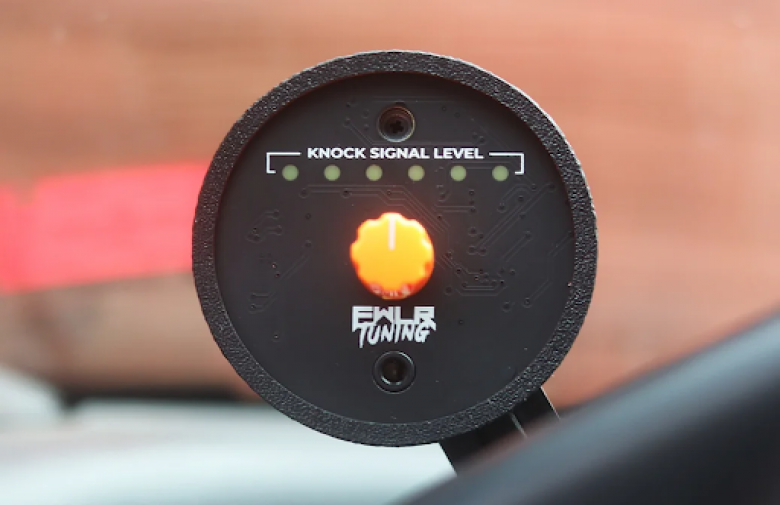
How Do You Handle Knock When Road Tuning?
Managing knock correctly during road tuning is critical, and the right approach depends heavily on the power level of the engine you're working with. A mildly tuned naturally aspirated engine can tolerate a small amount of knock activity without immediate damage, but a highly tuned turbocharged engine producing 300 horsepower per litre or more can suffer damage from even brief knock events. The higher the specific power output of the engine, the more seriously any knock activity needs to be treated.
Good quality audio knock detection equipment is essential. When you identify the onset of knock, you need to retard the ignition timing to establish a safe buffer from the knock threshold, just as you would on the dyno. Factory ECU calibrations can also be a useful reference point, as OEM manufacturers typically build knock retard strategies into their base tunes, and you can use that information to help guide where the timing is potentially over-advanced.
Is Steady State Road Tuning Possible?
Yes, it is. On a dyno, steady state tuning is straightforward because the power absorber holds the engine at a fixed RPM under load. On the road, you can replicate this using a technique called left-foot braking. By applying light brake pressure with your left foot while controlling throttle position, you can vary the load on the engine and maintain a stable RPM. Adjusting the balance between brake pressure and throttle lets you hold a specific operating point in the map.
It takes practice to develop the necessary finesse, particularly when you first start out. You'll also need to be mindful of brake temperatures, as sustained use of this technique puts heat into the brakes. Done carefully and with patience, though, left-foot braking makes steady state road tuning a practical reality. In a way, this is no different from managing tyre wear on a roller dyno. You wouldn't run your best racing slicks on a rolling road chassis dyno, and you wouldn't show up with worn tyres that could blow out. The same mindset applies to your brakes here.
It's worth noting that for engines being reflashed from a factory calibration rather than tuned from scratch on a standalone ECU, steady state tuning on the road is often less critical. Factory ECUs running mass airflow sensor systems are typically starting from a calibration that's already in a sensible ballpark, and the MAF sensor itself does much of the work in keeping the fuelling accurate across different operating conditions.
What Are the Limits of Road Tuning?
Road tuning handles the core of a tune well, but there are areas where the dyno is genuinely necessary for optimal results.
Variable cam timing (VVT) optimisation is a clear example. The changes in airflow resulting from adjustments to cam timing tables can be very subtle, and detecting those differences accurately without real-time torque feedback is difficult at best. You may be able to get close as far as ensuring the shape of your maps look correct, but fully optimising a VVT map on the road is just not realistic. A dyno is the right tool for that job.
The same applies to any situation where you're chasing the last few percent of performance. Street tuning is well suited to getting a tune into good shape, but it has a ceiling when it comes to precision optimisation of more advanced engine management parameters, and you will leave some power on the table compared to a dyno tune. How much? That depends on your tuning ability and we are talking about single-digit per cent figures, not 100 hp losses.
Is Road Tuning Safe?
Road tuning as a skill is as safe as you make it and if you feel like you're doing something unsafe or dumb, you probably are.
Trying to drive the car and live tune with your laptop at the same time? Don't. Sit in the passenger seat and do it while a friend drives the car for you. Trying to hit 200kph to 'reach all the tuning cells'? Don't. You don't have to do that to reach those cells either.
It is important to note that because tuning is load-based, it means it is not speed or gear-dependent. This means if you are tuning on the road, you don't need to be doing speeds of 200kph+ to get data from all the load cells. Due to this, if you don't have access to a race track or drag strip, road tuning can still be safe and practical.
The Perfect Approach? Road Tune First, Dyno to Finish
For many people, the most cost-effective path is a combination of both. Using road tuning to work through the fuel tables, get the ignition timing into the right ballpark, and resolve any obvious issues costs nothing more than your time and a tank of fuel. Once the tune is in good shape, a short dyno session, perhaps one or two hours, is all that's needed to put the finishing touches on the calibration, precisely optimise the ignition tables, and confirm that everything is correct.
This approach gets the most out of paid dyno time by arriving with a tune that's already close, rather than spending expensive hours working through the basics. It's a strategy that many HPA students use to develop their tuning skills and produce strong results without unlimited access to a dyno.
With that said, there are also plenty of cars out there with no dyno time that are perfectly tuned, save for that last few per cent of power.
This is why in the HPA 6-step reflash tuning and 10-step aftermarket ECU tuning process both include dedicated road tuning modules as the final steps, even if a dyno was used and regardless of the type of dyno.
Learn how to tune ignition timing for maximum brake torque (MBT), target the right air fuel ratio for your engine combination, and understand why “lean is mean” is a myth that can lead you in the wrong direction in this free lesson.