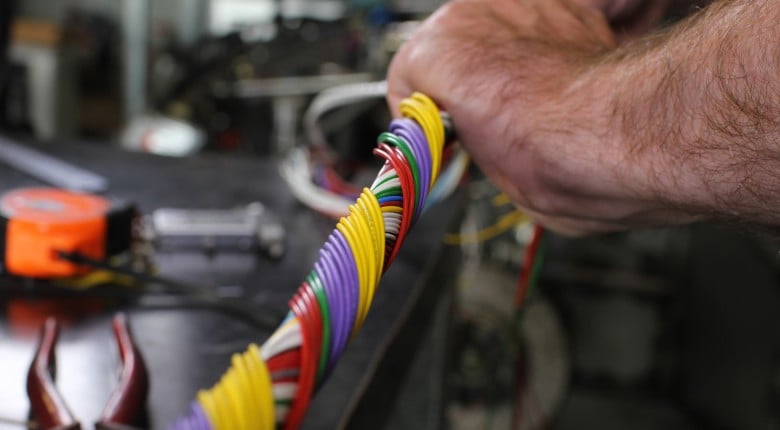
What type of wire do the professionals use, and what type of wire should YOU use for your own custom wiring harness?
When it comes to motorsport wiring, the conductor inside the wire is only part of the story. It is the insulation that determines whether a harness survives years of heat cycling, chemical exposure, vibration, and abrasion, or begins to fail the moment conditions get serious. The problem is that "automotive wire" covers a huge range of products with very different capabilities, and some of what is widely marketed as suitable for vehicles simply does not perform in a demanding motorsport context.
Let's break down the key wire types most referenced in automotive performance and motorsport wiring: PVC, TXL, GXL, Spec 44, and Tefzel. For each, we cover what the insulation is made of, what it is rated for, and what that means in practice.
In this article: PVC Wire | TXL Wire | Spec 44 | Tefzel | Spec 44 vs Tefzel | Working with High-Performance Wire | Where to Buy | Conclusion
Does Thicker Wiring Insulation Mean Better Protection?
All wire carries current. Beyond that, the differences between wire types are significant. The insulation material determines the temperature range the wire can survive, its resistance to fuels, hydraulic fluids, and chemical cleaners, how well it holds up against abrasion and vibration, the bend radius, and how much physical space it occupies in the harness.
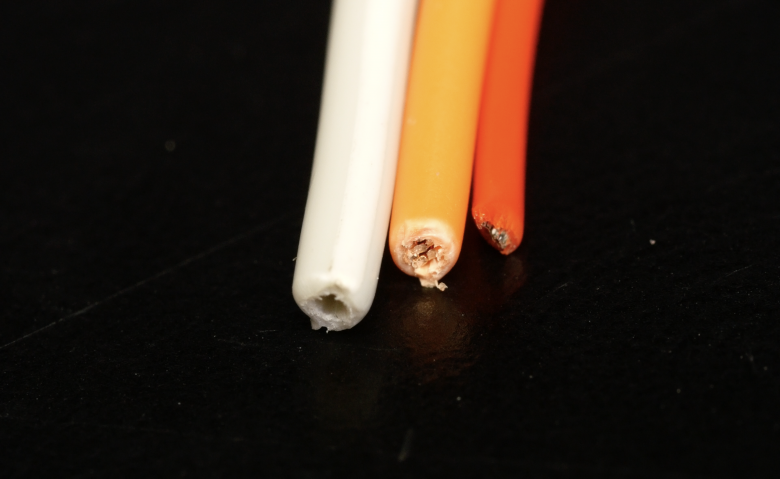
There is also a common trap with lower-quality automotive wire: a thick insulation wall does not mean better protection. Some wires use a thin conductor surrounded by heavy insulation, giving a large outer diameter relative to actual current-carrying capacity. High-performance wires invert this relationship: thin, tough insulation around a conductor with the expected cross-section for that wire size. The result is a smaller, lighter harness with the same useful current-carrying capability for a given AWG size, rather than wasting space on bulky insulation. For a motorsport build, where the temperature extremes of an engine bay environment, chemical exposure, and sustained vibration are all real concerns, those distinctions matter.
What Is Cold Flow?
In our comparisons below, we're going to mention cold flow, aka creep. Cold flow is a failure mode in some uncrosslinked materials where insulation gradually deforms under sustained pressure over time. You've possibly seen some PVC wire 'flat spot' where it was once held by a zip tie or bracket in a computer, toy or home appliance? That's cold flow. It's bad and can lead to compression failure.
Cold flow is not going to be an issue for you because you're going to use the right wire based off the information below, but just in case it helps to know for other projects, you can avoid it by insulating your wire in appropriate areas.
Is The Most Expensive Wire The Best?
A higher price means better quality right?
Many factors determine the cost of our wiring tools and materials, and across many areas of the automotive world what is 'best' as determined by your own list of requirements is not always what will cost you the most. 2 common (ish) examples would be how some budget tyres in uncommon sizes can cost close to or more than premium tyres in common sizes, or how the best ECU for your build might not be a $30,000 Bosch Motorsport option if you have to fly in someone from overseas to tune it vs using your local MaxxECU, Link, Haltech or EMtron etc tuner.
Wiring is no different, and our most recommended wire types below are not the most expensive options we'll discuss.
PVC Wire
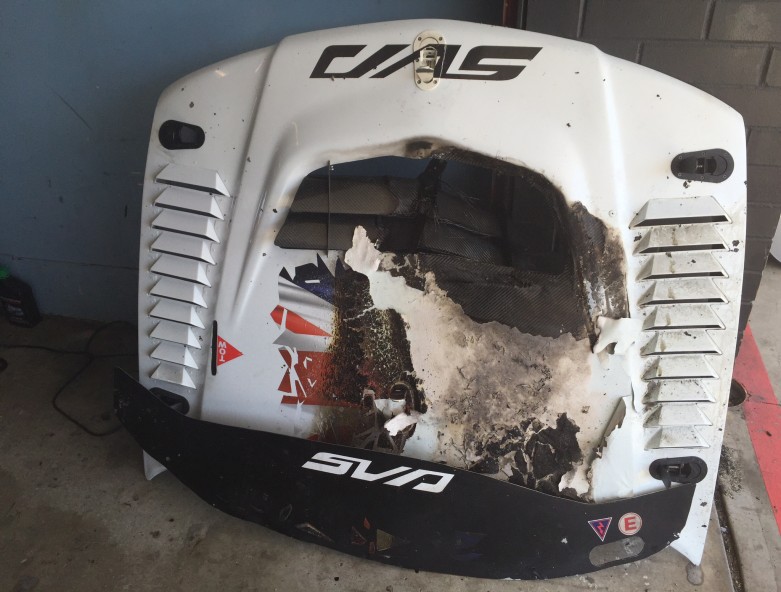
PVC (polyvinyl chloride) wire is among the most widely available and heavily marketed options sold as automotive wire (it's what you'll find at your local automotive parts store), but typical low-cost PVC wire falls short of what motorsport applications demand, especially in the engine bay. With a common temperature maximum of 90°C (some brands produce a 105°C range), basic PVC sits well below the thermal loads a performance vehicle regularly generates. In basic terms, it can soften, deform or melt if it is exposed to temperatures beyond its rating, especially in engine bay areas with poor routing, radiant exhaust heat or limited protection. That will cause all sorts of other fun problems, possibly even letting all the magic smoke escape from your wiring, and as you might know that's really hard to get back in...
How PVC, TXL and Tefzel handle heat is actually the first thing covered in HPA's free introduction to motorsport wiring lessons because we firmly believe understanding the limitations of PVC insulation is so important for any performance enthusiast.
There is a bit of nuance here, though, because PVC wire does not always mean the same thing. AVSS is terrible, but FLRYW, for example is still PVC insulated, but it is a reduced-wall, heat-resistant, hot-pressure-resistant automotive cable rated to ISO 6722 Class C commonly used in the European automotive industry, but these are not what most people are talking about when they refer to basic PVC automotive wire from a parts store. The insulation material alone does not tell you enough; the actual wire specification matters. For the custom performance and motorsport harness work we are focused on here, HPA still recommends TXL or better.
For every rule there is an exception, however, and with PVC that exception can be double-sheathed polyethylene and PVC battery cable. With a tinned copper conductor, a large unbundled cable run where overall diameter is not usually the limiting factor, and a cost per metre that can be around half that of some higher-end alternatives, there is a valid use case for PVC-coated cable in this specific instance on your race car.
That does not change our general recommendation for the rest of the harness, and it still is not the normal choice in professional motorsport. This also assumes the battery is not mounted in the engine bay, with the cable properly routed and protected away from sustained heat sources. In most race cars, the battery will be mid or rear-mounted, which makes that assumption reasonable.

Basic PVC wire also tends to use thin conductors packaged in thick insulation, resulting in a wire that occupies more space in the harness than its actual current-carrying capacity justifies. This adds difficulty (beyond the low maximum temperature range) if you want to use heatshrink.
Despite appearing substantial, basic PVC insulation can offer less protection against abrasion and chemicals than far thinner alternatives made from higher-quality materials.
For these reasons, basic PVC wire is not appropriate for performance automotive or motorsport wiring use and HPA strongly recommends you only use TXL or better.
Quality copper core PVC-coated wiring will, of course, suit other uses that are less demanding perfectly fine like industrial or household applications, but we're not working on those here and if you're reading this we doubt you are either.

What Is TXL Wire?
TXL stands for Thin Wall Cross-Linked. It is a stranded single conductor copper wire insulated with cross-linked polyethylene (XLPE), rated for use from -40°C to +125°C and conforming to the SAE J1128 standard. TXL offers meaningful resistance to abrasion, chemicals, fuels, oils, and solvents compared to standard PVC wire. TXL is what we and many others consider to be the minimum acceptable grade for automotive use. In fact, this and GXL (which we'll touch on below), is the type of wire you will find used by many OEMs in your factory wiring harness.
"HPA recommends TXL wire for the club-level wiring harness."
On the heatshrink side, SCL is a practical pairing for TXL and many people use this combination without issue. The recovery temperature is higher than TXL's rated limit on paper (135°C for SCL), but the heat is not transferred directly to the wire insulation so this is not a real-world concern. DR-25 is a different story as even though its recovery temperature is 175°C, its price generally means it's not really an option for those looking to keep the budget tight using TXL and the cheaper tools and connectors that come with that wire choice in the first place. Expandable braid works well with TXL too and sidesteps the recovery temperature question entirely.
The table below shows representative nominal overall diameter and weight for common TXL AWG sizes based on manufacturer datasheet data. Because TXL is produced by a large number of manufacturers, stranding, outer diameter, and weight figures can vary between suppliers within the tolerances of the SAE J1128 specification. It is always worth checking the datasheet for the specific product you are purchasing. For club-level motorsport wiring, any reputable TXL option within spec will usually work with common automotive connector families, provided the wire seal and terminal range match the actual outside diameter of the wire you buy.
| Wire Size (AWG) | Stranding | CSA (mm²) | Nom. OD (mm) | Approx. Weight (g/m) |
|---|---|---|---|---|
| 22 | 7/0.25 | 0.32 | 1.70 | 6 |
| 20 | 7/0.32 | 0.52 | 1.90 | 8 |
| 18 | 19/0.23 | 0.82 | 2.20 | 11 |
| 16 | 19/0.28 | 1.31 | 2.40 | 15 |
| 14 | 19/0.36 | 2.08 | 2.70 | 22 |
| 12 | 19/0.45 | 3.31 | 3.30 | 34 |
| 10 | 19/0.57 | 5.26 | 4.00 | 53 |
| 8 | 49/0.46 | 8.37 | 4.90 | 85 |
What About GXL?
On the vein of that, GXL (General purpose Cross-Linked) is also another wiring type you might see mentioned in relation to TXL and OEM wiring, so it's worth quickly addressing. Other than thicker insulation which makes it physically bulkier, GXL is the same as TXL internally. In our opinion, GXL adds no practical benefits over TXL, costs more, and has the potential to limit some connector choices due to that larger overall diameter.
Should YOU Use TXL Wire?
HPA recommends you use TXL wire for club level wiring harness construction, and it's what we've used in our staff build GA2 Honda City project car. What is club level wiring? Read all about it here.
Spec 44
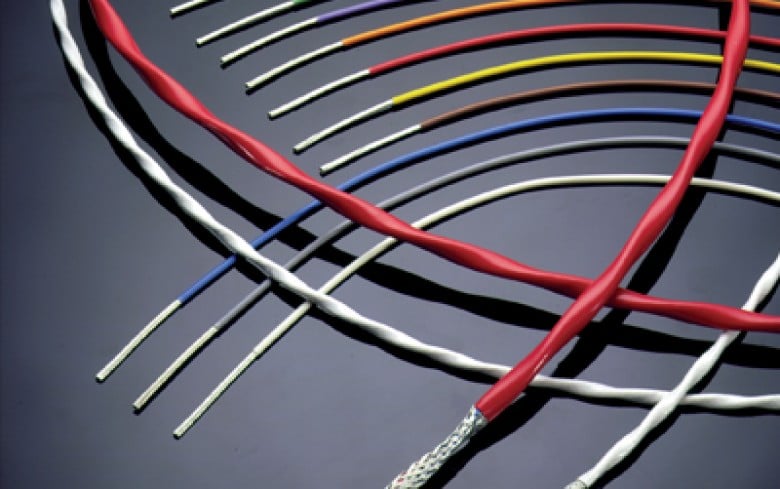
Spec 44 is where high-performance wire begins in earnest, but don't stop reading here as Spec 44 is not going to be our primary choice for professional-level motorsport wiring applications for a few reasons, but it is still helpful in some specific situations.
Spec 44's dual-wall construction combines a primary insulation of radiation crosslinked polyalkene with an outer jacket of radiation cross-linked polyvinylidene fluoride (PVDF). This combination produces a wire rated for continuous operation from -65°C to +150°C, with tolerance for short periods at temperatures up to 300°C, but also prevents cold flow.
The 600V standard equipment wire (44A011X series) has a nominal insulation wall of 0.19mm, and that thin wall still provides 40% greater cut-through resistance than equivalent PTFE insulated wire with a 0.25mm wall. The performance comes from the material, not the thickness. Chemical resistance is broad: Spec 44 is highly resistant to fuels, oils, acids, alkalis, and hydrocarbon solvents, and demonstrates resistance to electrical arc tracking under both wet and dry conditions. Insulation tensile strength is 4000 PSI (28 N/mm²).
It sits between Tefzel and TXL when it comes to thickness, and will sometimes fit more general automotive connectors designed for PVC where Tefzel is simply too thin to be an option at all.
Spec 44 Pros:
The slightly thicker diameter comes with some advantages.
- Wear indication: Spec 44 has 2 different layers which can give an indication if there is any abrasion damage, as you'll see the second colour start to appear. That said, in a fully sheathed harness this isn't a concern.
- Being a little thicker means it can work with a broader range of connector wire seals.
- Spec 44 is easier to strip than Tefzel, and in general, as a high-performance wire, it is easier than most, if not all, alternatives.
Spec 44 Cons:
For every advantage, there is a disadvantage.
- The thicker insulation means it won't suit many race spec circular connectors.
- That thicker insulation also makes it more difficult to fit into sheathing like DR-25.
- It is more expensive than Tefzel wire and often difficult to buy in smaller quantities.
- Spec 44 is heavier than Tefzel. That might not make a practical difference, but it is a fact.
Types Of Spec 44
Spec 44 is available in:
- Primary (single) Wire - Dual Wall Only
- Twisted Pair
- Screened and Jacketed Single
- Screened and Jacketed Pair
The tables below show nominal dimensions and maximum weight across the Spec 44 primary wire range. The standard 600V tin-plated copper variant is Raychem part number 44A0111, which corresponds to MIL spec part number M81044/12.
You can download TE Connectivity's (Tyco Electronics) datasheet for Spec 44 here.
M81044/12 aka 44A011X - 600V Primary Wire
| Wire Size (AWG) | Stranding | CSA (mm²) | Nom. OD (mm) | Max Weight (g/m) |
|---|---|---|---|---|
| 30 | 7/0.10 | 0.06 | 0.68 | 1.06 |
| 28 | 7/0.13 | 0.09 | 0.76 | 1.43 |
| 26 | 19/0.10 | 0.15 | 0.86 | 2.08 |
| 24 | 19/0.13 | 0.25 | 1.02 | 2.98 |
| 22 | 19/0.16 | 0.40 | 1.19 | 4.46 |
| 20 | 19/0.20 | 0.60 | 1.40 | 6.70 |
| 18 | 19/0.25 | 1.00 | 1.65 | 10.12 |
| 16 | 19/0.29 | 1.25 | 1.83 | 12.80 |
| 14 | 19/0.36 | 2.00 | 2.26 | 19.64 |
| 12 | 37/0.32 | 3.00 | 2.74 | 30.06 |
| 10 | 37/0.40 | 5.00 | 3.28 | 46.28 |
Tefzel Wire
Alright, prepare to be a little confused, but bear with us, there is a method to this madness and hopefully we can clear up some of the confusion so you know enough to make sure you're looking for the right type of wire.
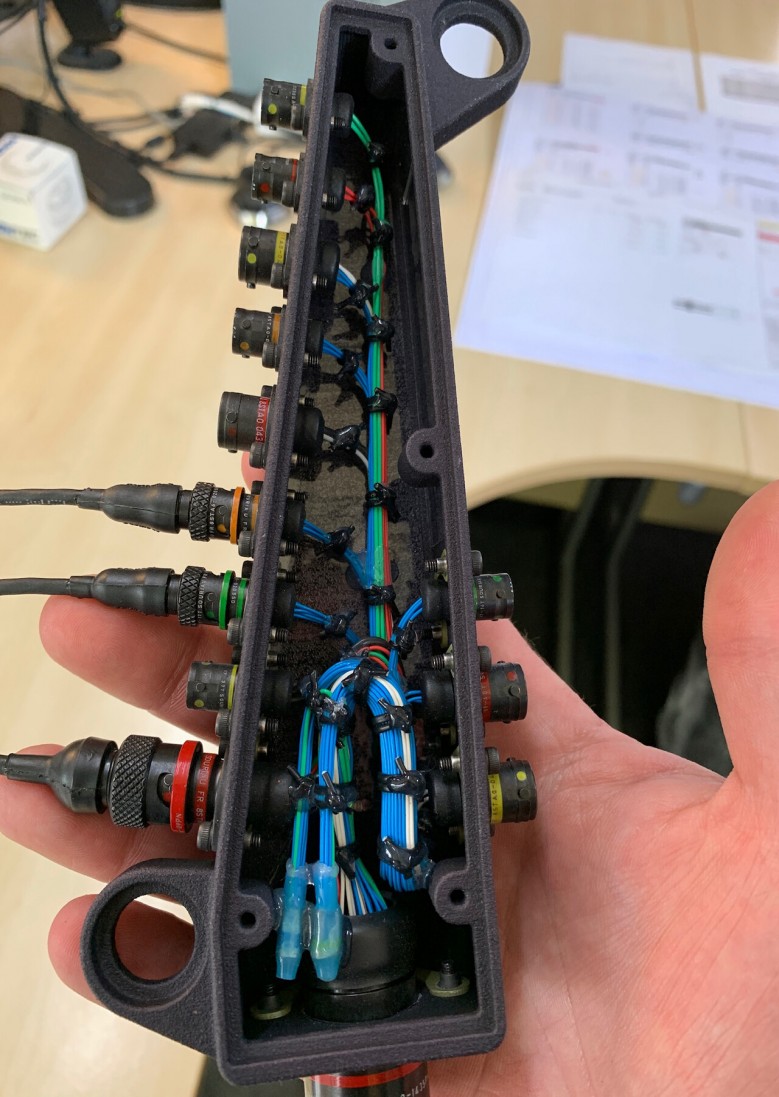
Tefzel is a trade name for ETFE insulation material, Spec 55 is Raychem's wire family, and M22759/32 is the specific tin-plated, cross-linked modified ETFE primary wire most commonly used in professional motorsport harnesses. It is the wire of choice for professional motorsport harnesses worldwide. This is the gold standard used in Formula 1, MotoGP, WRC, WEC, IMSA, as well as countless world record-breaking drag, time attack, and land speed racing builds. Originally developed for high-temperature airframe and avionics applications, it was engineered to a standard where the risk of failure must be minimal, and those properties translate perfectly into the motorsport environment.
"HPA recommends Tefzel wire for professional level motorsport wiring projects."
It is important that you understand the terms Tefzel, Spec 55 or M22759 is just the broad product reference and that the /XX on the end is the specific type of wire within that line. M22759/32 aka Raychem Part Number #55A0111 is going to be the main (and possibly the only) variant of Tefzel primary wire you will use in your professional-level motorsport wiring harness and is what we use here at HPA.
The temperature rating for the tin-plated copper variants we're using is -65°C to +150°C continuous, with tolerance for short periods at temperatures as high as 400°C. The chemical resistance of Tefzel is comprehensive: the insulation is unaffected by fuels, hydraulic fluids, defluxing agents, cleaners, coolants, and de-icers, many of which will find their way around your engine bay from time to time. It also demonstrates excellent resistance to UV and ozone and will not hydrolyse (swell) with long-term water exposure. Electrical arc tracking resistance is maintained under both wet and dry conditions.
What About M22759/44?
M22759/44 is another type of Spec 55 you might see mentioned in relation to motorsport wiring. The difference between /44 and /32 is that the former uses silver-plated copper and the latter tin-plated copper.
The silver-plated conductor in /44 does give it a higher continuous temperature rating of +200°C versus +150°C for the tin-plated /32, which is a real difference on paper. In practice however, a correctly routed and protected motorsport harness will not push M22759/32 beyond its rating, making the extra temperature headroom of /44 unnecessary for the vast majority of builds. The difference in price is significant given tin is considerably cheaper than silver, and you will struggle to find a supplier that stocks /44 outside of the aerospace world where minimum order quantities are enormous.
Is M22759/16 Also 'Tefzel' Wire?
M22759/16 might be another number you've seen mentioned on the HPA forum or around the internet. Beyond /32, the M22759 specification covers other variants which differ in insulation construction and conductor material. The two most relevant to motorsport wiring are M22759/16 and, of course M22759/32 which we just introduced above.
While it carries the same M22759 designation, Raychem does not give M22759/16 its own specific part number, probably because this is now produced as a legacy product for existing applications in the aerospace industry.
What's The Difference Between M22759/16 and M22759/32
TL;DR /32 is also meaningfully thinner than /16 across all sizes due to the difference in insulation.
M22759/16 uses an extruded ETFE (Ethylene Tetrafluoroethylene) insulation with a tin-plated copper conductor, rated from -55°C to +150°C.
M22759/32 uses a radiation cross-linked modified ETFE insulation called XLETFE (Irradiation Cross-Linked Ethylene Tetrafluoroethylene), also with a tin-plated copper conductor, and is rated from -65°C to +150°C.
Both /16 and /32 use ETFE as the base material, but the radiation crosslinking process used in /32 significantly improves its mechanical properties: scrape and cross-wire abrasion resistance, cut-through resistance, and cold flow resistance are all enhanced, and the insulation becomes non-melting at high temperatures.
Like /44 is to our /32, /17 is the silver-plated conductor version of /16. There is also a /18 version that has thinner insulation.
If you want to nerd out further, ETFE and XLETFE are compared here, and you can find a spec sheet here.
M22759/16 - 600V Single-Wall Extruded ETFE Wire
| Wire Size (AWG) | Stranding | CSA (mm²) | Nom. OD (mm) | Max Weight (g/m) |
|---|---|---|---|---|
| 24 | 19/36 | 0.25 | 1.19 | 3.85 |
| 22 | 19/34 | 0.40 | 1.37 | 5.47 |
| 20 | 19/32 | 0.60 | 1.57 | 7.97 |
| 18 | 19/30 | 1.00 | 1.85 | 12.24 |
| 16 | 19/29 | 1.25 | 2.06 | 14.80 |
| 14 | 19/27 | 2.00 | 2.41 | 22.17 |
| 12 | 37/28 | 3.00 | 2.97 | 33.63 |
| 10 | 37/26 | 5.00 | 3.61 | 52.19 |
Tefzel Pros:
Tefzel's reputation as the professional standard is well earned.
- The thinnest and lightest of the high-performance wire options, making it ideal for minimising harness diameter and weight in competition builds.
- M22759/32 achieves excellent mechanical performance with a thinner insulation wall, making it smaller and lighter than Spec 44 in the same AWG size.
- The de facto standard for professional motorsport harnesses, with specific connector lines designed around its diameter.
- Comprehensive chemical resistance including fuels, hydraulic fluids, coolants, de-icers, and cleaning agents. It will not hydrolyse with long-term water exposure and resists UV and ozone degradation.
- Available from many motorsport wiring suppliers at competitive pricing with good availability in both small and large amounts.
Tefzel Cons:
No wire is perfect for every situation.
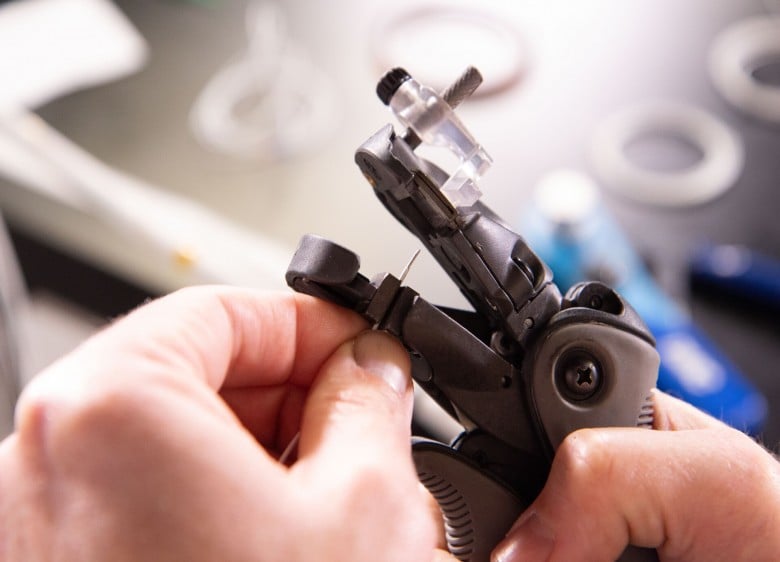
- Requires dedicated stripping tools due to the insulation's toughness.
- The motorsport-grade connectors, terminals and tooling designed to work with Tefzel's smaller diameter are generally more expensive than what you'd use with TXL.
Types Of Tefzel
Now to confuse you a little further, unlike Spec 44 Tefzel is actually available in both single-wall and dual-wall constructions, but the single-wall wire is the variant most widely used in motorsport, so for simplification, just keep that in your 'nice to know but not practically useful' knowledge bank.
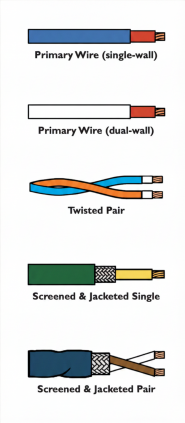 |
Spec 55 is available in: Primary (single) Wire - Single Wall (this is the one you want) Primary Wire - Dual Wall Twisted Pair - Used for CAN Bus wiring Screened and Jacketed Single - aka shielded cable. Screened and Jacketed Pair - Aka shielded cable, used for critical engine data, including engine speed, knock and engine position sensors. |
The tables below show nominal dimensions and maximum weight across the Tefzel range. The standard tin-plated copper single-wall variant is Raychem part number 55A0111, which corresponds to MIL spec M22759/32.
You can download TE Connectivity's datasheet for Tefzel/Spec 55 here.
M22759/32 aka 55A011X or Tefzel - 600V Single-Wall Equipment Wire (Motorsport variant)
| Wire Size (AWG) | Stranding | CSA (mm²) | Nom. OD (mm) | Max Weight (g/m) |
|---|---|---|---|---|
| 30 | 7/0.102 | 0.06 | 0.61 | 0.98 |
| 28 | 7/0.127 | 0.09 | 0.68 | 1.35 |
| 26 | 19/0.102 | 0.15 | 0.81 | 2.08 |
| 24 | 19/0.127 | 0.25 | 0.94 | 2.98 |
| 22 | 19/0.16 | 0.40 | 1.09 | 4.17 |
| 20 | 19/0.203 | 0.60 | 1.27 | 6.40 |
| 18 | 19/0.25 | 1.00 | 1.52 | 9.67 |
| 16 | 19/0.287 | 1.25 | 1.73 | 12.35 |
| 14 | 19/0.36 | 2.00 | 2.20 | 19.34 |
| 12 | 37/0.32 | 3.00 | 2.62 | 29.32 |
| 10 | 37/0.403 | 5.00 | 3.25 | 47.32 |
| 8 | 133/0.287 | 8.30 | 4.77 | 87.50 |
Should YOU Use Tefzel Wire?
HPA recommends Tefzel wire for professional-level wiring projects, and it is what we have used in projects like the SR20-swapped GT86 build. What is considered a professional-level wiring harness? This article explains all.
Spec 44 vs Tefzel
Both Spec 44 and Tefzel are well-suited to motorsport and represent a significant step above TXL in real-world performance. They share a number of key characteristics: both have a -65°C to +150°C continuous temperature rating in their standard tin-plated copper variants, both are radiation crosslinked for solder iron and overload resistance, and both offer broad chemical resistance.
The differences come down to insulation construction and the resulting physical dimensions. Spec 44 uses a dual-wall system, combining a crosslinked polyalkene inner layer with a PVDF outer jacket. Tefzel uses a single-wall modified radiation cross-linked ETFE insulation. Despite being a single layer, Tefzel's ETFE insulation is harder and mechanically tougher than Spec 44's construction, allowing it to be applied at a thinner wall thickness while still meeting demanding mechanical requirements. The result is a smaller and lighter wire at the same AWG.
Comparing the 22 AWG versions of each as an example:
| Wire Type | Nom. OD (mm) | Max Weight (g/m) |
|---|---|---|
| Spec 44 (44A0111) | 1.19 | 4.46 |
| Tefzel (55A0111) | 1.09 | 4.17 |
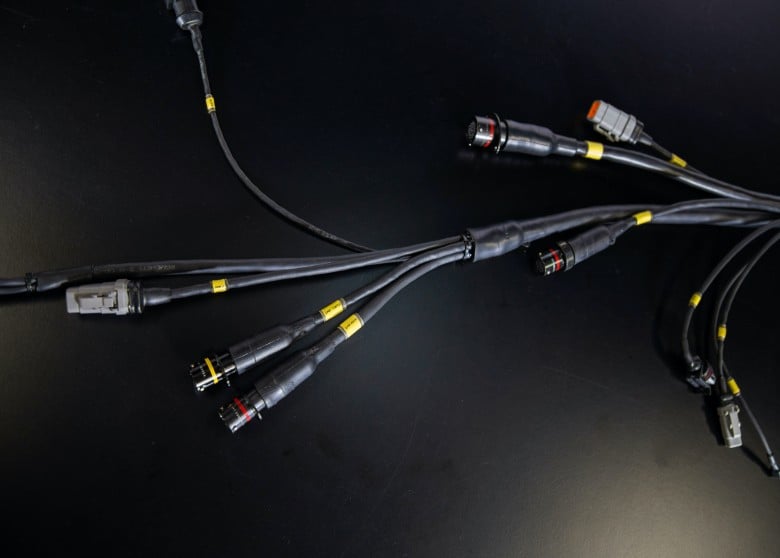
A 0.1mm reduction in outer diameter per conductor may seem marginal for a single wire, but across the dozens or hundreds of conductors in a full harness or concentric twist, the cumulative difference in harness diameter and total weight is meaningful, particularly in a competition context where mass is a genuine consideration.
Tefzel also carries a higher insulation tensile strength: 5000 PSI (35 N/mm²) compared to Spec 44's 4000 PSI (28 N/mm²). As per the data sheets linked above, both also pass the same solder iron resistance test at 370°C for one minute.
Due to not being as widely used, leaving fewer distribution options out there for us, Spec 44 also costs more than Tefzel.
For a professional or competition harness where weight and harness diameter are priorities, Tefzel is the preferred choice and the de facto standard for race-spec builds. For a high-quality build where ease of installation matters more and the slight difference in size and weight is not critical, nor the extra cost, Spec 44 will do the job just fine too.
Working with High-Performance Wire
Spec 44 and Tefzel differ in one practical area worth considering before committing to a wire type: how each behaves during stripping.
Spec 44 strips cleanly with conventional die blade strippers. Its flexibility makes it one of the more manageable high-performance wires to work with during harness construction, and the tin-plated conductor solders and crimps without issue.
Tefzel is mechanically tougher, which is central to its performance as an insulation material, but that toughness can create challenges during stripping. Conventional strippers may struggle with the ETFE insulation, and we like to keep a nice and sharp pair that we only use for Tefzel. If you are setting up a workshop to work regularly with Tefzel, investing in the right stripping tools upfront is worthwhile and will save you time and frustration.
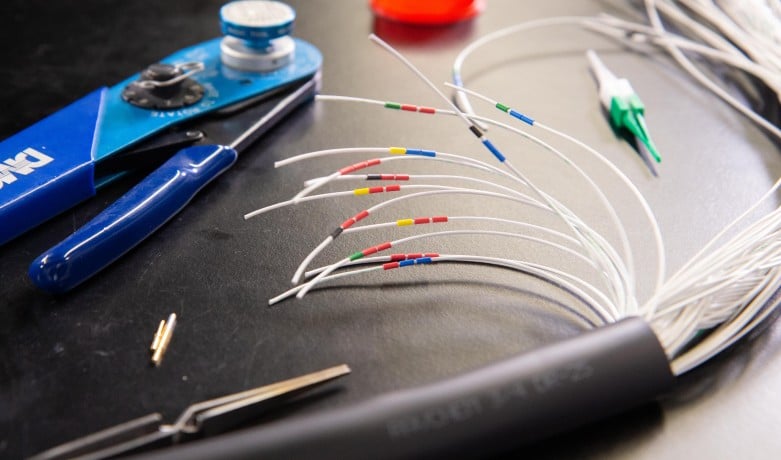
Both wires accept hot stamp, ink jet, and laser marking directly on the insulation, making circuit identification straightforward if you're into that, but we just use identification tags.
From a community perspective, M22759/32 has become the standard choice for race-spec harnesses. Alternatives with comparable specifications do exist, including wires from other manufacturers using similar fluoropolymer insulations, but real-world experience within the HPA community found these to be significantly more expensive in practice, often with more limited availability and less flexibility than Tefzel. The established supply chain, competitive pricing, and proven performance of M22759/32 make it the practical choice for the vast majority of high-level wiring applications.
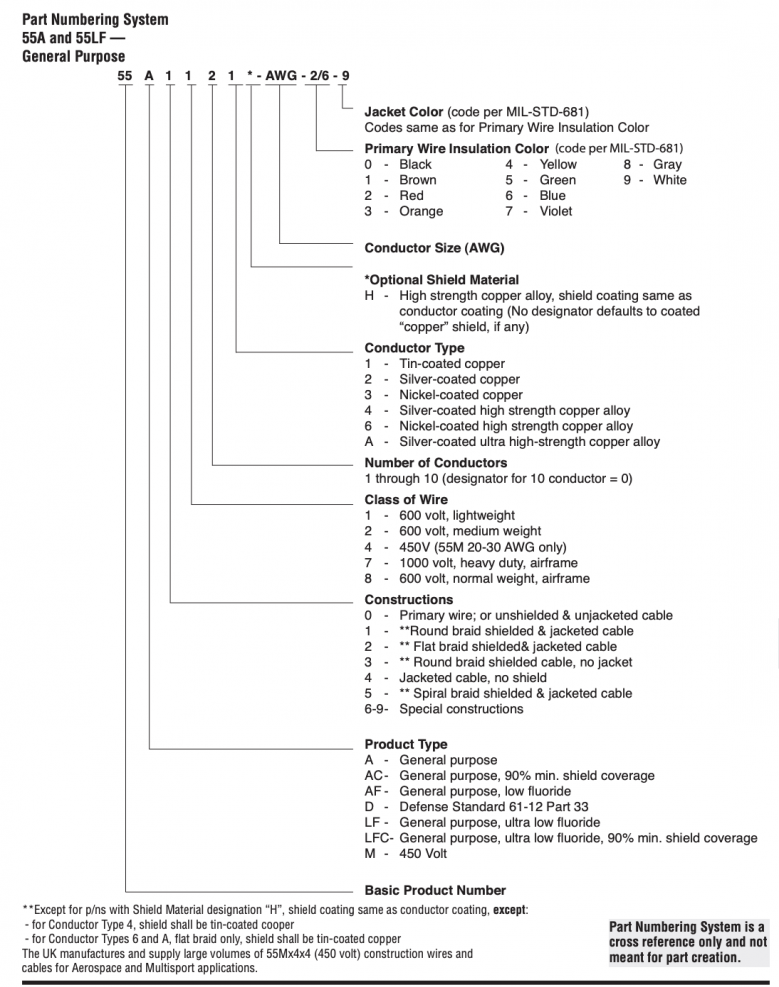
How To Read TE and Raychem Wiring Part Numbers
All good datasheets for a specific type of wire will tell you how to read their product coding. The example above is from the Spec 55. You can see that most of the code doesn't really matter for committing it to memory, you can look them up at any time. The last two numbers you want to know at a glance as they represent the size and colour.
Example: 55A0111-20-2
55 - Type
A - General Purpose
0 - Primary Wire aka Hook Up Wire
1 - 600v
1 - 1 Conductor
1 - Tin Coated Copper
20 - AWG Size
2 - Red Colour
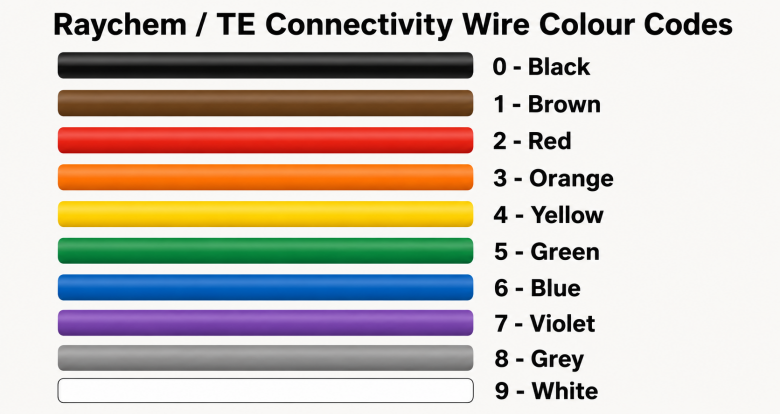
0-9 wire colour codes follow the MIL-STD-681 standard, which Raychem uses across their product range.
What About SAE and Milspec Codes?
People throw the term 'Milspec' around a lot in relation to wiring without really knowing what it means, and to be honest, you do not need to beyond just knowing what to use and what to avoid, like any other part number. Suppliers will cross-reference the Raychem codes, and the last 2 parts of the number also represent size and colour, so it is still easy to understand the information we're all looking for at a glance whether it's when we're ordering it or looking at a spool on the bench.
Example:
Military Specification Number - M22759/32-20-2
Society of Automotive Engineers (SAE) - AS22759/32-20-2
20 - Size
2 - Colour
We can easily see this is still 20 AWG red wire, even though the designation before that is very different.
As you will know from the wire sizing guide, AWG stands for American Wire Gauge. It's a standardised system used to size electrical wire, where a higher AWG number means a thinner wire.
Where to Buy Motorsport Wiring Materials
There are a number of suppliers stocking performance and mil-spec wiring materials worldwide. The best option for you will depend on your location, timeframe, and what other materials you need alongside the wire itself. The HPA community has put together a solid list of suppliers across different regions to help you get started. Check out the wiring and accessories suppliers list on the HPA forum here.
Conclusion
We've covered quite a bit in this article which we hope will clear up some confusion out there, but if you take anything away from all of this make it these 4 key points:
- General PVC-insulated wire is not suitable for performance or motorsport harness work.
- TXL is an acceptable minimum for club-level wiring projects.
- Spec 44 represents a substantial jump in quality, but isn't the industry-wide preferred choice.
- Tefzel (specifically M22759/32) is the professional gold standard: smaller, lighter, and tougher than anything above, and the wire of choice for professional motorsport wiring harnesses worldwide.
Choosing the right wire is only the starting point. If you are not yet sure what gauge of wire you need for a given circuit, we recommend checking out our guide on wire sizing next, and the type of sheathing you plan to use is also a decision you want to make early on in your wiring planning process.